
Qatar Tenant Rights and The Rental Law Explained (2026 Update)
Most people don’t know how much protection the tenant has in Qatar under leasing law. The deposit amount can never exceed two months’ rent, contracts renew automatically and to evict a tenant, the matter must go before a committee. This guide has been updated to accommodate Law No. 8 of 2026 and covers the new QR 250 fee, fines and appealing to the Court of Appeal.
 Arady Desk13 min read
Let’s say you’ve just seen a flat in Lusail. It looks okay, the air conditioning actually works, the landlord looks like a nice person, and then he mentions the deposit: four months, paid immediately.
At a monthly rent of 6,000 riyals, that’s 24,000 before you even get the keys. Is it legal, though? That’s where things get tricky, and the gap between what landlords typically request and what the law permits is pretty much the entirety of the rental market in Qatar.
Your rights as a tenant are protected by Law No. 4 of 2008 on real estate leasing (available on Almeezan, Qatar’s official legal publication site). This law was amended by Law No. 8 of 2026 in August 2026. Among other things, the law introduced a flat QR 250 registration fee, a fine for unregistered leases, and made appeals against the disputes committee go to the Court of Appeal. This guide was updated in August 2026 to reflect these changes.
It limits residential deposits to two months’ rent. It also automatically renews your contract if you remain in the property after the lease expires and no party objects, which most people don’t realize until it happens.
In addition, a landlord who wishes to evict you doesn’t have the power to do so without first going through a dispute resolution committee. Most people discover these rules while they’re embroiled in a disagreement with their landlord.
Two laws, but essentially it’s just one
In theory, your tenancy falls under two laws. Law No. 4 of 2008 governs most issues you’ll encounter in the course of a lease: deposits, renewals, maintenance, and evictions.
The Court of Cassation reaffirmed the framework in case number 258 of 2016, stating that a tenancy normally terminates upon the expiration of the term, at which point the tenant must return the property in the state in which he found it.
Underlying that is the Civil Code, Law No. 22 of 2004, which provides supplementary rules where the 2008 law is silent. You won’t usually need to refer to this code, so I’ll focus exclusively on Law No. 4 of 2008.
Two months’ rent is the maximum deposit amount
Our hypothetical four-month landlord isn’t following the rules. As stated on Almeezan:
The Lessor may not charge the Lessee a security deposit of more than two months’ rent in the case of residential premises, and it may be otherwise agreed upon in the case of premises leased for non-residential purposes.
There’s no wiggle room here. If your landlord requests more, you can refuse. A quick reference to the law usually resolves the matter without a lengthy negotiation.
This regulation applies only to residential properties, not commercial premises. Commercial leases are subject to separate regulations.
One note before we proceed to the actual legislation. In Qatar, the Arabic version of a law is always the authoritative version. Almeezan offers an official English translation, which is what’s quoted in this article.
Have you remained in the property beyond the expiration date? Your tenancy may already be considered renewed
This is another provision that often takes people by surprise. According to Article 15 of the English translation:
Without prejudice to the provision of Article 19 of the present Law, the lease shall be terminated at the end of the term specified therein. If the Lessee continues to utilize the Leased Premises after the end of the term, while the Lessor is aware of such utilization and expresses no objection, the contract shall be deemed to be renewed for a similar term under the same terms and conditions.
In plain English, it means: The lease expires at the stated date. But if the Lessee keeps living there and the Lessor accepts the rent without objecting, the agreement renews automatically.
The same period applies, with the same terms of payment and other obligations. No new lease needs to be signed, and no renegotiation takes place. This caveat at the beginning, “without prejudice to Article 19”, is important, as I will explain.
When can a landlord evict you?

The simple answer is, not when he wants to. In English, Article 19 begins like this:
The Lessor may, even before the expiry of the Lease, request the Committee to have the Leased Premises vacated in the following circumstances:
You might notice what is hidden in that sentence. The Lessor does not inform the Lessee; he does not change the locks; he asks the Committee to evict him. There are eight circumstances that follow, and these are roughly divided into three categories.
The first category covers the actions of the tenant
- Not paying the rent on time, without a valid excuse that the Committee would agree to
- Renting out or transferring the lease to another party without the Landlord’s written consent
- Inhabiting the property in a manner that violates the contract or general laws
If you pay your rent on time, ask for permission before subletting. Don’t violate any laws or contracts, and then you don’t fall into the first category.
The second category concerns the premises themselves
- The government requires the premises to be demolished
- The premises are declared unsuitable or dangerous to inhabit
- The owner wants to demolish it. This category also includes buildings that are at least 15 years old, as well as approved construction projects.
- The owner wants to undertake major renovations or add floors
The last two exceptions have conditions attached
- The work could not be carried out while you were occupying it
- The permits required for this work had already been issued
- You were given at least six months’ advance notice, starting from when the permits were issued
- The owner had to start the work within six months of you leaving, otherwise you can claim compensation
The final category is based on the owner’s needs
- The owner can ask for the premises to be vacated if they are located near the owner’s own house and the owner wants them back for his or her own use or for the use of his or her family
- The owner or their dependents require housing and none of them owns another dwelling that is suitable
Six months’ notice in either case
If none of the eight circumstances apply to you, then you are entitled to remain until the lease ends. If any do, you must await the decision of the Committee; nobody else can decide. The actual text of Article 19 is below in a block you can open and close if you want.
Read the full text of Article 19
The Lessor may, even before the expiry of the Lease, request the Committee to have the Leased Premises vacated in the following circumstances:
- If the Lessee, without what the Committee deems an acceptable excuse, fails to pay the rent on its due date;
- If the Lessee in any way sub-lets or assigns the leased premises to third parties without the written consent of the Lessor;
- If the Lessee utilizes the leased premises or allows them to be utilized in such a way as to violate the terms and conditions of the lease or in contravention of public order or public decency;
- If the competent authority decides to demolish the building, or if the Leased Premises prove liable to collapse or to endanger the safety of residents;
- If the Lessor intends to demolish the building, in the following circumstances:
- At least fifteen years have elapsed from the date the building was erected;
- The Lessee intends to construct business buildings, provided that the necessary approvals are obtained from the appropriate authorities;
- If the Lessor intends to add additional floors to the building or to effect any changes and modifications to it, subject to the following:
- The impossibility of adding additional floors or effecting changes and modifications to the building while the Lessee remains in residence in the Leased Premises, and at the discretion of the licensing authorities;
- That the Lessor has secured all required licenses from the appropriate authorities;
- That the Lessee is granted a period of not less than six months from the date the necessary licenses are obtained to vacate the premises;
- That the Lessor shall proceed with the licensed works within six months of the date on which the Leased Premises were vacated;
If the Lessor does not undertake the licensed works, or lets the Leased Premises to another Lessee before undertaking such works, the Lessee may submit a claim for compensation if such is warranted;
- If the Leased Premises are situated in the vicinity of the Lessor’s home, and the Lessor intends to use the leased premises for his/her own occupation or that of his/her spouse, parents, children or any lawful dependants provided that the Lessor shall notify the Lessee at least six months prior to such occupancy.
- If the Lessor intends to occupy the Leased Premises himself, or intends his wife, children, parent or lawful dependant to occupy them, and none of the above persons owns a dwelling fit for habitation, provided that the Lessor shall notify the Lessee at least six months prior to such occupancy.
Who fixes what
Every tenancy eventually reaches the point where something needs fixing, and it’s unclear whether the landlord or tenant should do it. The law states:
The Lessor shall be responsible for maintaining the Leased Premises in a fit and usable condition.
That means structure, infrastructure, everything that makes the home usable is the landlord’s responsibility.
Your part is basically maintaining the premises and using them per the contract, everyday stuff.
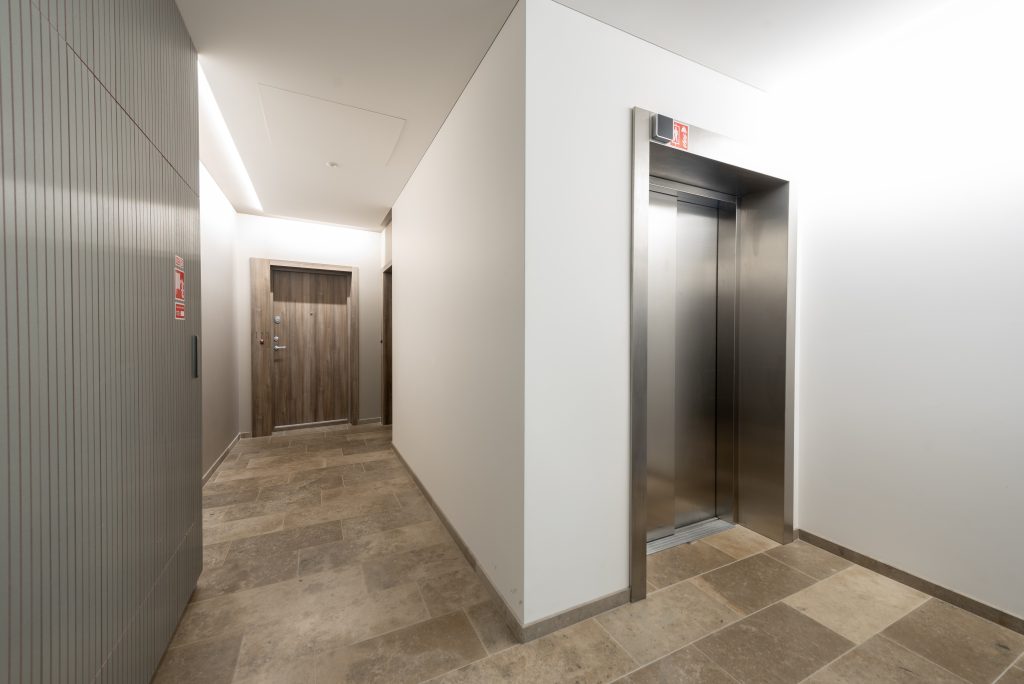
The one that makes them nervous is this. You’re on the ninth floor, the building’s sole elevator has been inoperable for three weeks, and the landlord isn’t returning your calls. You can request that the Committee cancel the lease, or that the rent be reduced commensurate with your diminished use of the premises.
For urgent repairs, a landlord might undertake repairs even against your wishes where they are required to preserve the premises. However, where such repairs prevent you from using part of the leased premises, you can request termination of the lease, a rent reduction or waiver for the relevant period or an extension of the lease term.
You have 30 days, starting on the day the repairs are completed, to make such a request.
Lease registration falls on the landlord
But there’s one more thing. One body that has authority over everything mentioned above. The Rental Disputes Committee. The lease registration requirement is a landlord’s obligation
The body which decides all of the above is the Rental Disputes Committee at the Ministry of Municipality. And as of August 2026, this body’s power increased significantly under Law No. 8 of 2026.
Now the Committee exclusively determines disputes between landlords and tenants, and the law requires it to decide such cases urgently. The courts will not hear such cases unless the Committee has ruled, and any decision made by the Committee can be appealed before the Court of Appeal within 15 days of issuance.
The registration process itself is tighter than many realize, yet the obligation isn’t yours. The law dictates that the lease agreement be in writing, identifying the contracting parties and their nationality and address, the duration of the agreement and the amount of rent to be paid, along with the method of payment. It then dictates that the landlord register the agreement at the Real Estate Lease Contracts Registration Office within two months of signing it.
There was a belief that if you don’t have a registered lease, you cannot approach the Committee. That provision was part of the original 2008 law, and it continues to circulate in articles and online, but it was removed by Law No. 20 of 2009 and reversed.
In the current Arabic version, which carries legal force, the landlord is prohibited from bringing his case before the Committee or the courts if his lease is not registered, save for one exception: if he wishes to prove that the tenancy was established before 15 February 2008.
In the 2026 revision, failure to meet the obligation carries a higher penalty. The registration fee is fixed at QR 250 per unit, and it’s paid to the Office. The fee is included in our property fees guide, while the maximum penalty for not registering the lease agreement is set at QR 10,000, but you can settle at QR 1,000 and the fee amount.
A 2017 amendment also prohibited state providers from providing utilities to any property if the tenancy agreement is not registered.
The requirement is important enough for you to insist on it. Without registration, utilities cannot be connected, and your contract won’t appear in the database, so ask the landlord to provide proof of registration.
The rest of the obligations that the law places on you don’t cost anything. Keep your contract written, ensure you pay rent within seven days of the due date and ask for a receipt each time, and submit all requests and notices in writing as well.
The most common questions
He cannot unilaterally do that. In fact, the law stipulates that any increases to the rent will be determined pursuant to a Council of Ministers resolution setting out the rules, criteria and percentages for the purpose of such an increase. If the CoM doesn’t issue such a resolution that applies to your situation, then you’re stuck with whatever rate is written down in the contract from beginning to end. And if the parties want to change that rate upon the lease’s renewal, it requires both parties’ signatures.
The lease continues. The law states that death, whether it’s the landlord’s or the tenant’s, does not result in the termination of the lease. The spouse, parents, or children of the deceased who resided in the leased property become holders of the rights previously vested in the deceased tenant, provided they agree to assume the obligations of the lease, while heirs who resided in the leased property and wish not to continue the tenancy may request the termination of the lease.
Perhaps, but you’ll also likely be in breach of the lease. Withholding the rent makes you a late payer, which is the first ground for termination under Article 19. Now you’ll be the one fielding an eviction petition. Submit a complaint to the Committee instead, requesting a rent reduction or lease termination.
First, lease registration will now cost QR 250 per unit. Second, if a landlord fails to register the contract, he can be fined up to QR 10,000, with the option to settle for QR 1,000 plus the fee. Finally, decisions of the Rental Disputes Committee can be challenged before the Court of Appeal within 15 days.
The article above is not legal advice. It’s a summary of the law. If you have an ongoing dispute, consult a licensed attorney in Qatar.
Newsletter
Stay ahead of Qatar's property market
Sign up to receive the latest articles on property prices, land prices, buying guides, and real estate news in Qatar delivered right to your inbox.
No spam, ever. Unsubscribe anytime.
Related articles

Qatar Owners Union Law 2026 Explained in Simple Terms
Law No. (11) of 2026 requires an Owners’ Union in any co-owned property with three or more owners. This guide explains registration, subscriptions, the three-month non-payment rule, the ban on selling a unit with arrears, and every owner’s duties in plain language.
Land Subdivision in Qatar: Who Approves It, What It Costs and How Long It Takes
The minimum plot size for residential plots after 9 September 2026, no-subdivision areas, required documents, applicable fees and the period for subdivision of residential plots, according to official Qatar government sources.

What Qatar’s Draft Real Estate Tokenization Law Says
Qatar’s cabinet has approved a proposed law that permits property to be issued and transferred as digital assets linked to the national real estate registry. The bill will undergo a 10-day public consultation process via the Sharek platform before being presented to parliament. A timeline for its implementation has yet to be established.
Newsletter
Stay ahead of Qatar's property market
Sign up to receive the latest articles on property prices, land prices, buying guides, and real estate news in Qatar delivered right to your inbox.
No spam, ever. Unsubscribe anytime.