
What Qatar’s Draft Real Estate Tokenization Law Says
Qatar’s cabinet has approved a proposed law that permits property to be issued and transferred as digital assets linked to the national real estate registry. The bill will undergo a 10-day public consultation process via the Sharek platform before being presented to parliament. A timeline for its implementation has yet to be established.
 Arady Desk16 min read
Key Takeaways
- The cabinet has approved a draft law on real estate tokenization in order to diversify investment opportunities.
- Under the draft law, real estate tokenization would enable the representation of property ownership as digital tokens that can be traded like shares.
- The draft, its regulations, an explanatory memorandum and an infographic are on Sharek for public comment from 1 to 10 September 2026 before the text goes to legislative review.
- Tokens representing specific rights in property would be directly linked to the real estate registry in order to ensure safe and transparent transactions.
Qatar Cabinet Approves Draft Law on Real Estate Tokens
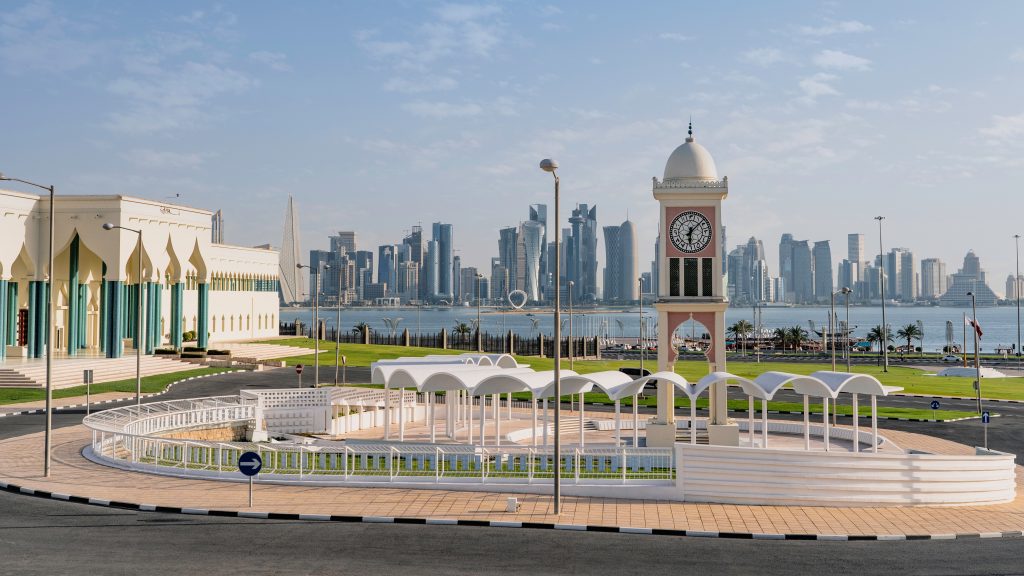
Qatar’s cabinet on Wednesday, August 26, 2026, approved a draft law that would enable property in the country to be issued and traded as digital tokens. It said the aim was to diversify real estate products and open investment in them to a larger pool of investors.
Real estate tokenization is the process of representing ownership of a property, or a defined right in it, as digital units called tokens that can be bought and sold. This turns a property into something closer to company shares, where each token is a recorded stake rather than a paper deed to the whole building.
For now, nothing changes for buyers. The Cabinet has decided to post the draft on the government’s Sharek platform for 10 days for public comment before it goes to legislative review.
What the Cabinet approved
The decision was taken at the regular meeting of the Cabinet at the Amiri Diwan, chaired by Prime Minister and Minister of Foreign Affairs Sheikh Mohammed bin Abdulrahman bin Jassim Al Thani, and was announced in a statement by Minister of Justice and Minister of State for Cabinet Affairs Ibrahim bin Ali Al Mohannadi, carried by the state news agency Qatar News Agency (QNA).
Two documents were approved. The first is the draft law regulating real estate tokenization and the trading of real estate tokens. The second is its draft executive regulations, the companion rules that spell out how a law is applied in practice.
Five government bodies worked on the draft. The Ministry of Justice prepared it with the Ministry of Municipality, Qatar Central Bank, the Qatar Financial Markets Authority, which regulates the financial markets, and the General Real Estate Regulatory Authority, known as Aqarat, which supervises the property sector.
What tokenization means
The explanatory memorandum provides an example of a QR 10 million asset that is divided into 5,000 ownership units of QR 2,000 each.
Investors can then purchase an amount that matches their budget. The property will be operated as normal, and its rental income will be split according to the units each investor holds. The units can then be bought and sold through a licensed platform.
Why the registry link matters
According to the statement, the draft sets out a complete legal framework that defines the nature of the real estate token and the rights of its holder, and regulates how it is traded.
The framework also connects the token directly to the real estate registry. The registry is the official government record, held at the Ministry of Justice, that proves who owns each property in Qatar.
Registration of a sale in this register completes the transfer of ownership, with prescribed registration fees. That may seem obvious, but it’s a critical point. A token won’t just exist in the app of a trading platform; it will represent a right to appear in the same official register that a court, a bank, or a prospective buyer would consult.
The statement said the purpose of linking the law with the property registry was “ensuring security and reliability in transactions, safeguarding investors’ rights, and ensuring the integrity and transparency of the market, while ensuring innovation goes hand-in-hand with risk management.”
Why is Qatar doing this?
According to the statement, the draft law came as part of the Ministry of Justice’s strategy to diversify real estate products, encourage investment, and provide opportunities for all investors. It also put the draft law in the context of the Third National Development Strategy, Qatar’s national plan from 2024 to 2030, which aims to create an attractive regulatory framework for investment and expand digital transactions.
The concept of tokenizing real estate in Doha has been brewing for a while. In May 2025, at a Doha forum, the chief executive of the Qatar Financial Centre, a commercial center with its own legal framework, said it had started experimenting with tokenized assets, initially in real estate, in its Digital Asset Lab, according to The Peninsula.
The draft law also comes at a busy time for the country’s real estate market. As of July 2026, the Ministry of Justice had received 485 real estate sales registrations worth QR 2.25 billion, according to Arady’s July 2026 market report.
Two models for a tokenized property
There are two ways the ownership is structured, either directly or via a company (Article 1). In the first, direct ownership, the real estate is registered as belonging to all of the co-owners and their rights are limited to those granted in the law and the prospectus, such as the right to transfer them, while in the second a company is formed for each property being tokenized.
The ownership of the company, the real estate tokens, represents the rights to ownership of the property. The company is a special purpose vehicle that is prohibited from any other activity and from holding other assets, and it may not borrow without the permission of the token holders (Article 9).
In both cases, the token holders’ shares are recorded in the token register kept by the tokenization platform and this has the same evidentiary weight as the real estate registry, to which it must be synced (Articles 7 and 38). The real estate registry takes precedence in the event of disagreement about the property’s description, boundaries or the rights over it, while the token register prevails on who holds which token (Article 7).
Importantly, the draft makes clear that the holders of the tokens have no right to use the real estate themselves; they have only a right to their share of the financial returns and of votes in the decisions of the token holders’ group (Article 8). That applies in both models, so a holder would not be permitted to reside there, or use it, for instance.
In both models the token register carries the same evidentiary force as the real estate registry (Article 38), and the tokenizer chooses the model at the application stage (Article 1).
Which properties qualify

As it stands, a property cannot be tokenized unless it is located in areas that allow non-Qataris to own it, or hold long term usufruct rights over it. More can be added later by the Cabinet (Article 1). So, a regular home in a typical residential area would not qualify, no matter what the owner wanted.
Some categories of real estate are also excluded (Article 23). For example, public property owned by the state, homes allocated under the citizens’ housing programme for as long as the sale ban on them runs, endowment property that lacks the endowment authority’s approval, and properties subject to expropriation for public use or urban replanning cannot be tokenized.
Other types of real estate are allowed only under certain circumstances. For example, privately owned real estate belonging to the state or government entities can be tokenized with the permission of the Cabinet, but that entity must keep a blocking stake of more than 34% (Article 24).
To be tokenized, a property must have clear title, with no encumbrances or disputes, and no liens on it unless the lien holders give notarised written consent. It must also be fully insured with an insurer licensed in Qatar and be clear of planning restrictions (Article 22).
Before tokenization, the property must also be valued by two independent valuers accredited by Aqarat. The valuations must be no older than six months (Article 25).
A property that is still under development can also be tokenized if the developer is licensed and the project is licensed and registered. The money raised from the sale of the tokens, which at that stage are more akin to rights in property, must be deposited in the project’s escrow account. When it is completed, and registered in the real estate registry, then the original tokens are converted by law into ownership tokens (Article 27).
Management of the asset is the responsibility of a licensed property manager, acting on behalf of all the token holders.
Who can buy and how much
- There must be a minimum subscription amount per investor, where at initial issuance this cannot be lower than QR 2,000 in nominal value per investor, although the QFMA could raise this minimum up to QR 10,000 depending on the offering and investor category (Article 31).
- Minimum investment requirements for trades on the secondary market should not be lower than initial investment requirements (Article 31).
- The QFMA sets the criteria for who counts as a qualified investor, based on wealth, investment experience or professional standing (Article 1).
- The cap on the total amount that a non-qualified investor could invest, or have exposure to (aggregated across multiple real estate tokens) cannot be lower than QR 50,000, and the platforms must block any trades for non-qualified investors if their cap would be exceeded, based on the income and net worth they declare (Article 32).
- Non-Qatari investors may only hold tokens which represent ownership in designated areas (as per Law No. 16 of 2018 on non-Qatari ownership and usufruct of property) (Article 14).
- Tokens count as securities under QFMA laws and regulations (Article 15).
- All transactions in tokens are conducted in Qatari riyal, and must be conducted with banks licensed in Qatar. Transactions may not be done using any cryptocurrency or virtual assets, except within the limits other legislation allows and with express approval from both the QFMA and Qatar Central Bank (Article 33).
How token holders are protected
- Each platform and custodian needs its own licence from the QFMA and each property manager a licence from Aqarat, and to avoid conflicts of interest the same entity cannot act as both platform and custodian in respect of the same property (Article 44).
- All investor monies, tokens and underlying assets held by the platforms, managers and custodians are ring fenced and are not counted among those companies’ own assets, nor subject to any creditor’s claims or insolvency proceedings in respect of these companies (Article 45).
- Platforms, managers and custodians must hold professional liability insurance, set at a minimum of QR 1m or 5% of the reference value of the biggest property they handle (whichever is higher) (Regulations, Article 26).
- Managers cannot hold more than 20% of the tokens for any given property, and are not permitted to vote on any decisions in respect of their own appointment and terms of remuneration (Regulations, Article 34).
- The draft law spells out the percentage thresholds required in respect of decisions to be made and voted on by token holders, which includes a minimum threshold to constitute a quorum of 25% of all shares (Article 59). For example:
- ordinary resolutions can be made with a majority vote of shares represented at a meeting;
- a vote of 66% of all shares in total would be required to dispose of the entirety of a property;
- a vote of 75% of represented shares, and at least 50% of all shares in total, would be required to mortgage a property, change the use of a property, demolish and rebuild it, or borrow against it.
- Investors holding 10% of tokens for a given property can call for a meeting to be held or ask the QFMA or Aqarat to inspect the platform or the manager (Article 65).
- The QFMA supervises and inspects platforms and custodians, and Aqarat does the same for property managers (Articles 17 and 18).
- Licensed operators who break the rules face administrative fines of up to QR 5m per violation, as well as potential suspension or revocation of licences (Article 76).
Article 59 of the draft law. A second meeting called within 15 days is valid at any attendance. Holders of 10% can call a meeting or request an inspection (Article 65).
Acting as a platform, tokenizing property, or acting as a custodian without a licence could result in a prison sentence of up to 3 years and a fine of up to QR 1m, or the revenue generated from the actions, whichever is higher (Article 79). Falsifying the token register, or commingling investors’ assets with the operator’s own, carries up to 5 years and a fine of up to QR 5m (Articles 80 and 81).
What the draft does not do
The explanatory memorandum to the draft law is explicit that the draft law does not do the following.
- extend to activities licensed inside the Qatar Financial Centre
- allow property to be tokenized anywhere in Qatar, since it is restricted to the legally designated areas and any the Cabinet adds
- oblige any owner to tokenize a property
- alter existing ownership rules or the authority of the real estate registry
- serve as a law for cryptocurrencies, which remain limited to what other legislation allows
- guarantee financial returns from tokenization, since a token can lose value or prove hard to sell quickly
- create a stock exchange for property, only regulated trading in tokens through licensed platforms in stages
- offer protection under the law to tokens being offered prior to the law being enacted, and no platform is licensed today.
How to comment before 10 September
The draft law is now published on Sharek and the consultation period is open from 1 to 10 September 2026 to everyone, individuals, investors, developers, banks, technology companies, law firms and academics. All comments should be submitted in Arabic.
In the memorandum, the Ministry of Justice has requested comments on ten specific questions including:
- Whether the definitions are clear? Could it be appropriate to broaden the scope geographically?
- Is QR 2,000 an appropriate investment minimum? Where should the exposure cap for non-qualified investors be set?
- Are the disclosures in the prospectus sufficient? Does the oversight of the property manager need strengthening?
- Is a majority of 66% the right threshold for property sales to balance the rights of minorities with effective decision-making?
- What conditions should trigger the transition to continuous trading?
The memorandum also sets out a format for feedback which links comments to specific article numbers. A form is provided to explain any proposed changes to the current text and reasons for the suggested amendments. Queries regarding the consultation should be emailed to [email protected].
Once the consultation closes, the Ministry of Justice will review feedback in cooperation with other regulators and publish a report within three months. The draft law will then go through the official legislative review process and, once approved, it will be published in the Official Gazette, after which it enters into force six months later (Article 87). No date has been set for any of these steps. Once in force, existing market players get a one-year transition period to comply with its provisions (Article 85).
Frequently asked questions
It is a digital representation of a defined right to a specific property. In Qatar’s proposed law, the token, its rights and its trading will be legally recognized and recorded in the property register.
There is no legal framework for it in Qatar yet. The draft law proposes that real estate assets could be divided into equal shares represented by tokens and sold through licensed platforms, with a minimum investment of QR 2,000, but it still has to pass legislative review and would enter into force six months after publication. As it stands today there is no platform licensed to operate and if tokens are issued without an established legal basis there is no statutory protection available.
The draft law and its companion documents are published on Sharek and comments are open from 1 to 10 September 2026. All comments should be submitted in Arabic through the platform, using the feedback form in the memorandum which links comments to specific article numbers. Queries regarding the consultation should be emailed to [email protected].
Foreigners can purchase freehold, or full permanent ownership, in ten designated zones, and can acquire 99-year leasehold rights in 16 others. Arady’s guide, which can be found in the research section, lists all the freehold zones.
Newsletter
Stay ahead of Qatar's property market
Sign up to receive the latest articles on property prices, land prices, buying guides, and real estate news in Qatar delivered right to your inbox.
No spam, ever. Unsubscribe anytime.
Related articles
Qatar Owners Union Law 2026 Explained in Simple Terms
Law No. (11) of 2026 requires an Owners’ Union in any co-owned property with three or more owners. This guide explains registration, subscriptions, the three-month non-payment rule, the ban on selling a unit with arrears, and every owner’s duties in plain language.
Land Subdivision in Qatar: Who Approves It, What It Costs and How Long It Takes
The minimum plot size for residential plots after 9 September 2026, no-subdivision areas, required documents, applicable fees and the period for subdivision of residential plots, according to official Qatar government sources.
Property Fees in Qatar 2026: Registration, Transfer & Notary Costs
Currently, Qatar charges 0.25% of the property value for registering a sale, and under Law No. 8 of 2026, the cost to register a lease stands at QR 250 per unit. In this guide we have included information on all fees for registration, transfer, notary, and any exemptions.
Newsletter
Stay ahead of Qatar's property market
Sign up to receive the latest articles on property prices, land prices, buying guides, and real estate news in Qatar delivered right to your inbox.
No spam, ever. Unsubscribe anytime.