
Museums in Qatar and the Ideas Behind Their Architecture
Seven museums in Qatar are open today, and three carry the work of Pritzker Prize winners. Each design began with something that already existed, from a desert crystal and a Cairo fountain to a school, a fire station and a stadium.
 Arady Desk10 min read

Museums in Qatar and Where Their Designs Began
The museums in Qatar may be renowned for the objects they house but they’re equally impressive for their architecture. In fact, three of the country’s seven currently open museums carry the work of Pritzker Prize winners, the highest accolade an architect can receive.
What’s more, each of Qatar’s seven museums, including the National Museum of Qatar and a former fire station, started from something that already existed, be it a fountain (in Cairo of all places), an old school, a crystal found in the desert, a cluster of family homes or even a stadium.
This guide covers each museum, from the initial structure or inspiration, to the Pritzker Prize-winning, or otherwise, architect behind it, to what stands there today.
Where Are the Museums in Qatar?
Located relatively close to each other on or near the Doha Corniche are the National Museum of Qatar (across the bay from Museum of Islamic Art), Al Riwaq (adjacent to MIA Park) and the Msheireb Museums (in Msheireb Downtown Doha and within a short stroll from the waterfront). The other museums are located around Doha, namely 3-2-1 (located at Khalifa International Stadium), Fire Station (in central Doha) and Mathaf (in Education City). The map below shows all seven.
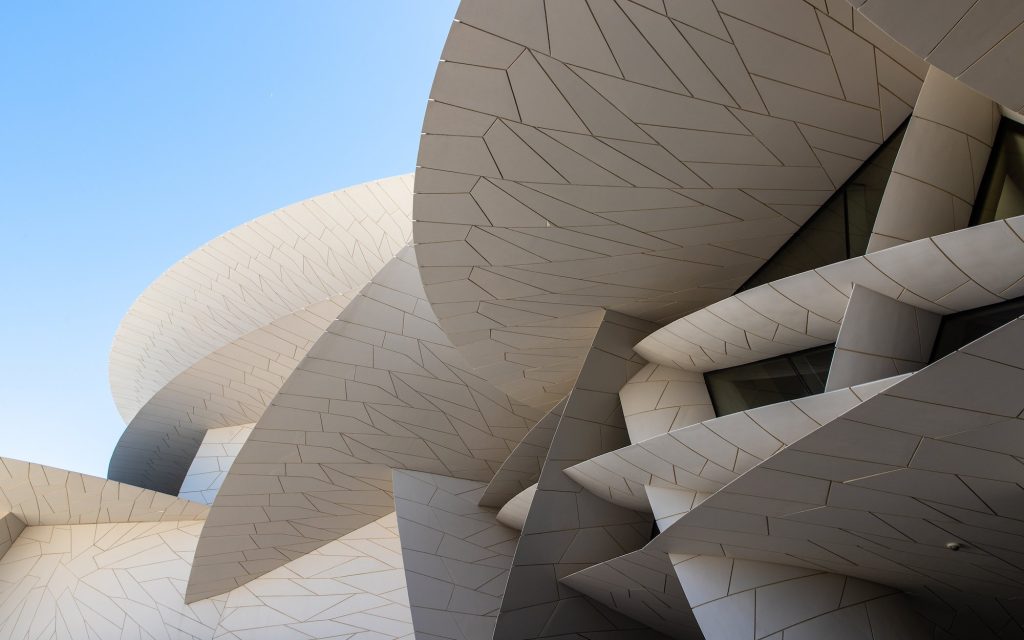
Jean Nouvel
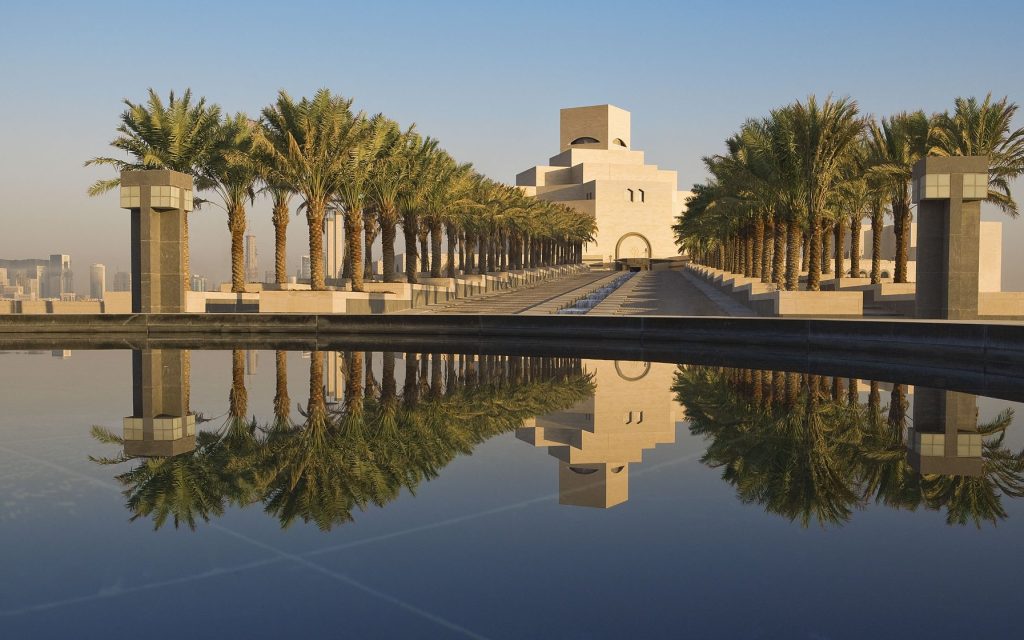
I. M. Pei
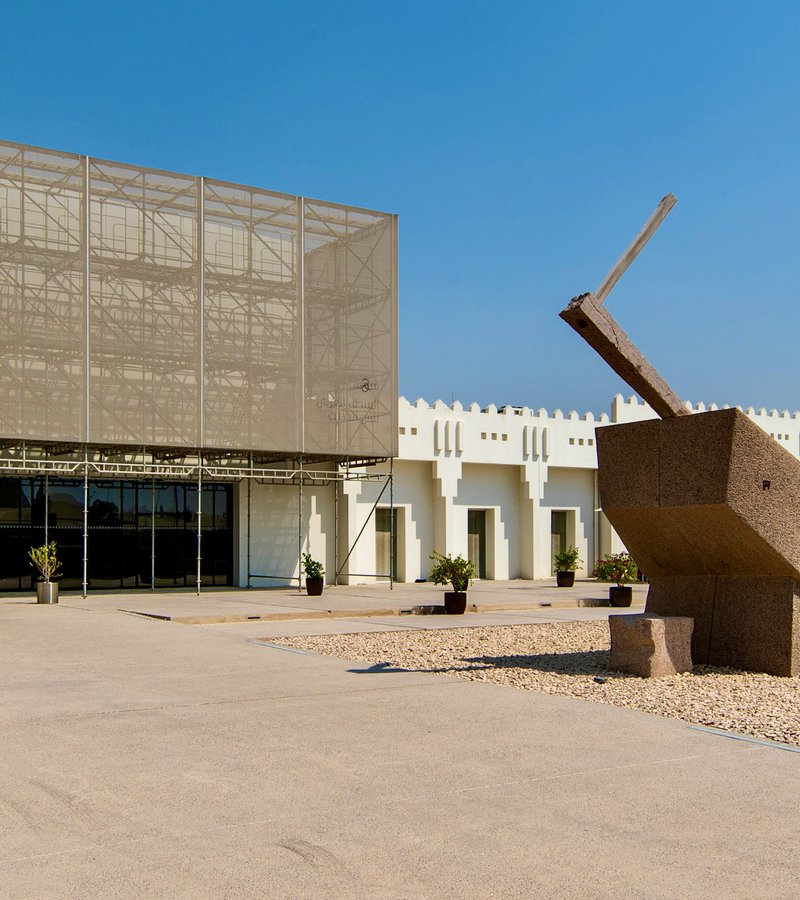
Jean-François Bodin
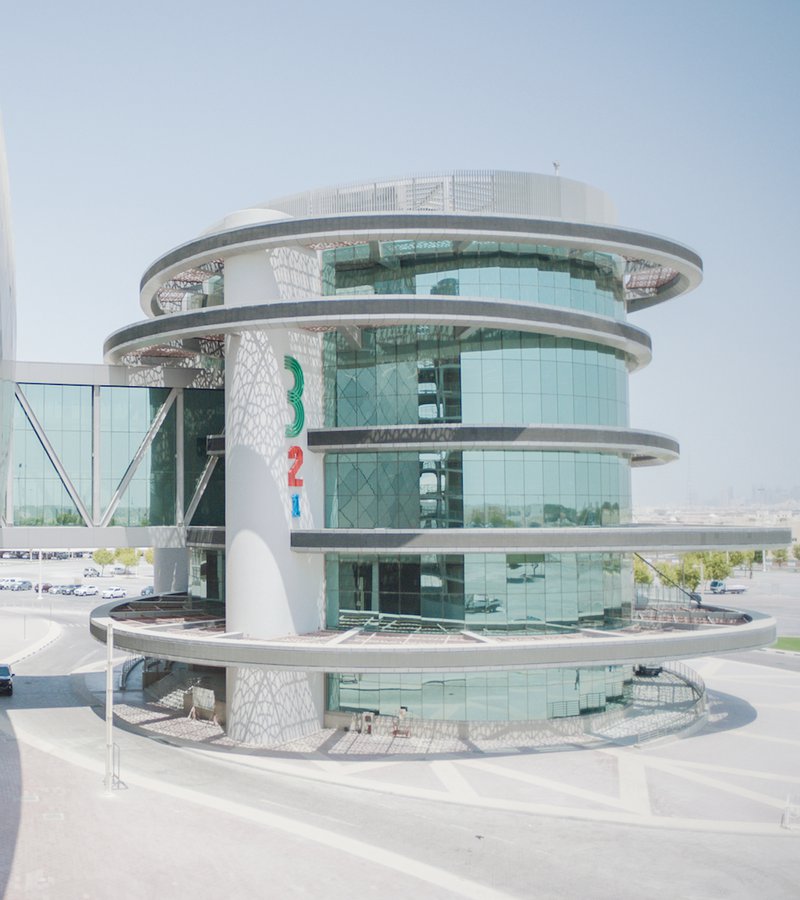
Joan Sibina
Ibrahim Al Jaidah
Renovated by OMA
John McAslan + Partners
Museums in Qatar Compared
The table below lists each museum with its architect, the idea behind its design and the year it opened. Details come from Qatar Museums and from the architects.
| Museum | Architect | Starting idea | Opened |
|---|---|---|---|
| National Museum of Qatar | Jean Nouvel (Pritzker Prize 2008) | A desert rose, built around the restored palace of Sheikh Abdullah bin Jassim Al Thani | March 2019 |
| Museum of Islamic Art | I. M. Pei (Pritzker Prize 1983) | A 13th century ablution fountain at the Mosque of Ibn Tulun in Cairo | 2008 |
| Mathaf, Arab Museum of Modern Art | Jean-François Bodin | A former school building, 5,500 square meters | 30 December 2010 |
| 3-2-1 Qatar Olympic and Sports Museum | Joan Sibina | The arc of Khalifa International Stadium, about 19,000 square meters | 31 March 2022 |
| Fire Station | Ibrahim Al Jaidah | The 1982 Civil Defence headquarters | Reopened 2015 |
| Al Riwaq | Renovated by OMA (Rem Koolhaas, Pritzker Prize 2000) | The riwaq, a sheltered arcade, as a 5,000 square meter hall | 2010 |
| Msheireb Museums | John McAslan + Partners with Ibrahim Jaidah | Four early 20th century courtyard houses | October 2015 |
National Museum of Qatar
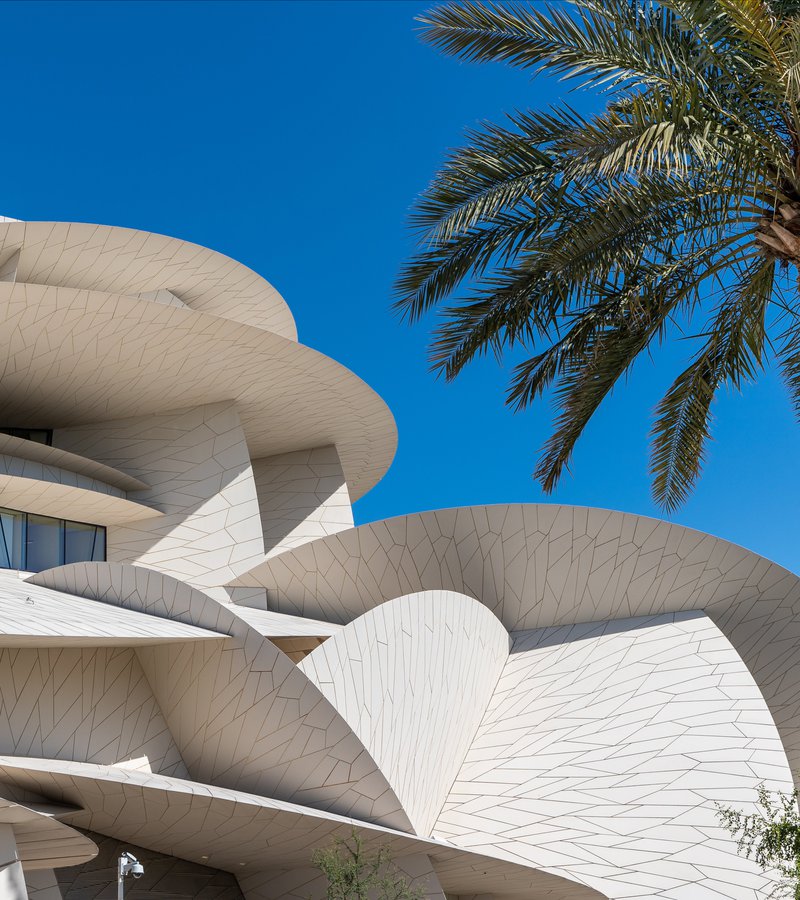
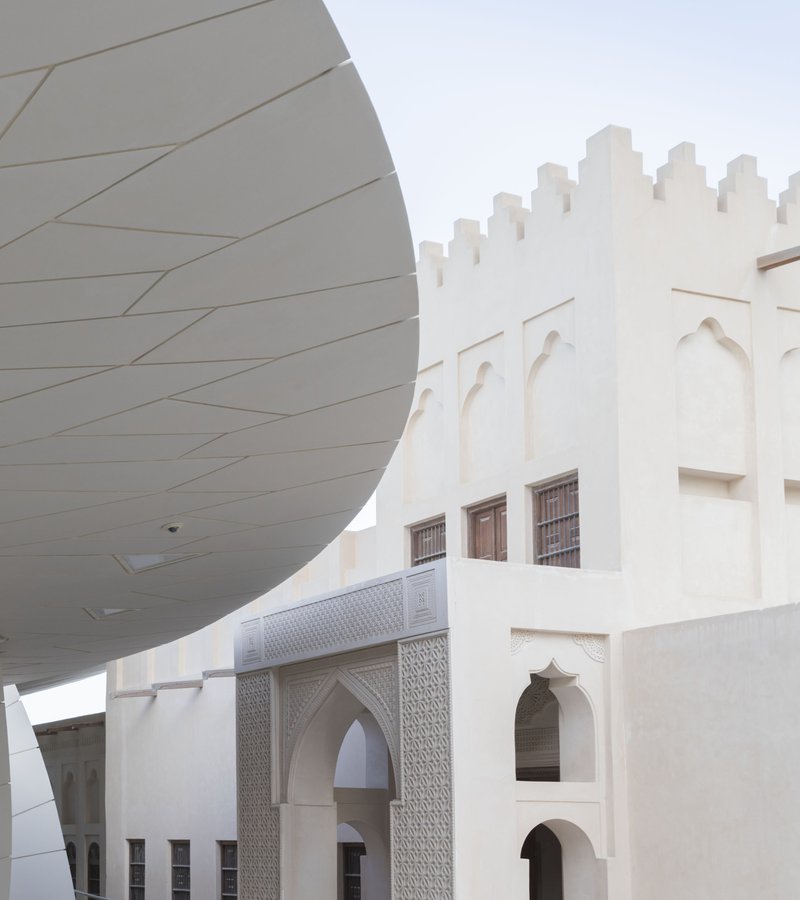
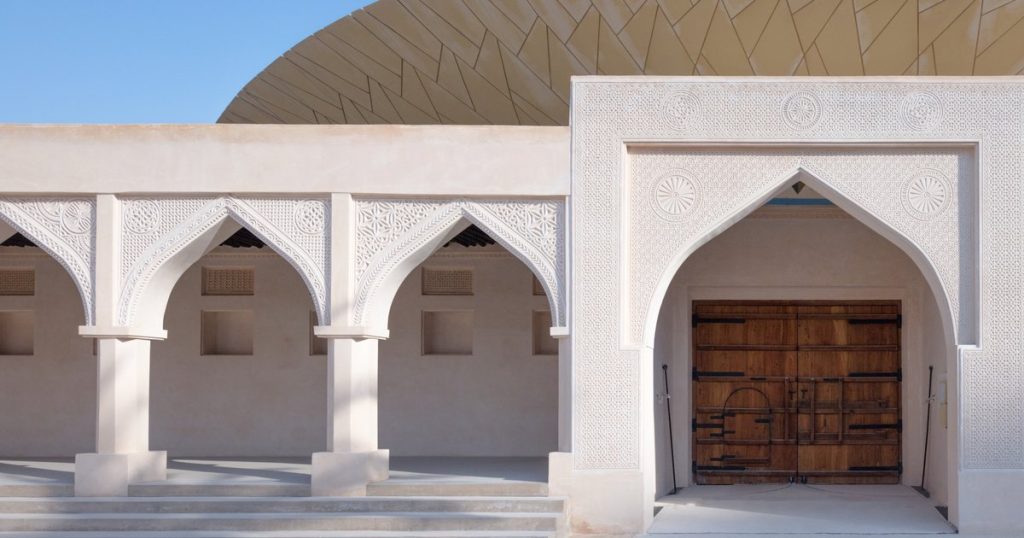
In Qatar’s capital, Doha, the National Museum of Qatar, the brainchild of Pritzker Prize (2008) winner Jean Nouvel, opened its doors to the public in March 2019. Nouvel was inspired by the desert rose, an aggregation of planar crystals that can be found in the sands of the Gulf, to create his distinctive design of interlocking disks.
As Nouvel explains on the museum’s website, “Qatar has a deep rapport with the desert”, and he thought of the desert rose as miniature architecture formed by wind, salt water and sand.
At the heart of the museum is the beautifully restored Sheikh Abdullah bin Jassim Al Thani Palace, which was once the seat of Qatar’s government for 25 years and the family residence of Abdullah bin Jassim Al Thani. The museum’s galleries wrap around the palace and extend to a total of 1.5 km, displaying Qatar’s history in chronological order.
Swipe for more photos
Museum of Islamic Art
When 1983 Pritzker Prize winner I. M. Pei came out of retirement to design Qatar’s Museum of Islamic Art, his first and only project in the Middle East, he first traveled extensively to educate himself on Islamic architecture.
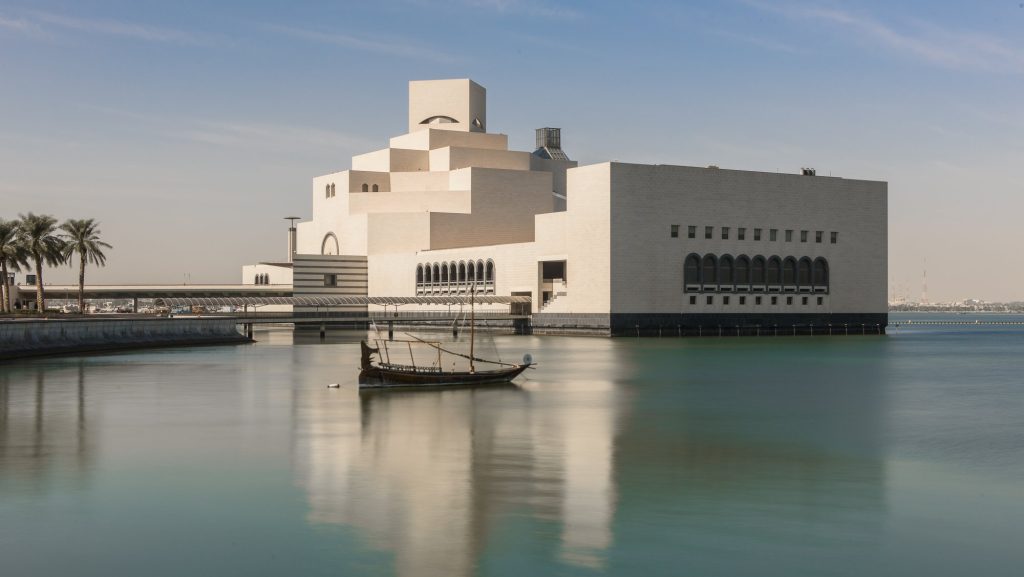
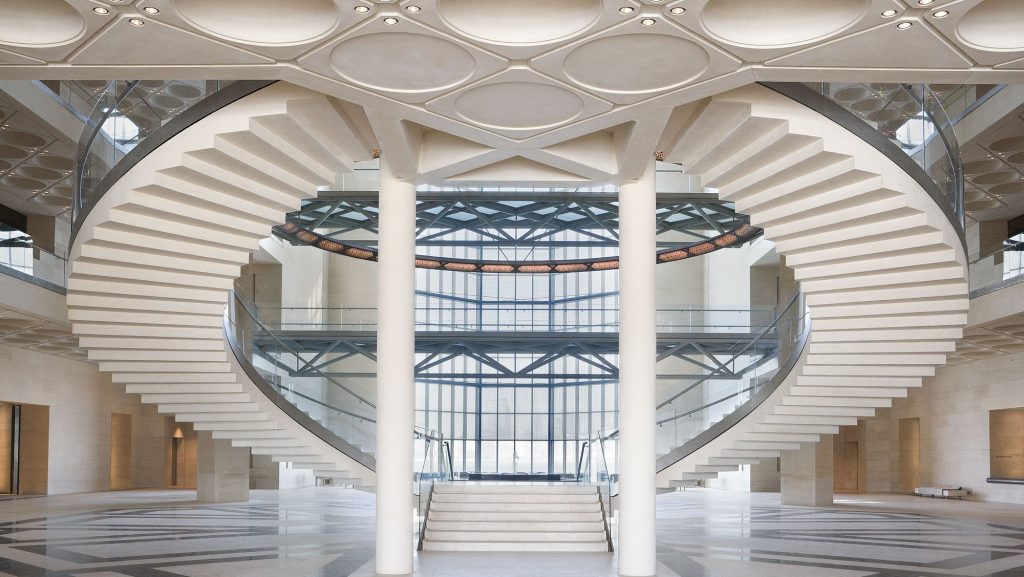
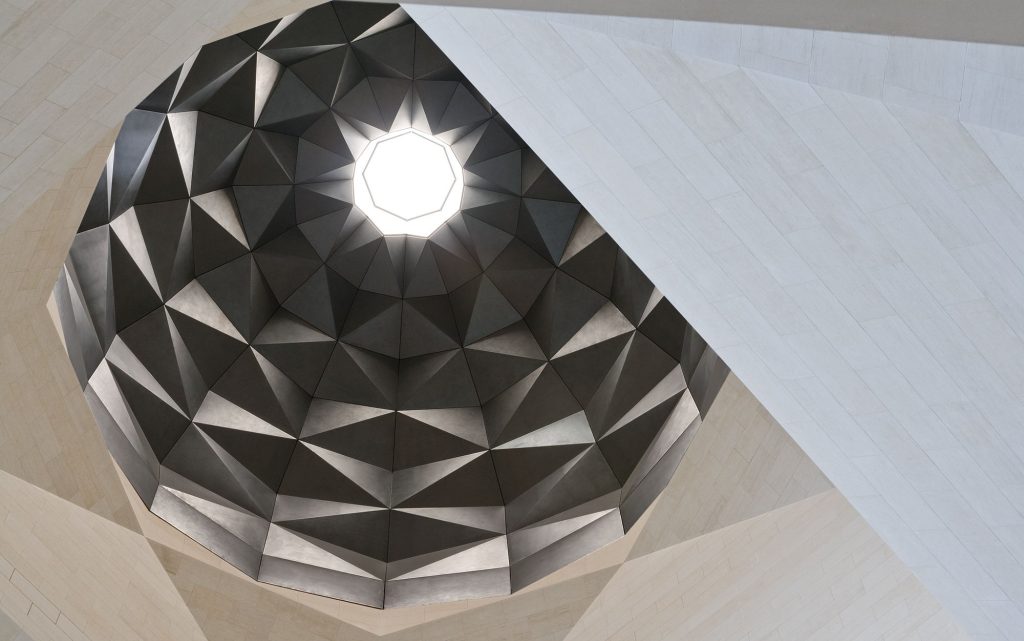
Pei’s inspiration came from a simple 13th century ablution fountain in the courtyard of Cairo’s 9th century Mosque of Ibn Tulun, and the way the structure’s plain, blocky forms catch the light and cast strong shadows. The museum, opened in 2008, recreates this effect on a monumental scale in gleaming cream limestone. The five-story main structure is composed of clean-lined stacked shapes built around a soaring domed central atrium.
Pei insisted on the museum’s very own plot of land, rejecting alternative sites on the Corniche to make sure that the museum would never be overshadowed by a taller neighboring building or have its light stolen away. Today the museum sits serenely on its own island surrounded by free-to-enter MIA Park.
Swipe for more photos
Mathaf, Arab Museum of Modern Art
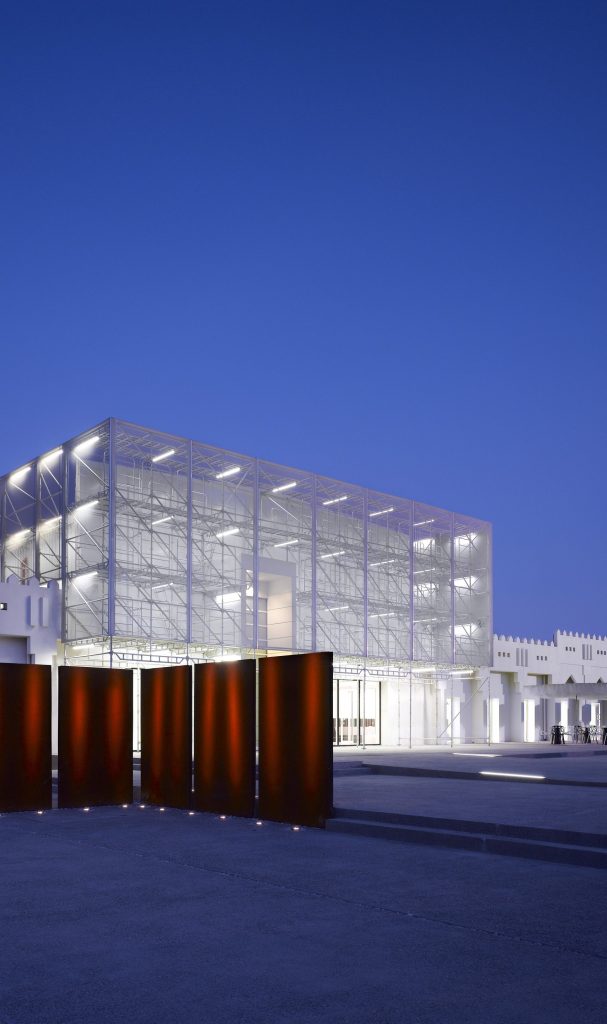
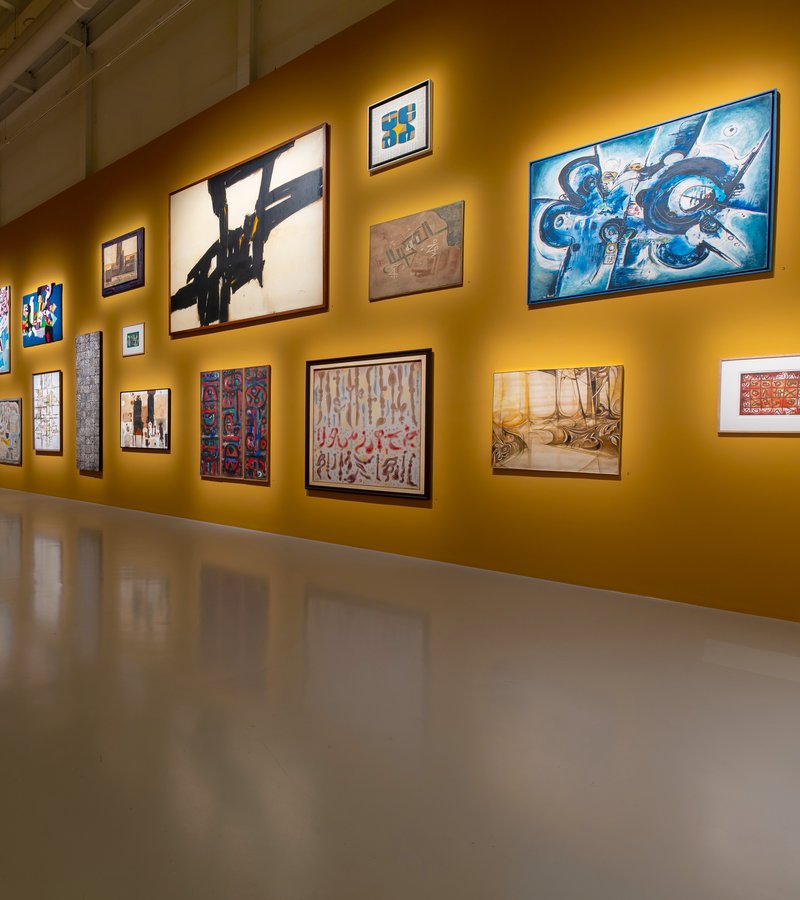
Mathaf, Arabic for museum, opened on 30 December 2010 in Education City. It is housed in a converted school building, sensitively remodeled by French architect Jean-François Bodin, who specializes in museum conversions. Bodin’s sensitive approach provides an unassuming shell for the collection, a deliberate counterpoint to the other museums on the Corniche.
Mathaf’s collection of modern and contemporary Arab art comprises more than 9,000 works. The 5,500 square-meter museum may be the most modest of the seven, but Mathaf’s message is clear, because all it takes to make a great museum is a great idea, even if it starts out as a rather ordinary school.
Swipe for more photos
3-2-1 Qatar Olympic and Sports Museum
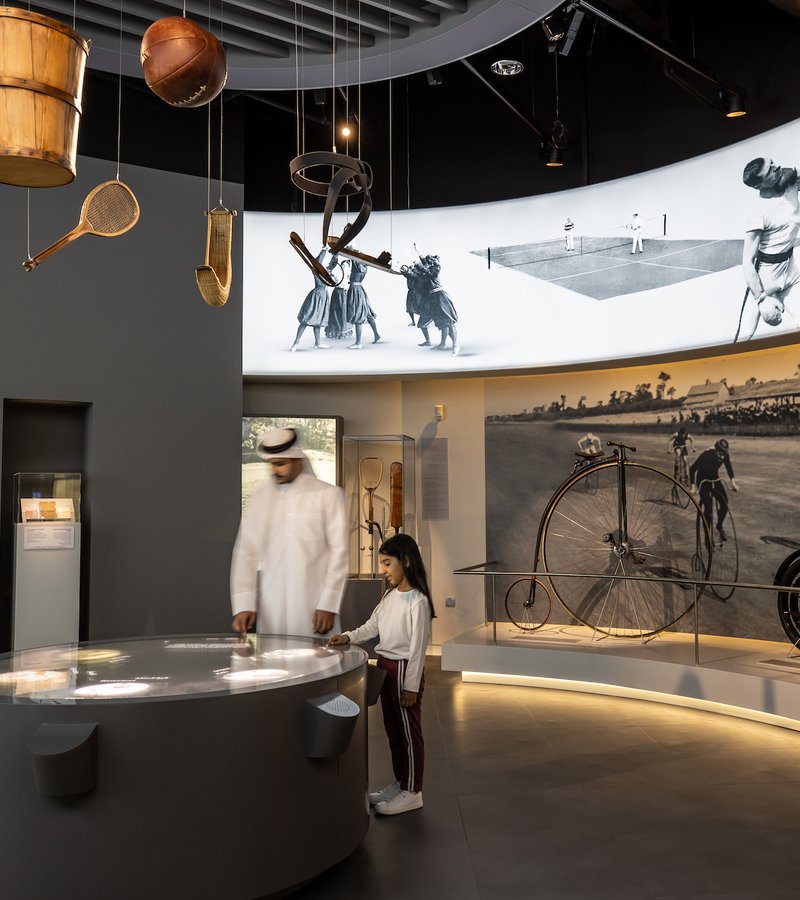
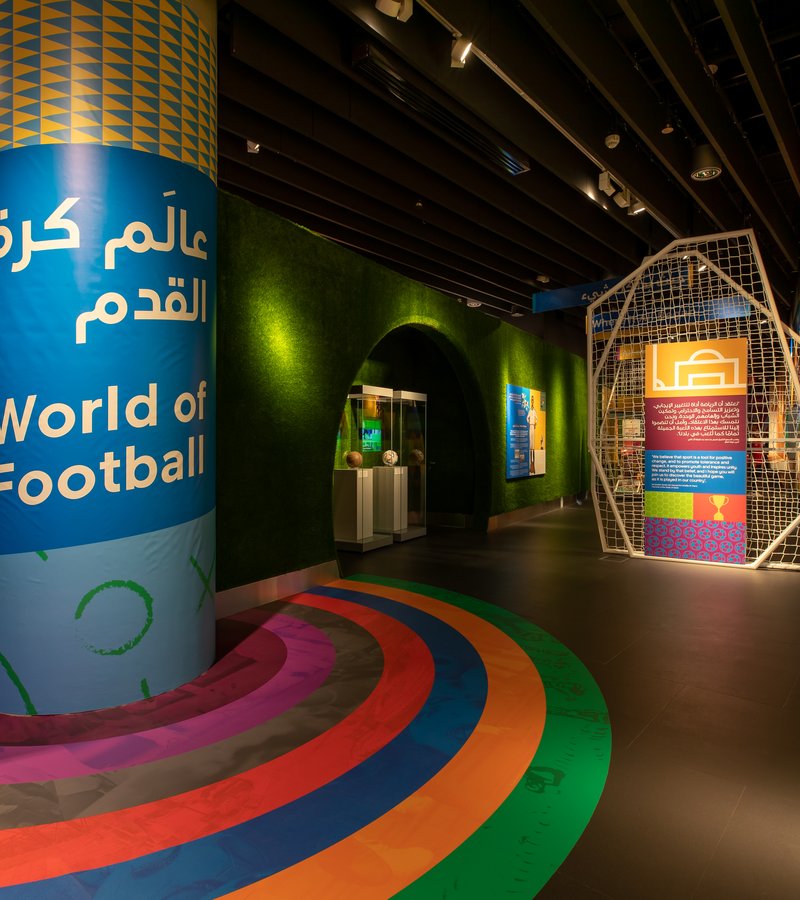
Designed by Spanish architect Joan Sibina, the 3-2-1 Qatar Olympic and Sports Museum opened on 31 March 2022.
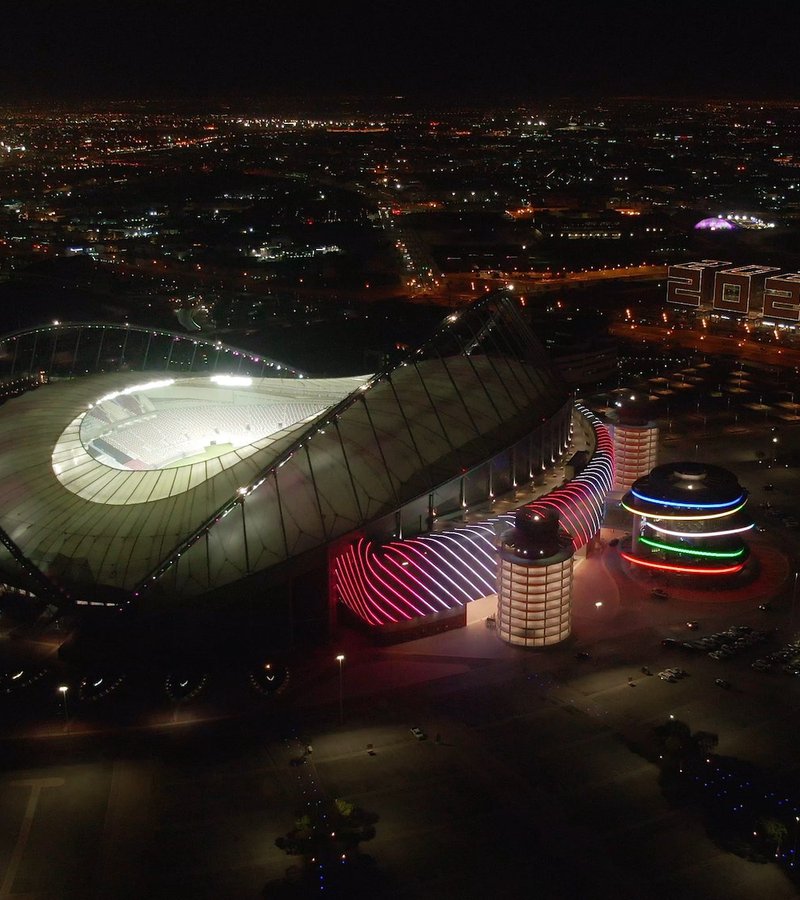
Built onto the side of 1976’s Khalifa International Stadium (see Arady’s guide to Qatar World Cup stadiums), the museum comprises two distinct structures. The main museum building mirrors the arc of the adjacent stadium, creating an almost seamless extension of the sports arena, while the entrance pavilion features a circular design wrapped with five rings in homage to the Olympic emblem. Together the two structures cover a total of around 19,000 square meters.
Swipe for more photos
Fire Station
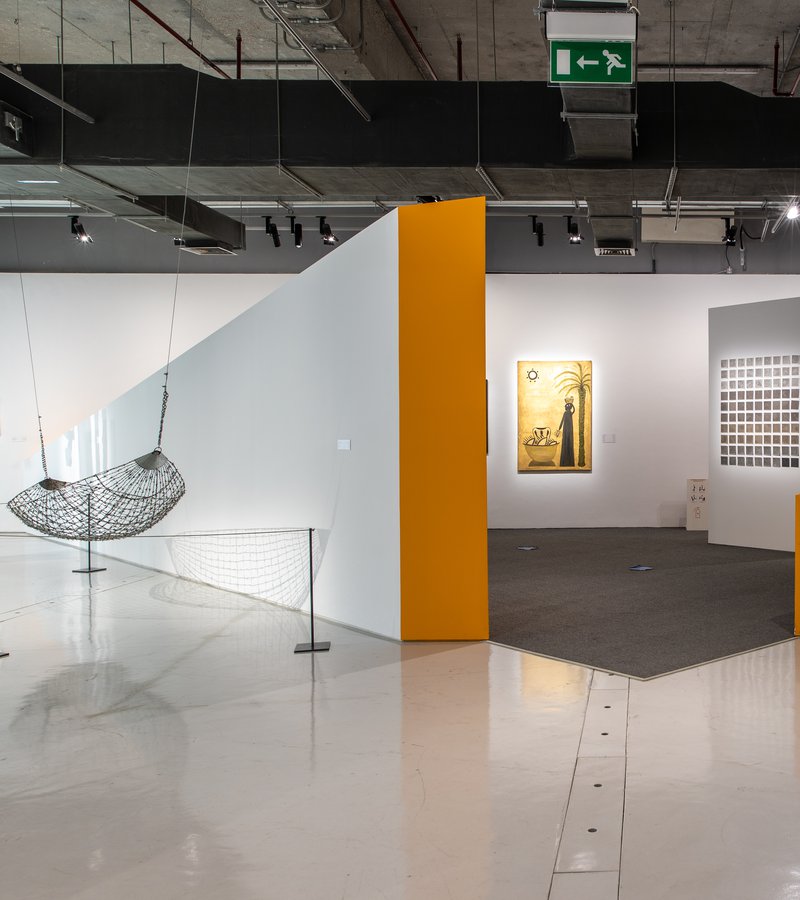
A former fire station is now one of Doha’s contemporary art spaces.
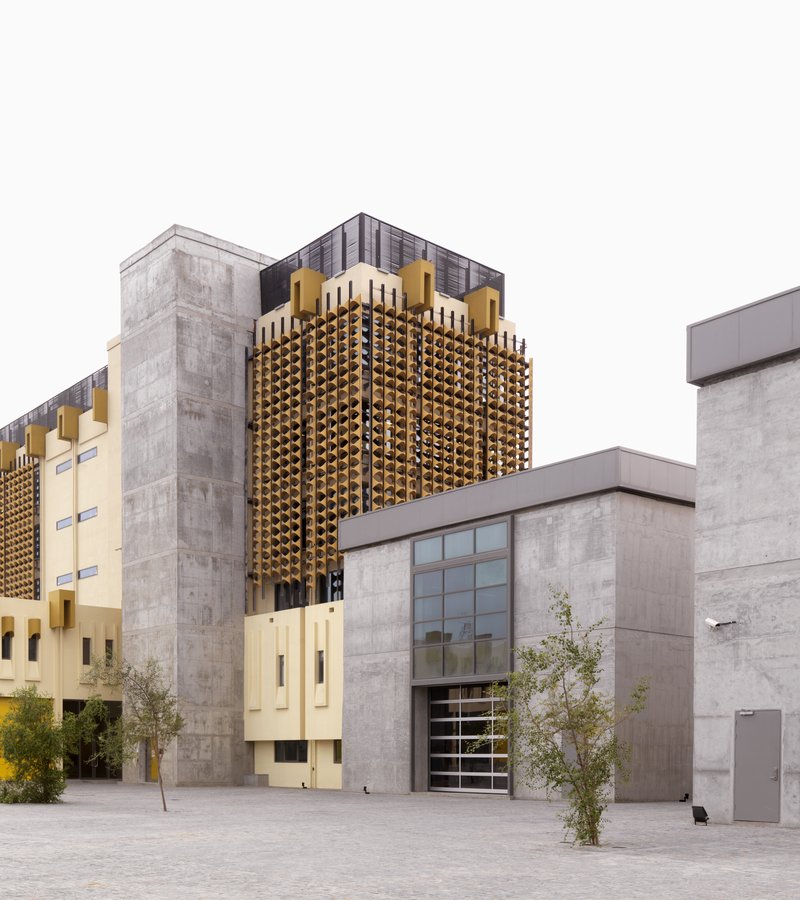
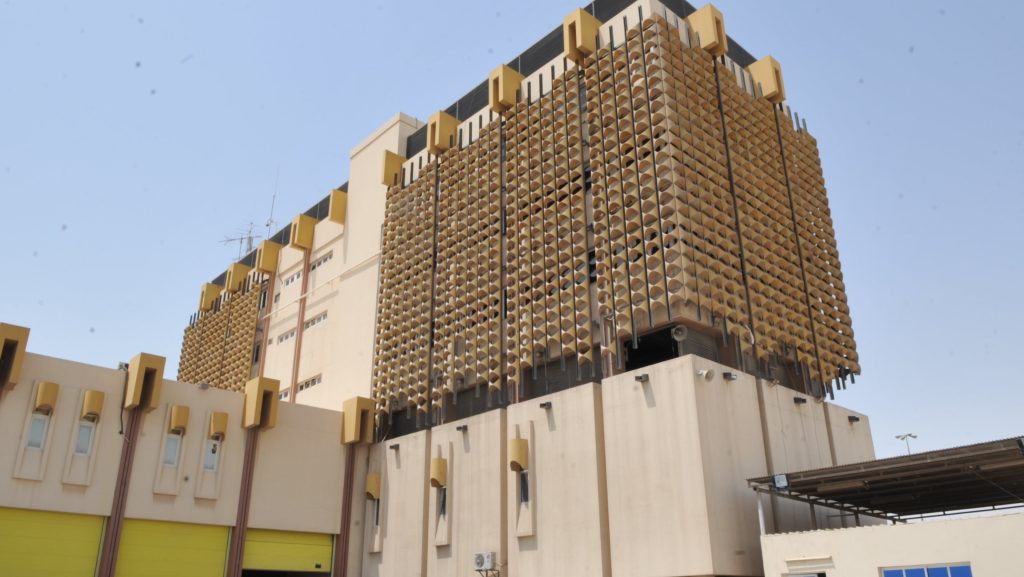
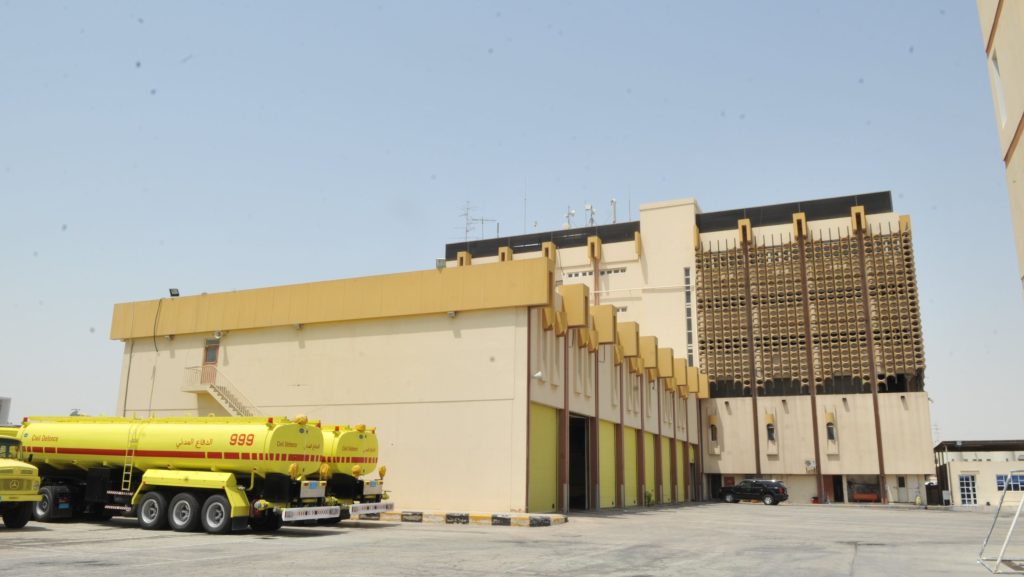
The fire station that served as Qatar’s Civil Defence headquarters since 1982 was decommissioned in 2012. The building’s conversion was led by Qatari architect Ibrahim Al Jaidah, and it has since been turned into an art center. Al Jaidah, who oversaw the renovation project undertaken by Qatar Museums, wanted to maintain some of the fire station’s original features, including its tower and honeycomb facade, as he considered the building an early modern landmark of Doha. Since its re-opening in 2015, the fire station’s garage has been turned into the Garage Gallery, while the building now holds studios for artists participating in the Artist in Residence program.
Swipe for more photos
Al Riwaq
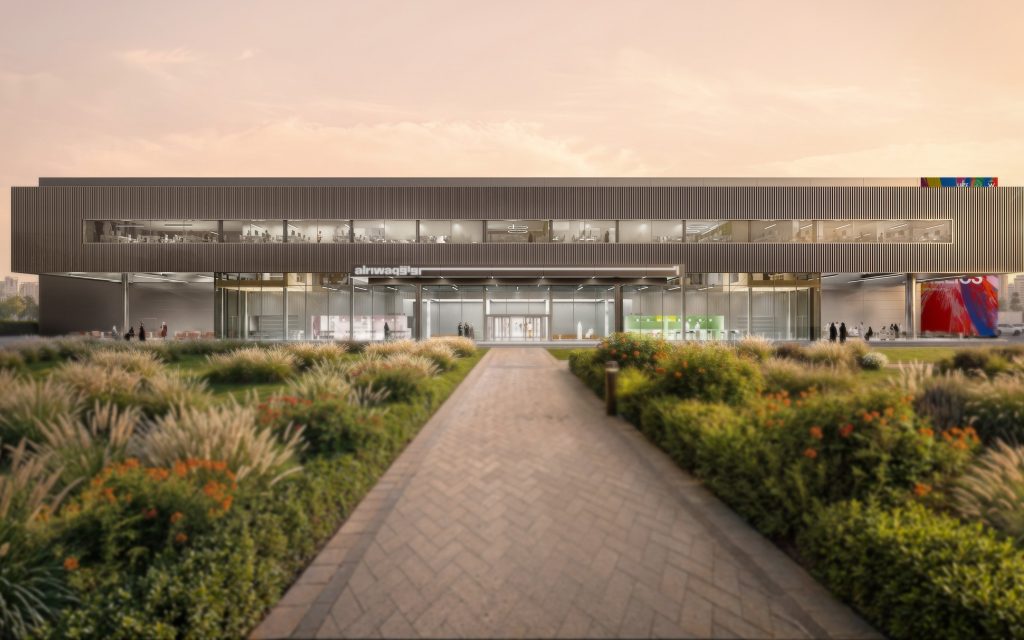
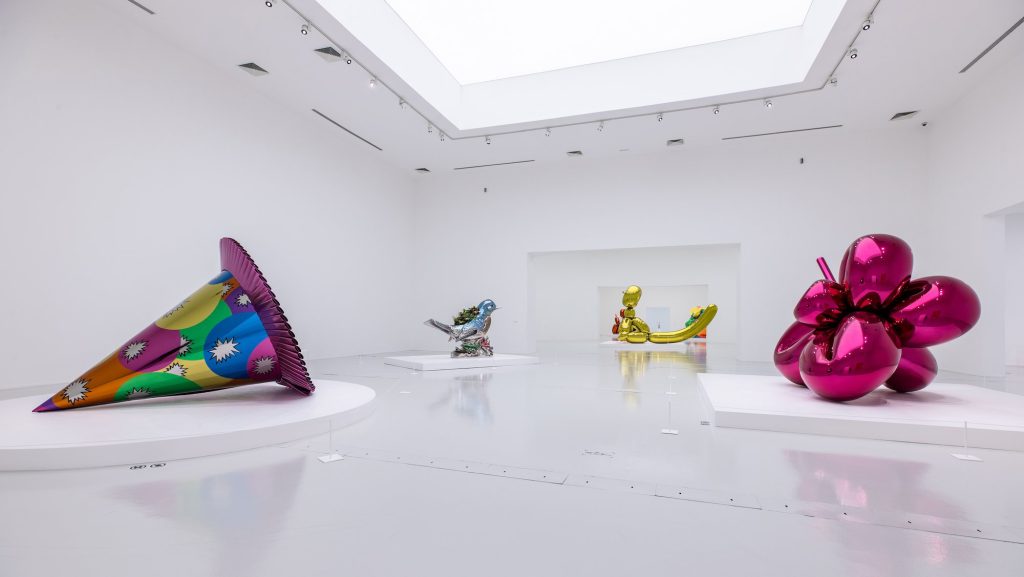
One of the most famous architecture names around, 2000 Pritzker laureate Rem Koolhaas and his practice OMA, is now attached to what is probably the most minimalist of the buildings in this list. Al Riwaq is a contemporary art gallery which opened in 2010 adjacent to MIA Park. The gallery has recently been renovated by OMA according to Qatar Museums.
There’s no permanent collection at Al Riwaq since it is just a 5,000 square meter hall ready to be reinvented for each exhibition, be it a Damien Hirst, Jeff Koons, Richard Serra or Takashi Murakami retrospective.
A riwaq is an arcade or covered walkway found around the perimeter of a mosque or house courtyard, and the gallery makes use of both the name and the concept of sheltered public space.
Swipe for more photos
Msheireb Museums
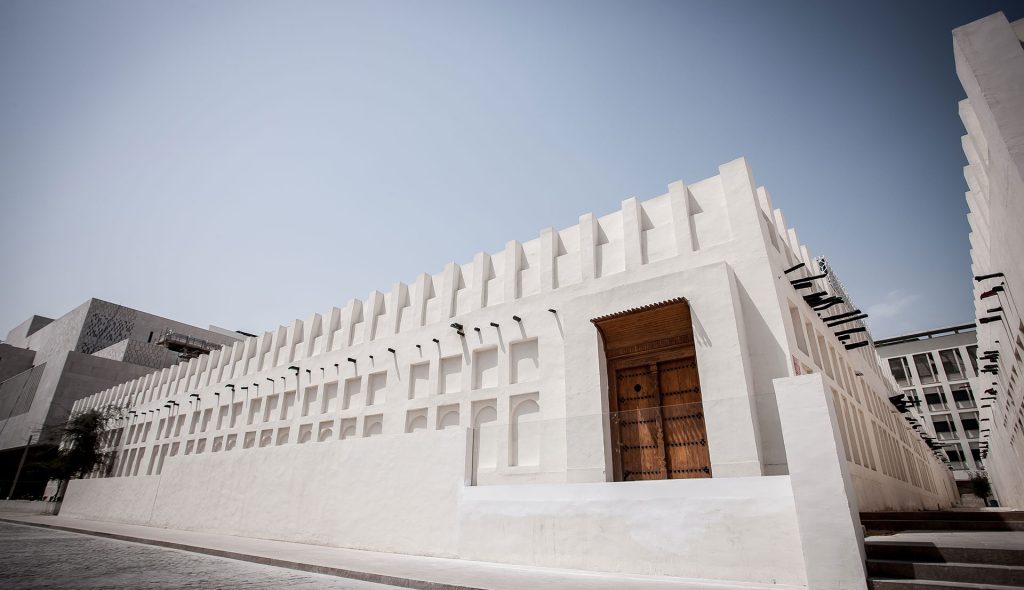
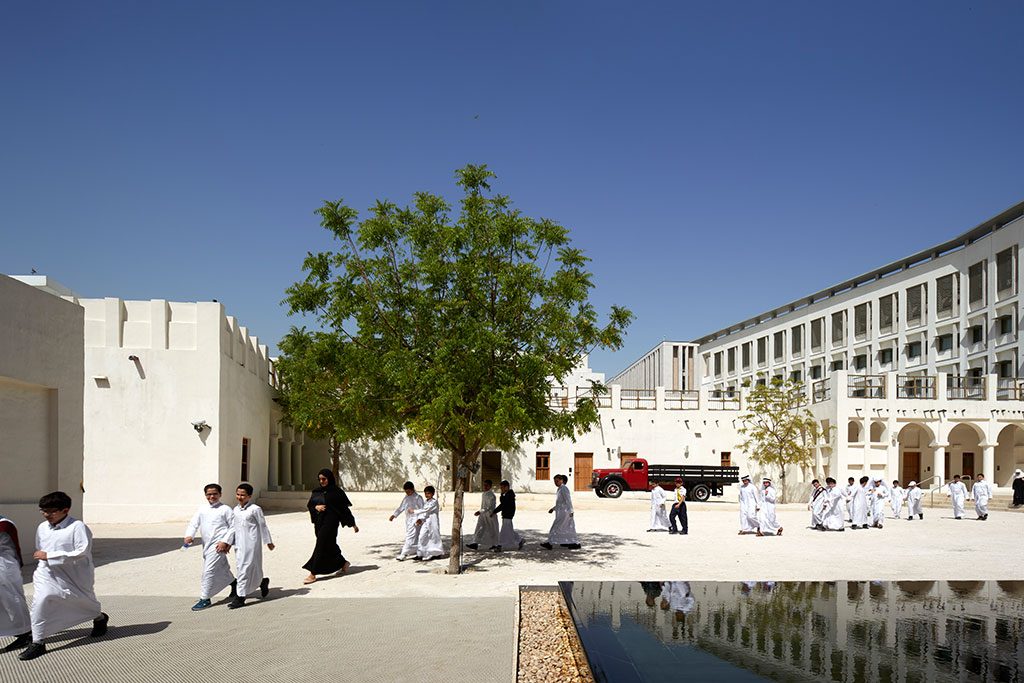
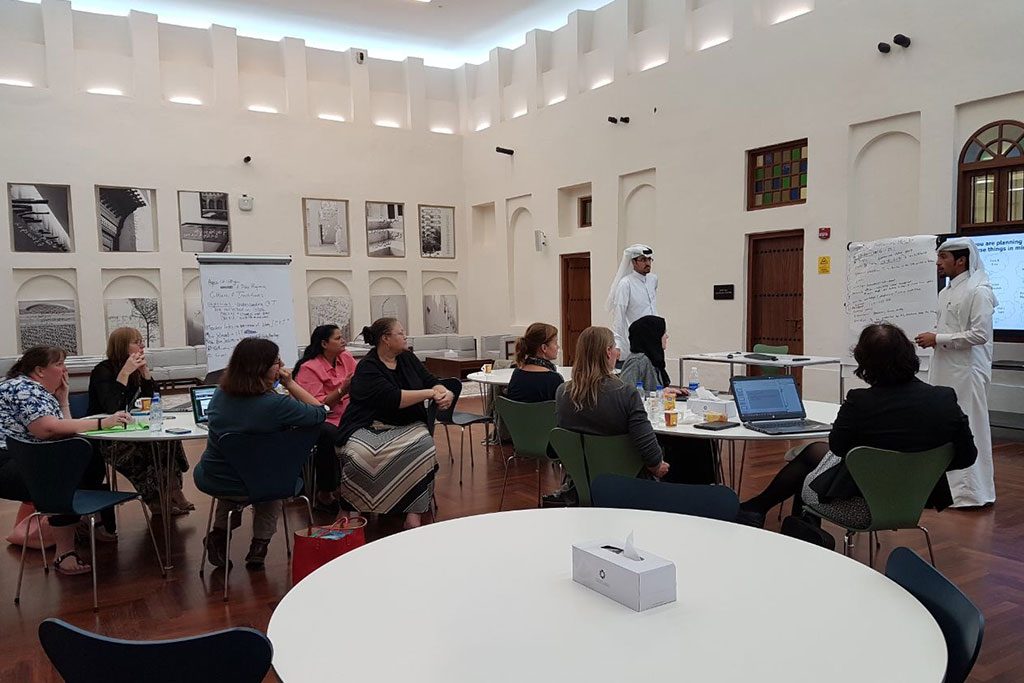
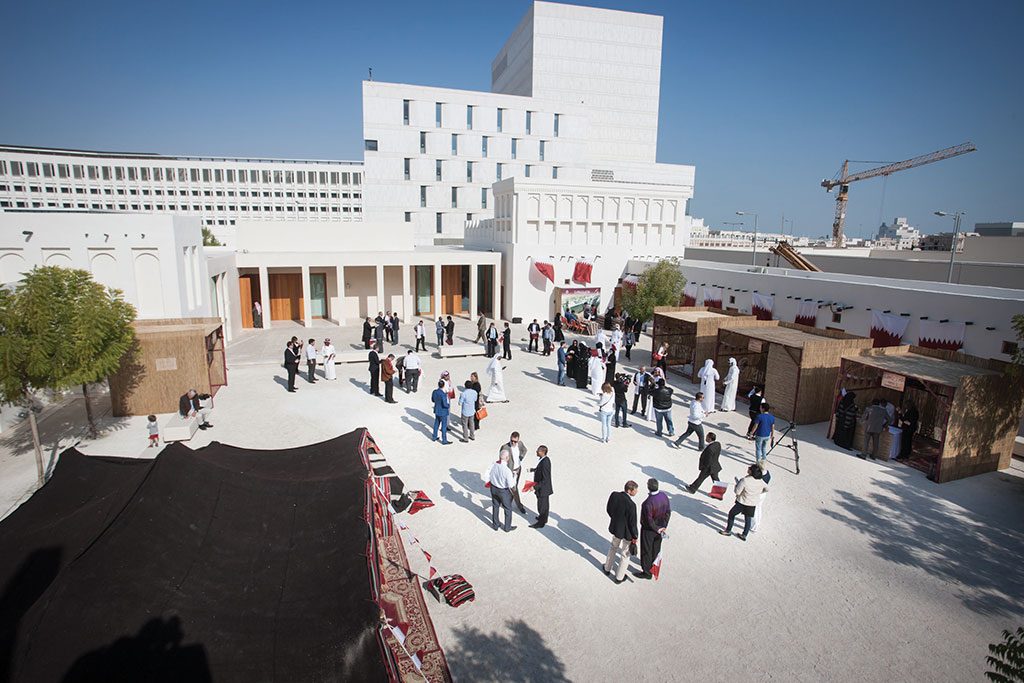
Bin Jelmood House, Company House, Mohammed Bin Jassim House, and Radwani House are early 20th century courtyard houses that make up Msheireb Museums in Doha’s historic core, which opened in October 2015. Working for Msheireb Properties, John McAslan + Partners with Ibrahim Jaidah as local architect approached each museum differently. For example, Mohammed Bin Jassim House was dismantled and reconstructed using salvaged original materials owing to structural problems resulting from previous modifications, while Company House’s addition comprises a contemporary metal-clad theater in keeping with the scale of the house.
The historic architecture, doorways, rooms and courtyards of the four houses are themselves the exhibits, with the galleries displaying the people, professions and families that helped develop Doha. The Arady guide to the traditional Qatari house gives further information about the vernacular architecture.
Swipe for more photos
What the Museums in Qatar Share
An old school, fire station and four houses have been converted for museum use. Museums have also been added onto a palace and a stadium. Desert crystal, a fountain and arcade have also inspired museum architecture.
In all seven cases the architects have used something of the existing context to develop their design. In this way new museums are able to gain a sense of belonging and place. The Arady guide to heritage sites in Qatar describes several other historic sites.

Newsletter
Stay ahead of Qatar's property market
Sign up to receive the latest articles on property prices, land prices, buying guides, and real estate news in Qatar delivered right to your inbox.
No spam, ever. Unsubscribe anytime.
Related articles
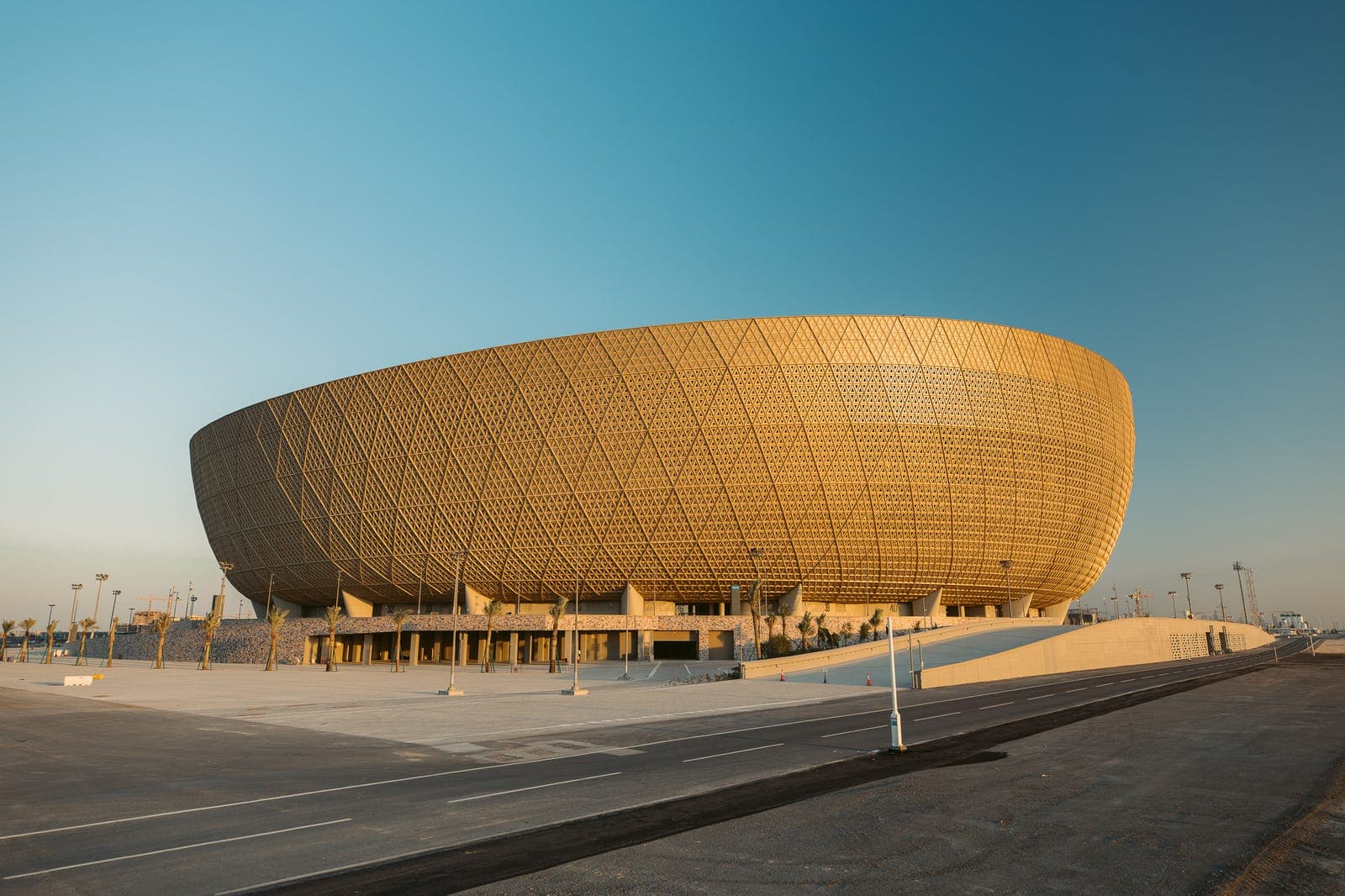
Qatar World Cup Stadiums Today and What Each One Became
Eight stadiums hosted the 64 matches of the FIFA World Cup Qatar 2022, and all eight still stand. This guide profiles each one, with its architect, design idea, capacity, legacy plan and current use, plus a map and photos.
Free Things to Do in Qatar This Winter With 29 Top Picks
29 free things to do in Qatar this winter, from eight seasonal events such as Skeek Al Doha, Torba Market and Darb Al Saai to 21 parks, souqs, beaches and heritage sites, with dates, opening hours, booking details and metro access.
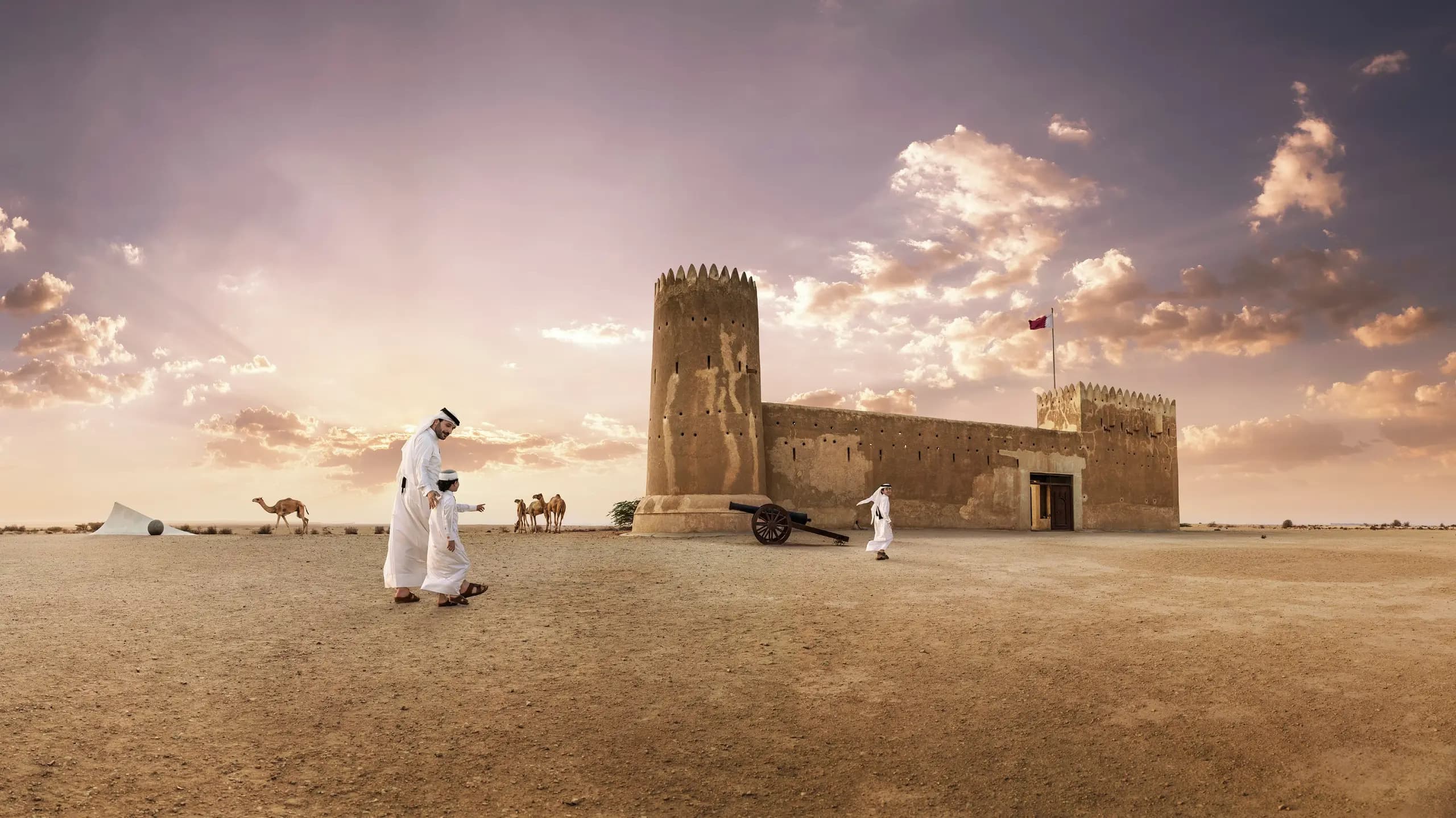
Heritage Sites in Qatar (What Is Open and How to Visit)
Al Zubarah, the only World Heritage Site among the heritage sites in Qatar, is open with free tickets, while five other sites are temporarily closed. This guide covers every site by region, with hours, entry rules and day trips.
Newsletter
Stay ahead of Qatar's property market
Sign up to receive the latest articles on property prices, land prices, buying guides, and real estate news in Qatar delivered right to your inbox.
No spam, ever. Unsubscribe anytime.