
Qatar World Cup Stadiums Today and What Each One Became
Eight stadiums hosted the 64 matches of the FIFA World Cup Qatar 2022, and all eight still stand. This guide profiles each one, with its architect, design idea, capacity, legacy plan and current use, plus a map and photos.
 Arady Desk15 min read
Qatar World Cup Stadiums Four Years On
The eight Qatar World Cup stadiums that hosted matches during FIFA World Cup Qatar 2022 are still in use, remaining some of Qatar’s most photographed buildings.
Four years on from Qatar hosting 64 matches across eight stadiums, seven of which were brand new, with the exception of 1976’s Khalifa International Stadium which was redeveloped, each venue has gone its own way. Some now host concerts and festivals, some are home to football clubs, and one that was set to be dismantled is busier than ever. The official legacy plan also called for reduced capacities at most venues, with seats to be sent abroad.
This guide runs through each stadium’s story, from the architect to the inspiration behind the design, capacity and how it’s being used now.
Where Are the Qatar World Cup Stadiums?
The stadiums are well-connected to the Doha Metro network. Ahmad Bin Ali Stadium and Education City Stadium can be reached using the Green Line, Khalifa International Stadium and Stadium 974 using the Gold Line, and Al Janoub Stadium and Lusail Stadium using the Red Line.
The closest one to Doha is Stadium 974 at only around 10 km. The furthest from the center is Al Bayt Stadium in Al Khor some 35 km to the north. All venues are within easy driving distance of Doha’s center, and the map below shows where each one stands.
88,966 seats
60,000 seats
40,000 seats
40,000 seats
40,000 seats
40,000 seats
40,000 seats
40,000 seats
Qatar World Cup Stadiums Compared
The eight venues are listed below alongside some key facts and figures. Capacity is the tournament figure as per the Government Communications Office, and the legacy plans are as per Visit Qatar. Not all have happened yet, so see the profiles for an up-to-date picture.
| Stadium | Location | Opened | Architect | Tournament capacity | Legacy plan | Nearest metro |
|---|---|---|---|---|---|---|
| Lusail Stadium | Lusail | 2022 | Foster + Partners | 88,966 | 40,000-seat arena and community hub | Lusail QNB, Red Line |
| Al Bayt Stadium | Al Khor | 2021 | Dar Al-Handasah | 60,000 | Home of Al Khor Sports Club | No station nearby |
| Khalifa International Stadium | Aspire Zone | 1976, reopened 2017 | Dar Al-Handasah | 40,000 | National team stadium, capacity kept | Sports City, Gold Line |
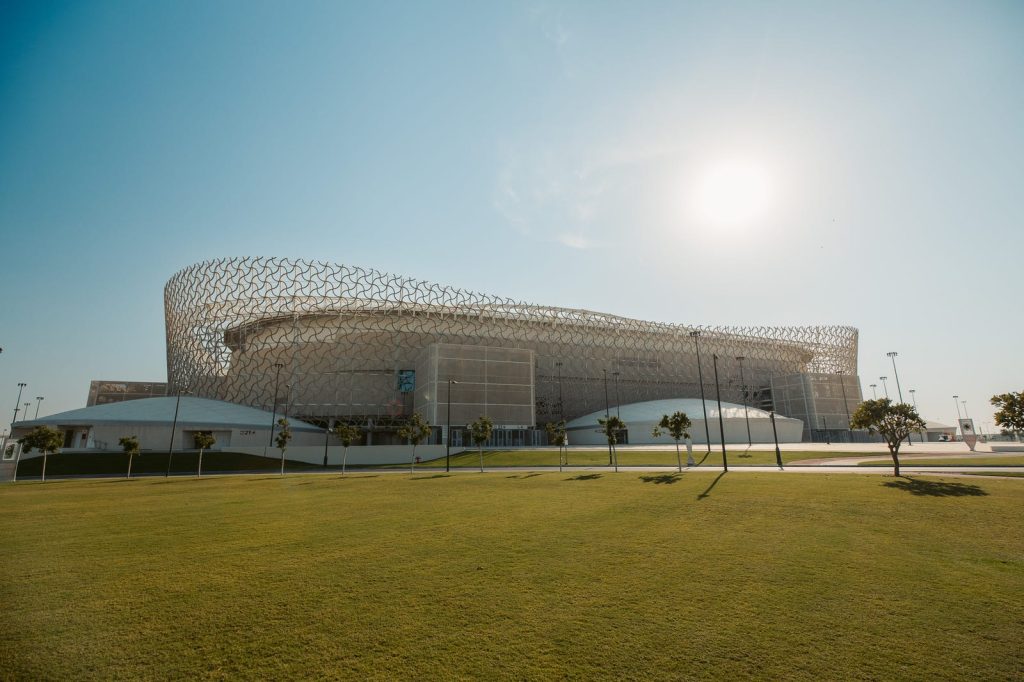
| Ahmad Bin Ali Stadium | Al Rayyan | 2020 | Pattern Design | 40,000 | Reduced seating, home of Al Rayyan Sports Club | Al Riffa, Green Line |
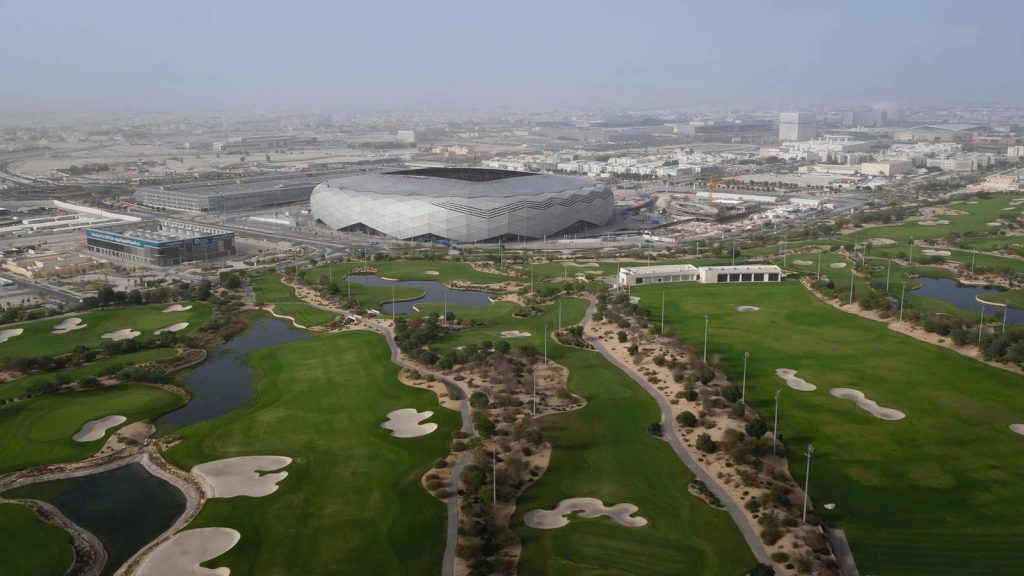
| Education City Stadium | Education City | 2020 | Fenwick Iribarren Architects and Pattern Design | 40,000 | Reduced seating, university athletics | Education City, Green Line |
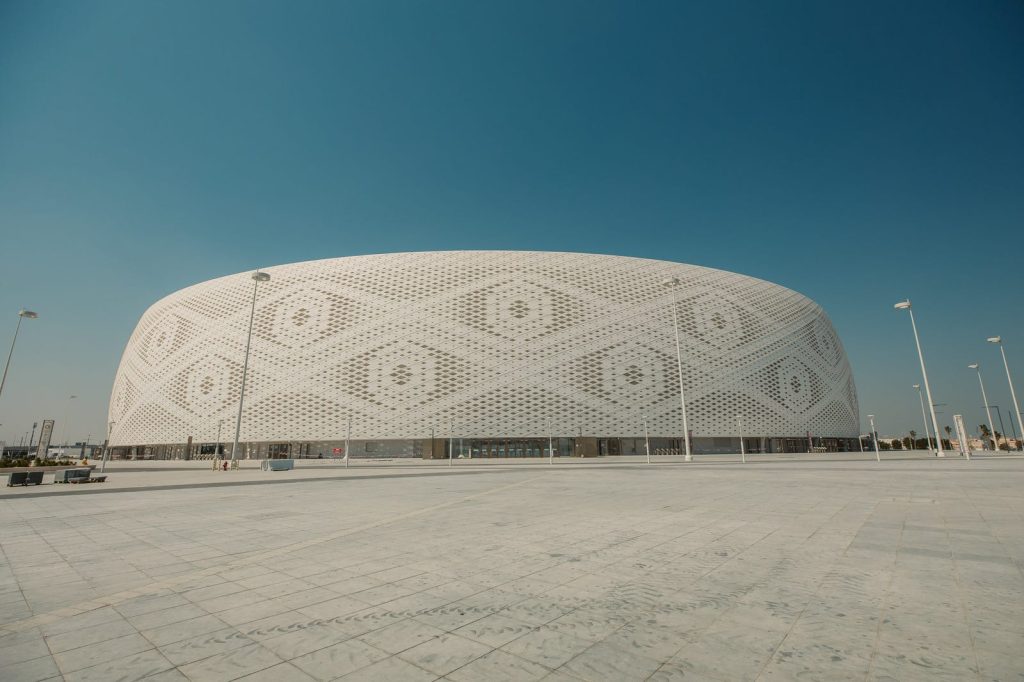
| Al Thumama Stadium | Al Thumama | 2021 | Ibrahim M. Jaidah | 40,000 | About 20,000 seats, mixed-use leisure site | No station nearby |
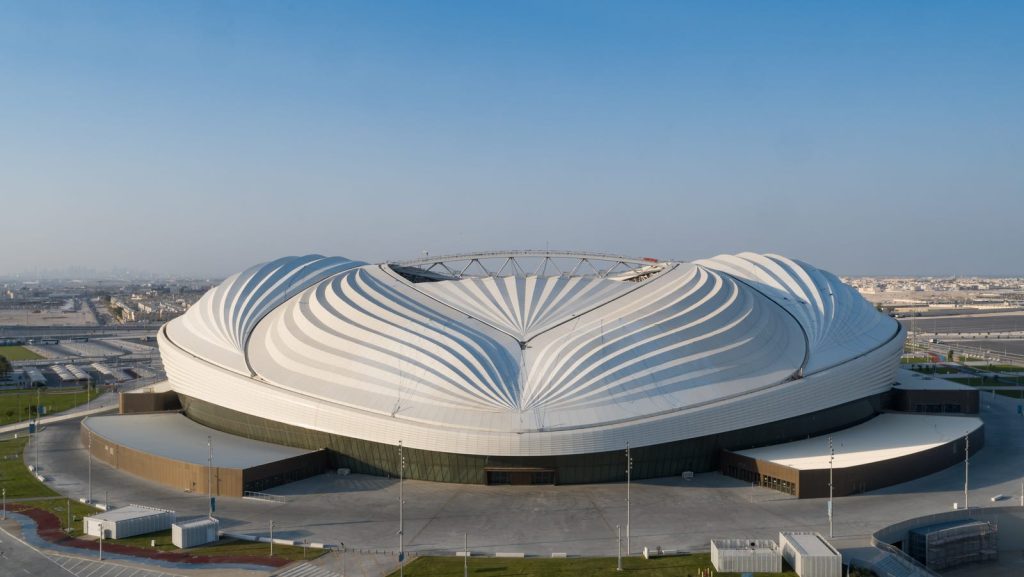
| Al Janoub Stadium | Al Wakrah | 2019 | Zaha Hadid Architects | 40,000 | About 20,000 seats, home of Al Wakrah Sports Club | Al Wakra, Red Line, then M132 bus |
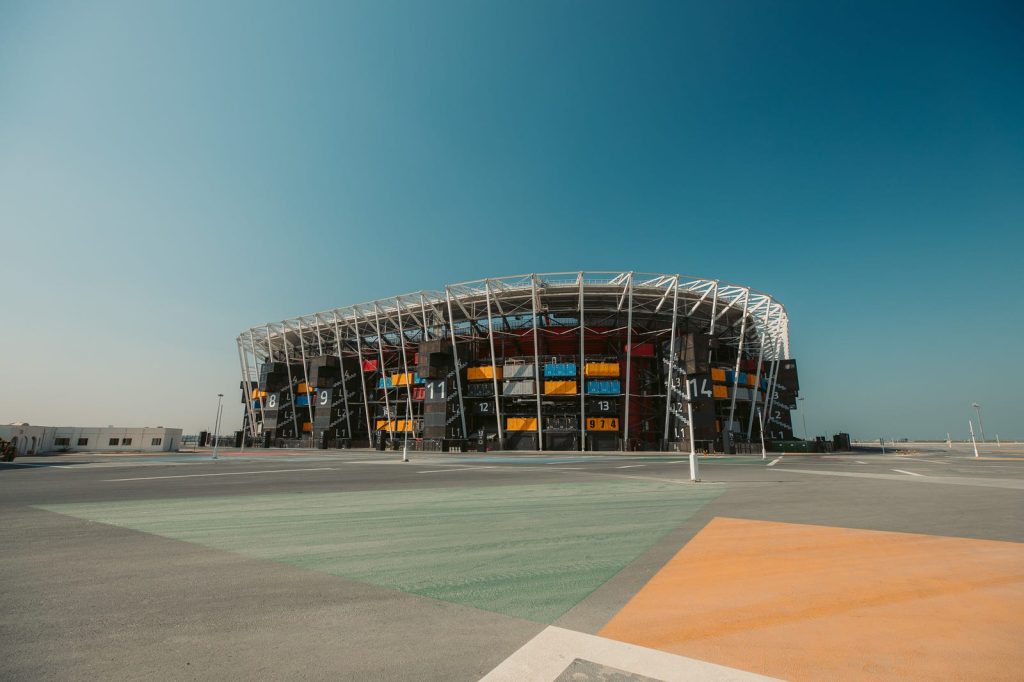
| Stadium 974 | Ras Abu Aboud | 2021 | Fenwick Iribarren Architects | 40,000 | Full dismantling planned, still standing | Ras Bu Abboud, Gold Line |
Lusail Stadium
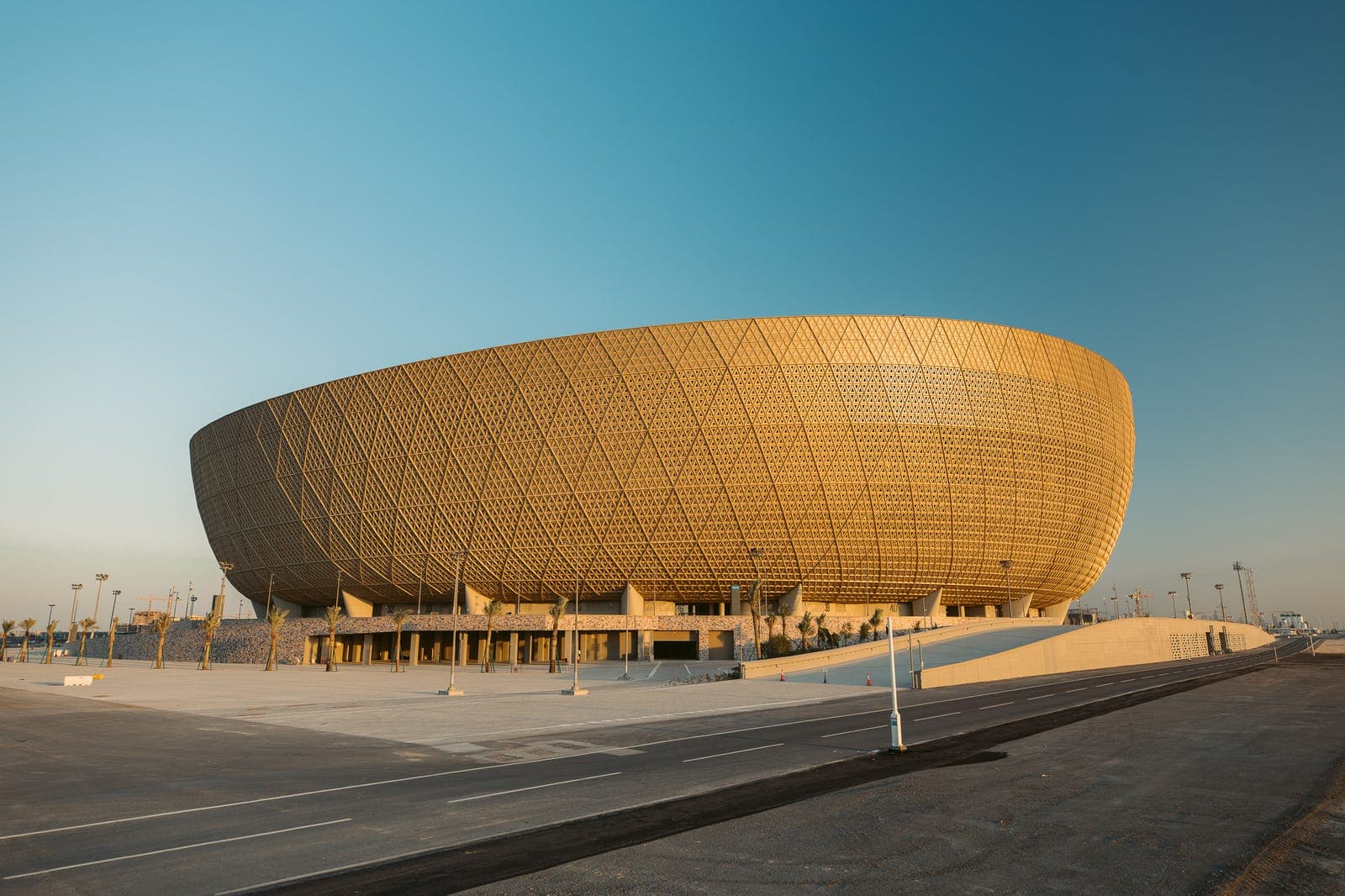
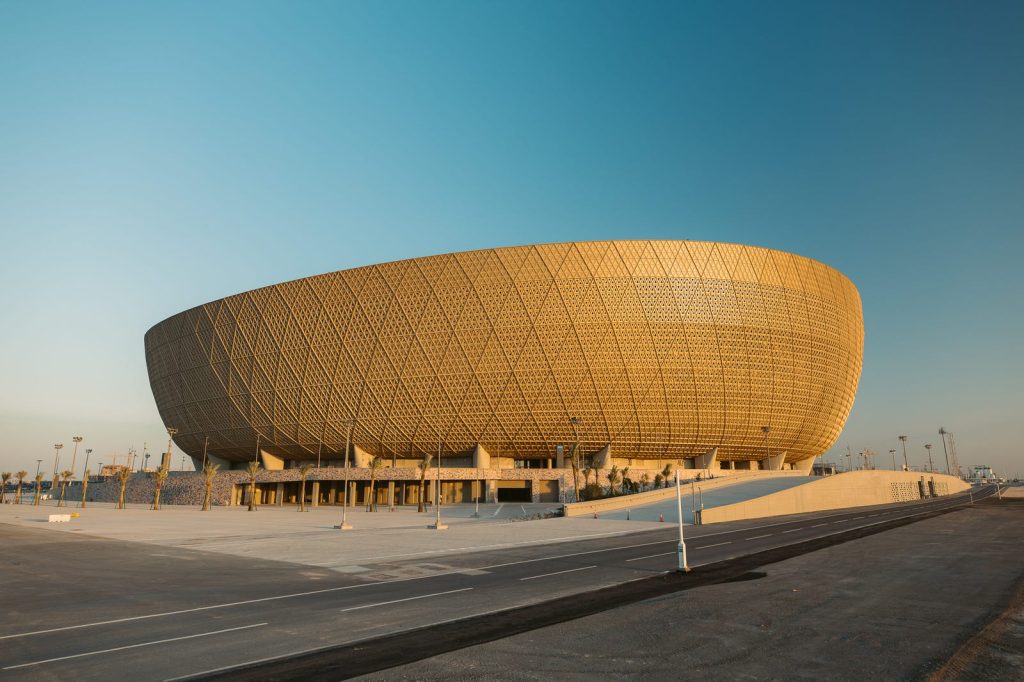
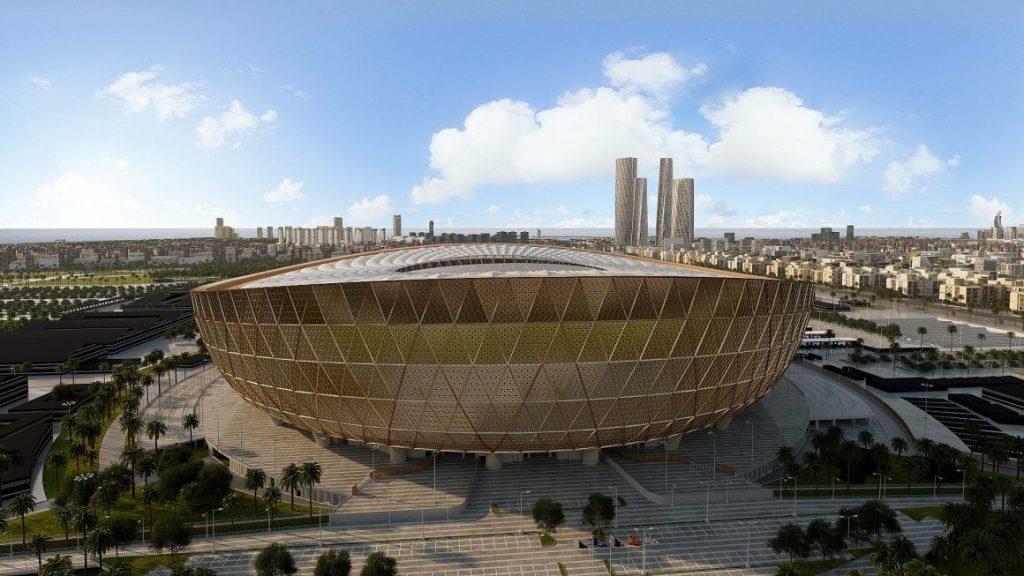
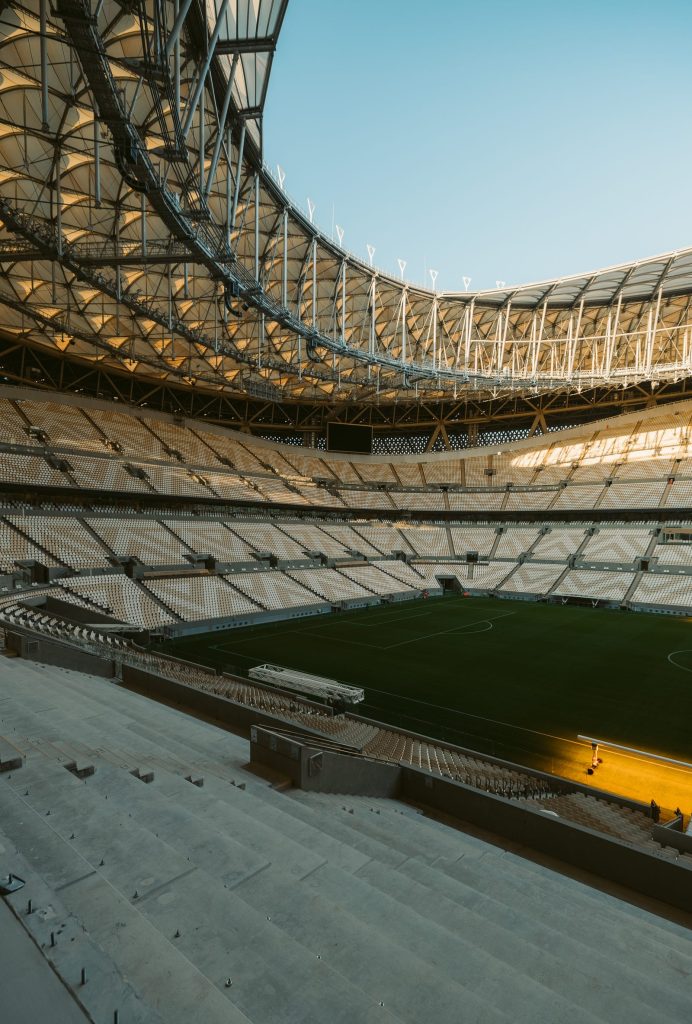
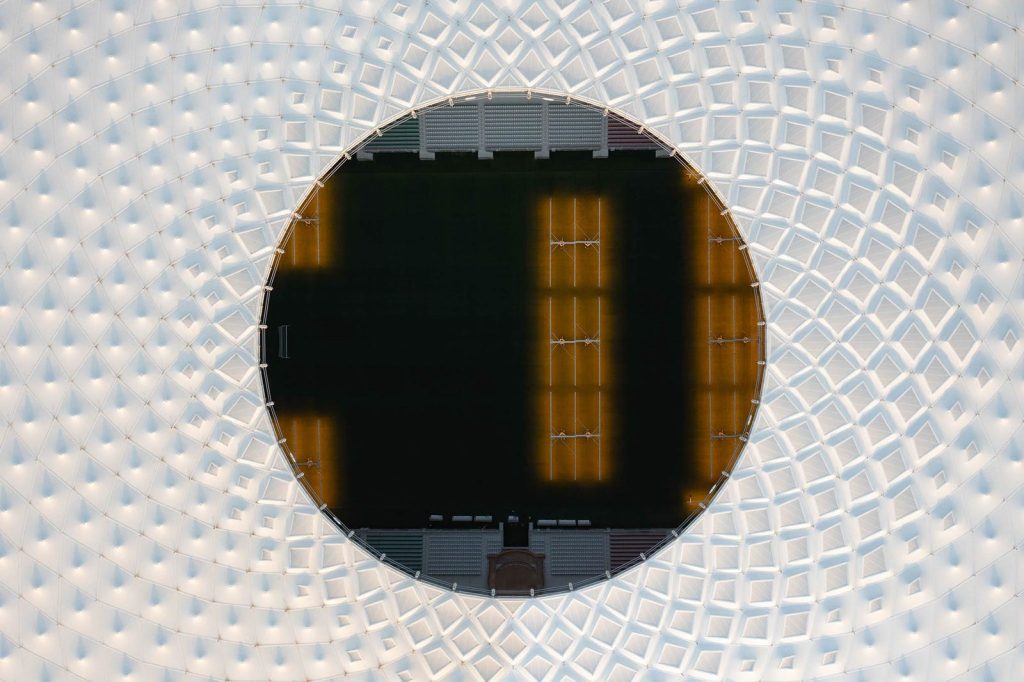
Designed by the British architectural firm Foster + Partners, Lusail Stadium is Qatar’s largest stadium with a tournament capacity of 88,966. Inspired by the fanar, a traditional lantern, the design of the golden bowl focuses on the effects of light and shadow. Patterns from Arab and Islamic art are repeated throughout the facade. The stadium has achieved a five-star rating from the Global Sustainability Assessment System (GSAS).
Opened on 9 September 2022 with a football match dubbed the Lusail Super Cup between Saudi club Al Hilal and Egyptian club Zamalek, Lusail Stadium hosted ten matches during the World Cup, including the final between Argentina and France on 18 December 2022, Qatar National Day. Other major events since have included the AFC Asian Cup final (February 2024) and the FIFA Arab Cup final (18 December 2025).
According to Visit Qatar, Lusail Stadium is slated to eventually become a 40,000-seat arena, with extra seats and materials from the original build being repurposed for retail outlets and other projects.
Lusail Stadium is a 15-minute walk from Lusail QNB station. The Lusail Tram travels throughout the city.
Swipe for more photos
Al Bayt Stadium
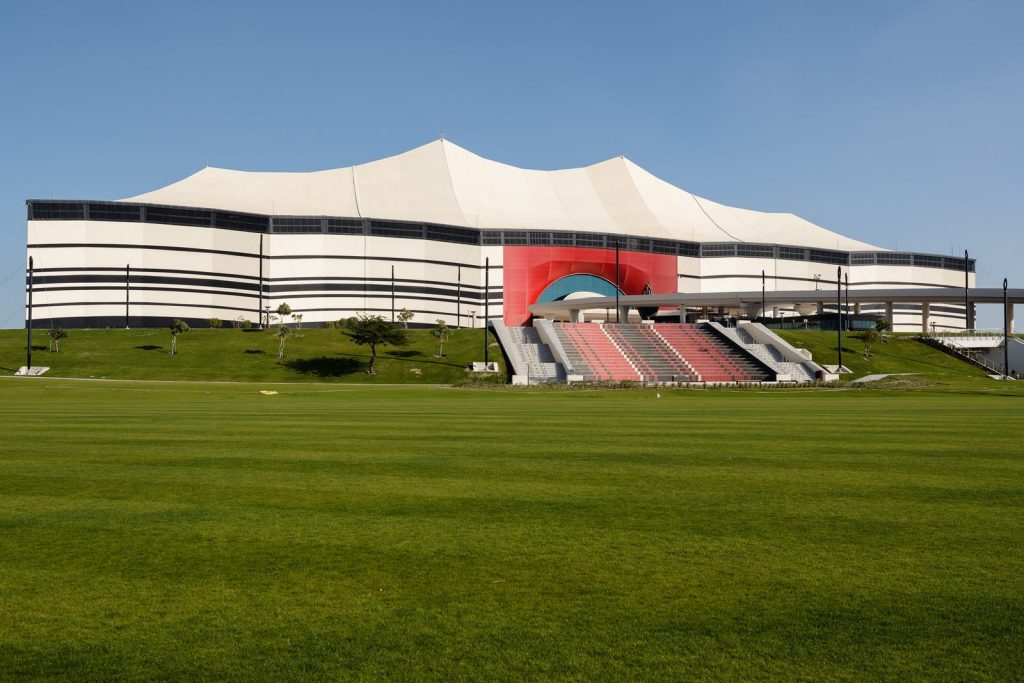
Al Bayt Stadium is named after the bayt al sha’ar, the tent traditionally used by nomadic families in the Gulf region. It is located in Al Khor and was used as one of the venues for the 2022 FIFA World Cup.
Designed by Dar Al-Handasah, Al Bayt Stadium features a retractable roof and seated 60,000 spectators for FIFA World Cup 2022 matches (Visit Qatar gives the capacity as 68,000). The black and white stripes on the outside of the stadium are a reference to tents traditionally used in the region while the seats inside are colored red and feature designs inspired by Sadu weaving.
The legacy plan names Al Bayt Stadium as the home stadium of Al Khor Sports Club, with the upper tier scheduled to be removed. However, the stadium still hosts major events and was one of the six stadiums used during the 2025 FIFA Arab Cup.
Al Bayt Stadium officially opened on 30 November 2021 for the opening match of the FIFA Arab Cup. For the 2022 FIFA World Cup, Al Bayt Stadium hosted the opening ceremony, the opening match (Qatar vs Ecuador) and a further eight matches up to and including the semi-finals. Al Bayt Park, which surrounds the stadium, opened to the public in February 2020.
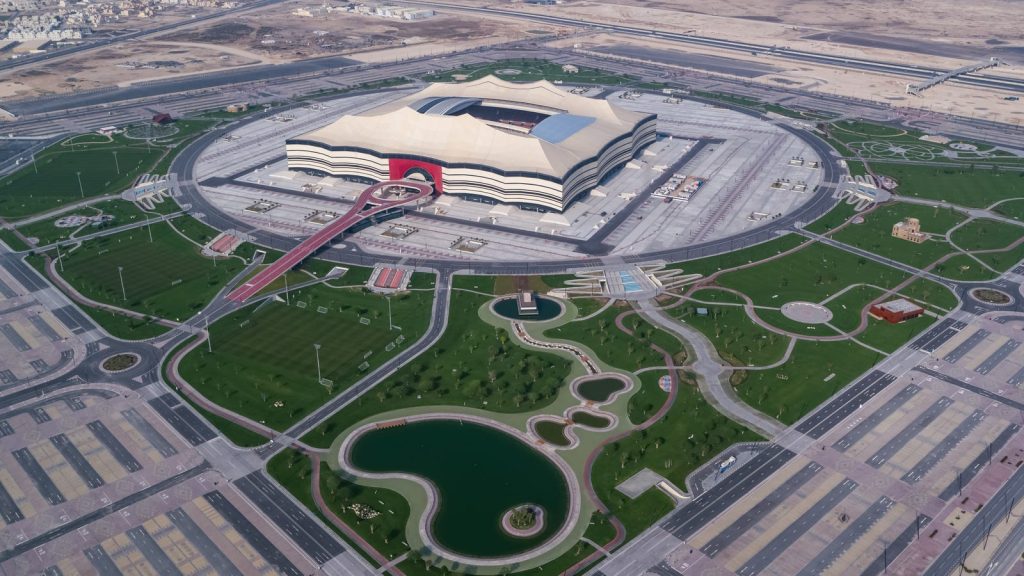
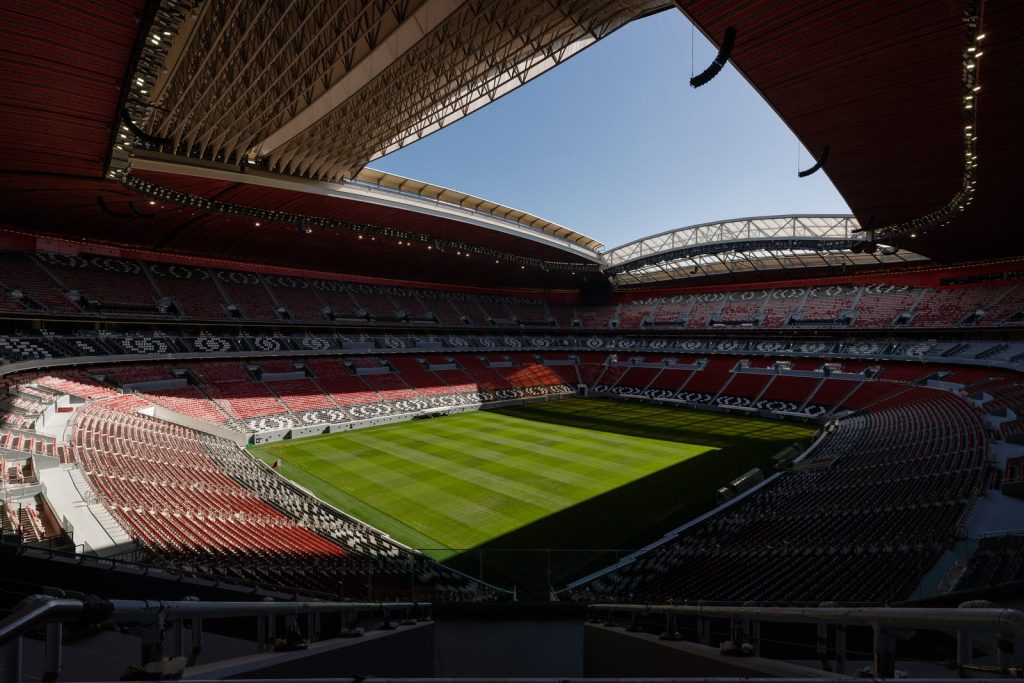
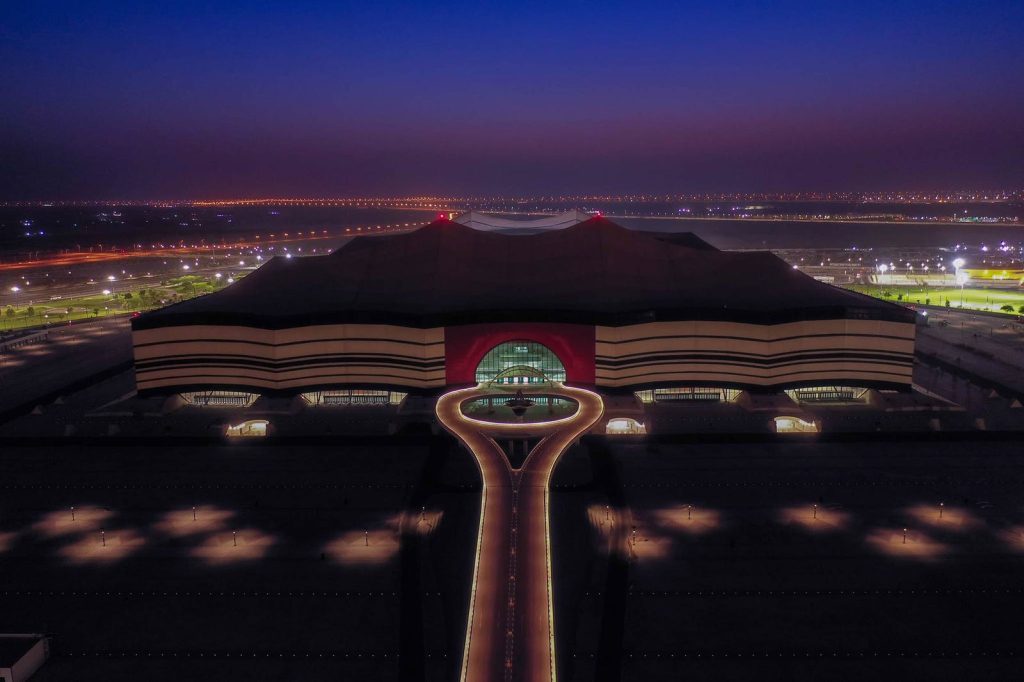
Swipe for more photos
Khalifa International Stadium
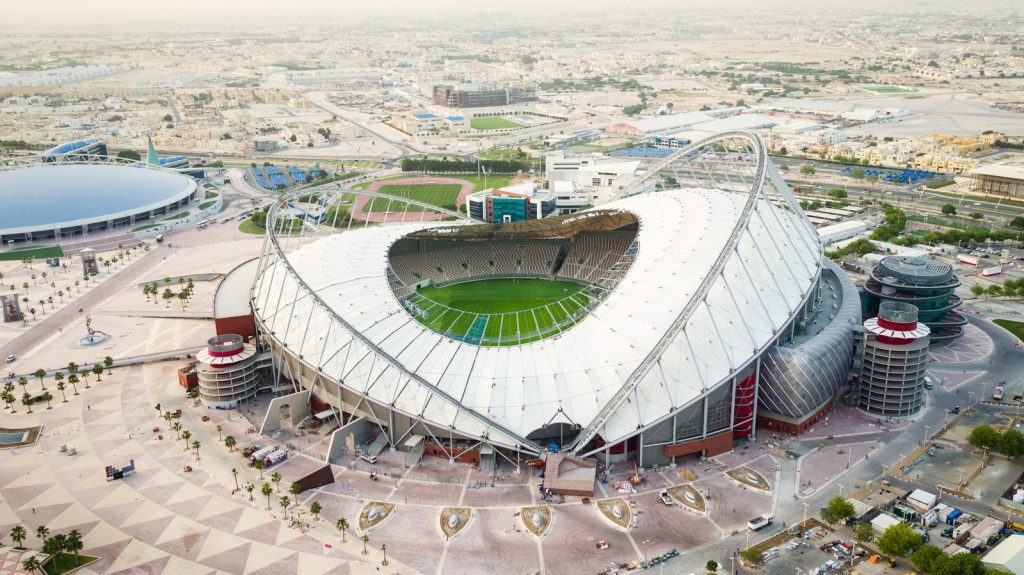
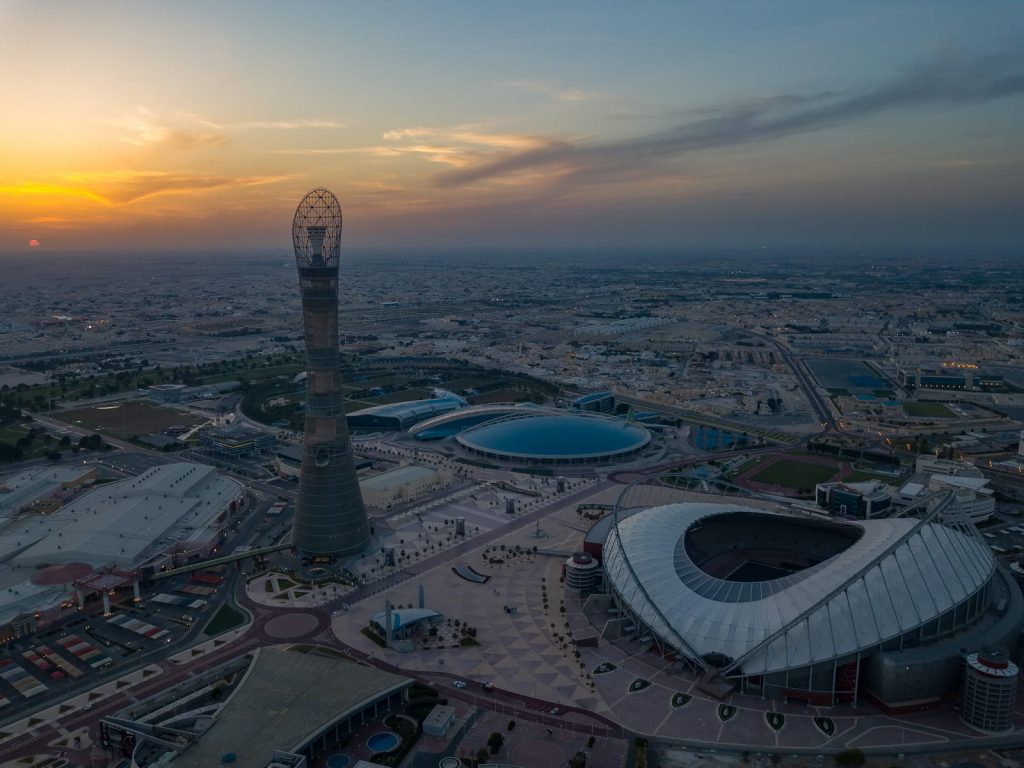
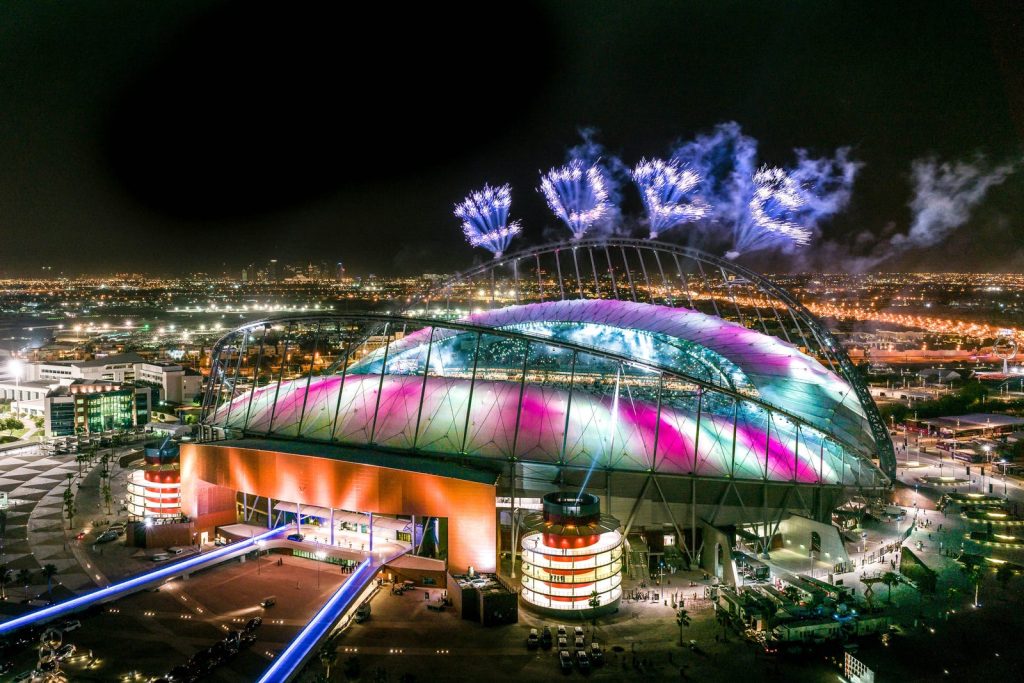
With a tournament capacity of 40,000, Khalifa International Stadium is Qatar’s national stadium and the oldest of the eight stadiums, having been opened in 1976 with 20,000 seats, and 2026 marks its 50th anniversary. Located in Aspire Zone, Khalifa International Stadium is adjacent to Villaggio Mall and close to the Gold Line’s Sports City metro station.
Designed by Dar Al-Handasah, Khalifa International Stadium was renovated ahead of the FIFA World Cup Qatar 2022 with the addition of a canopy covering the stands, a cooling system and about 12,000 extra seats. The renovation works began in 2014 and the stadium, whose distinctive feature are the two arches rising above the roof, was the first to be completed ahead of the tournament, officially reopening on 19 May 2017. Khalifa International Stadium became the first stadium in the world to receive a four-star rating under GSAS.
Eight FIFA World Cup Qatar 2022 matches were played at Khalifa International Stadium, including the third-place match.
The legacy plan keeps the 40,000 capacity, and the stadium’s use today includes matches for the Qatar national football team and major athletics events such as the Doha Diamond League. It also hosted the final of the 2025 FIFA U-17 World Cup which saw an attendance of 38,901.
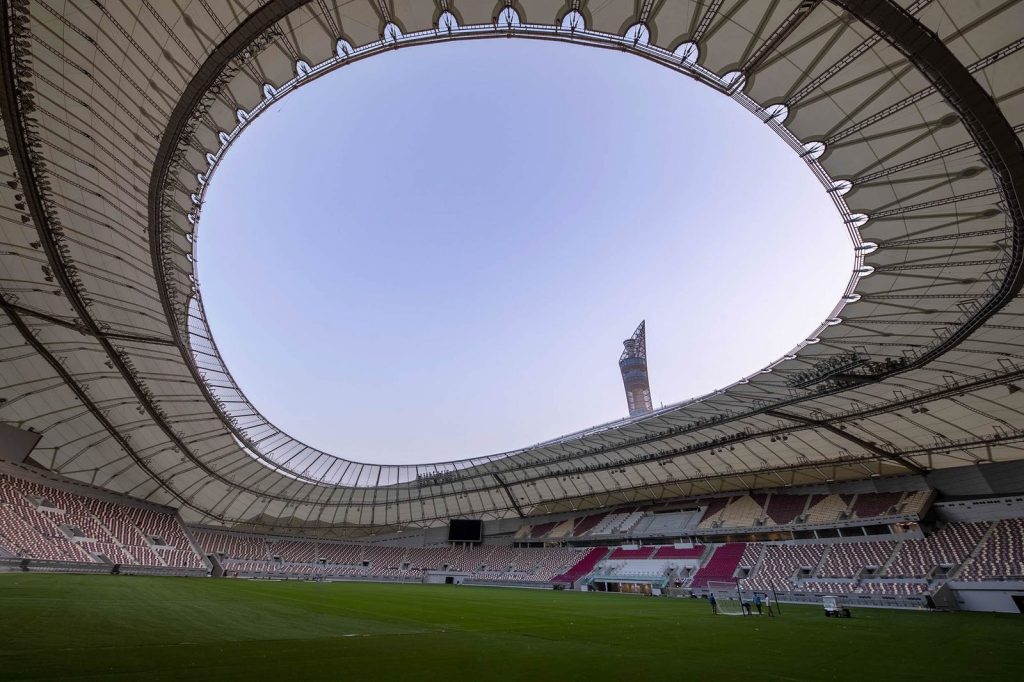
Swipe for more photos
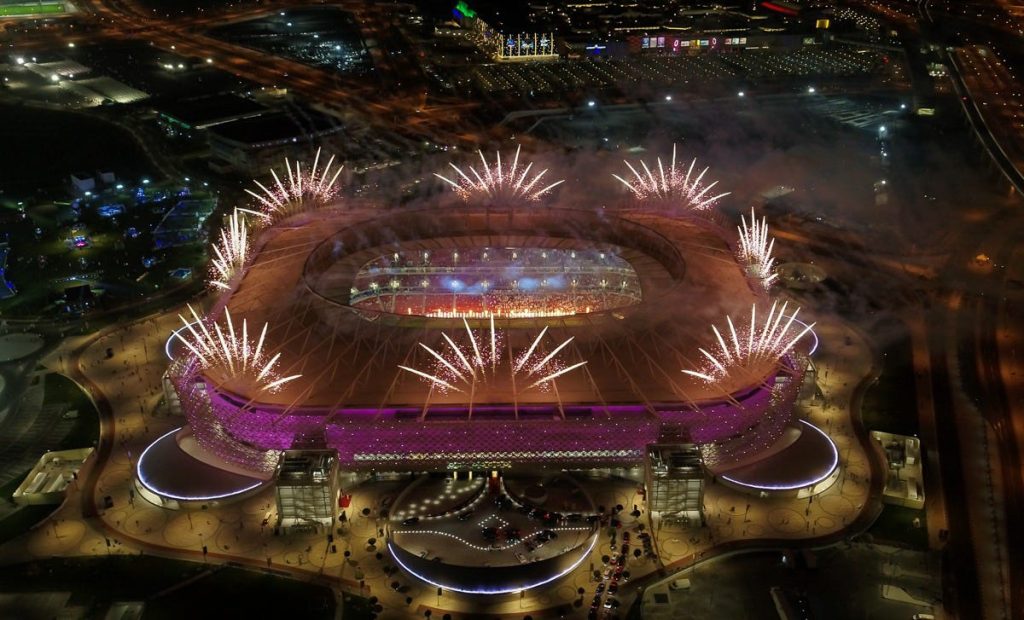
Ahmad Bin Ali Stadium
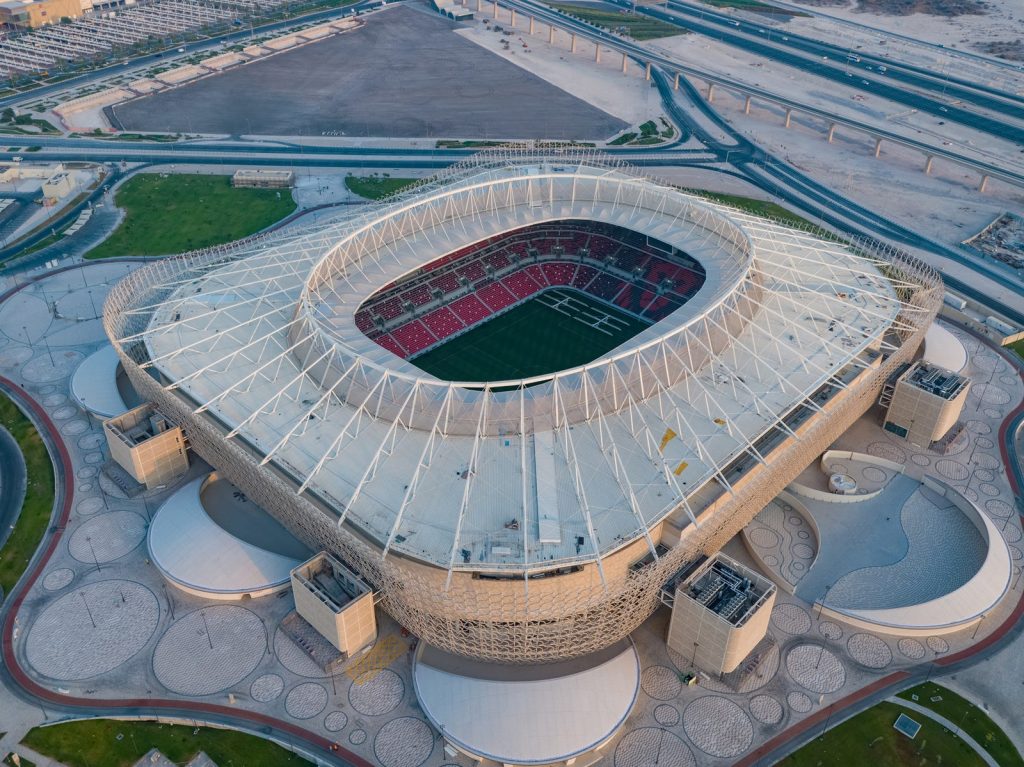
Ahmad Bin Ali Stadium is a multi-use stadium located at the edge of the desert, approximately 20 km west of Doha. It is used primarily for football matches and is the home stadium of Al Rayyan Sports Club. The stadium, which took its name from Ahmad bin Ali Al Thani, the Emir of Qatar from 1960 to 1972, hosted seven matches during the FIFA World Cup.
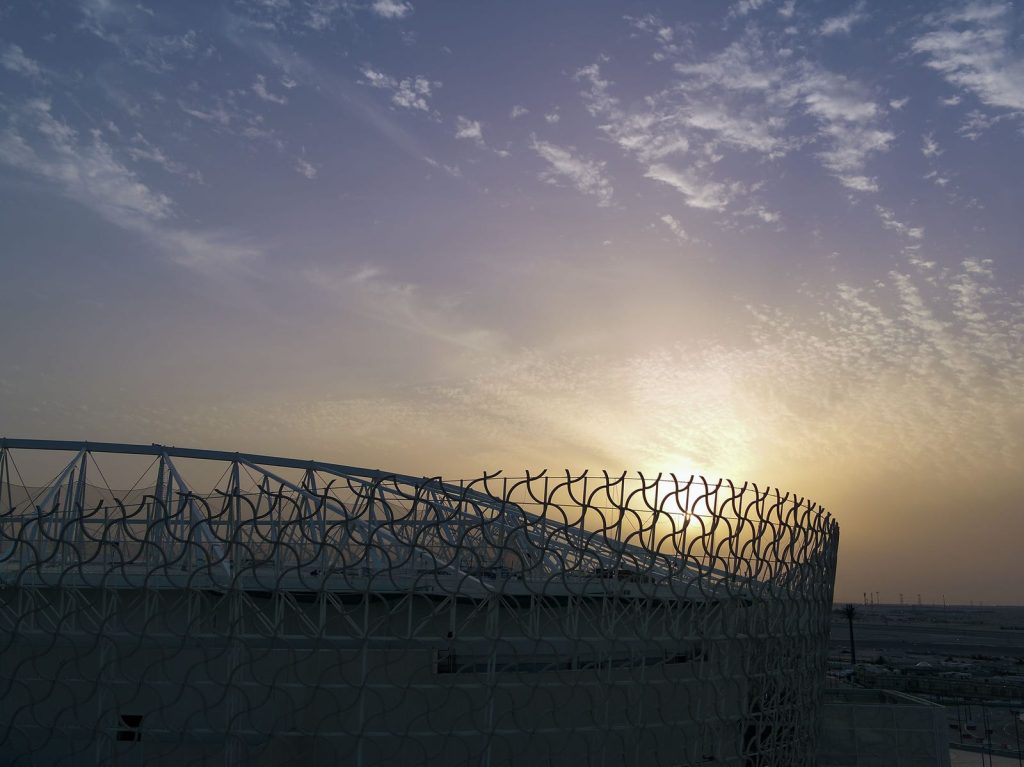
On 18 December 2020, the stadium hosted its first football match, the Amir Cup final. Architectural firm Pattern Design was the lead designer for the project. The geometric design of the stadium’s facade represents desert scenery, flora and fauna as well as Qatar’s trading history. According to Visit Qatar, more than 90% of the materials from the previous stadium that stood on the same grounds were recycled or reused.
The stadium will host the FIFA U-17 World Cup final on 13 December 2026 according to FIFA. Al Riffa station, located on the Green Line, is within walking distance of the stadium. In December 2025, Paris Saint-Germain defeated Flamengo on penalties at the stadium in the FIFA Intercontinental Cup final.
Swipe for more photos
Education City Stadium
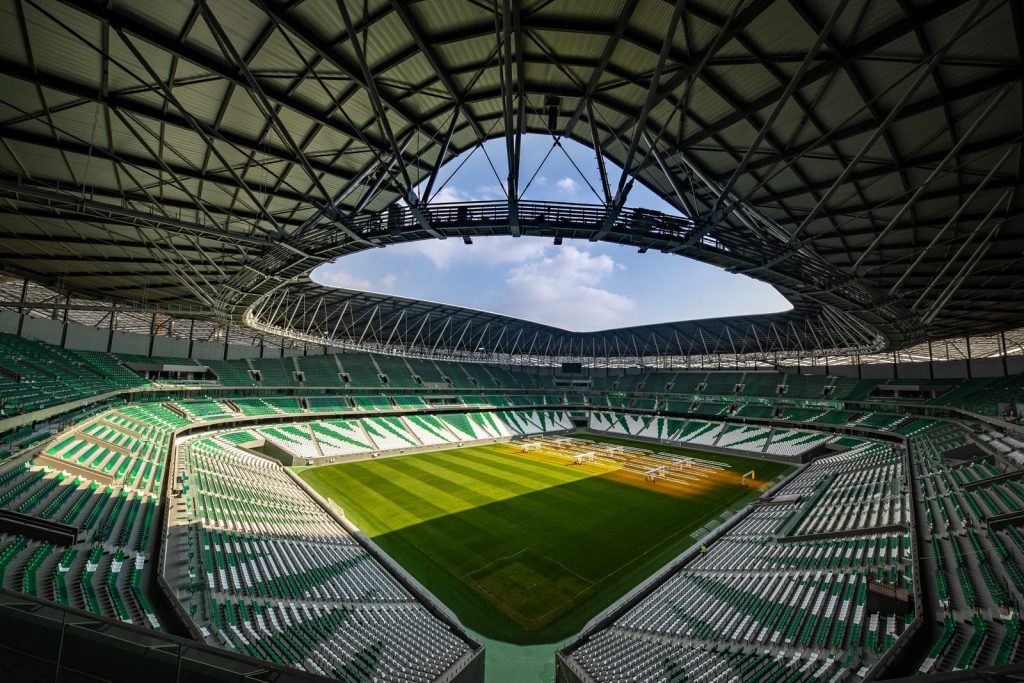
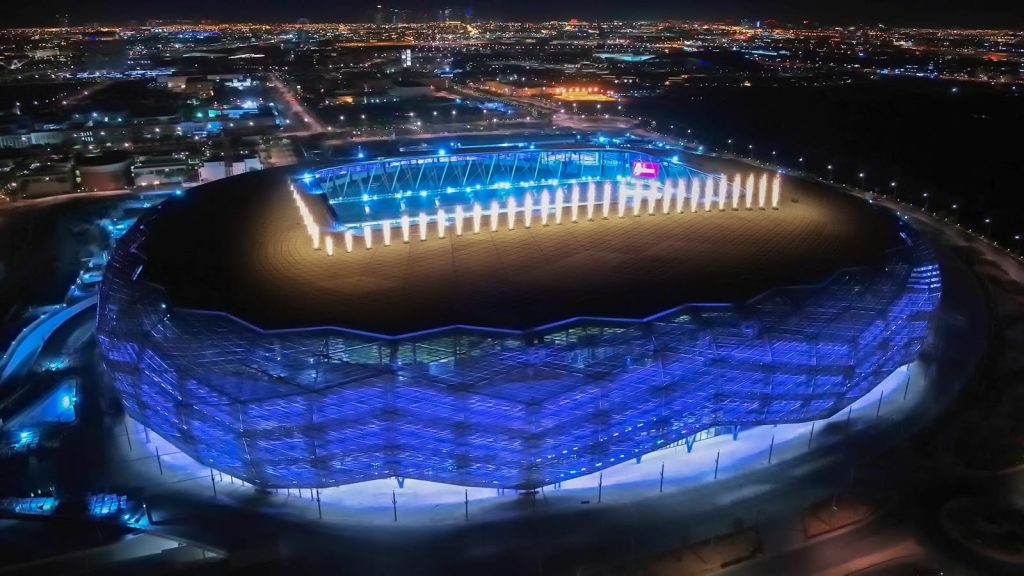
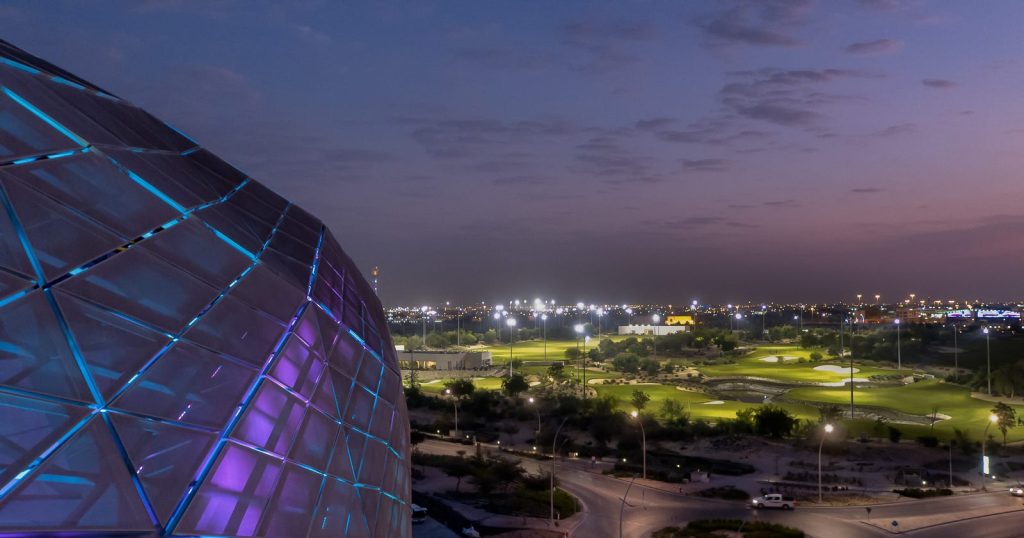
Nicknamed the Diamond in the Desert for its shifting, ever-changing facade (by day its diamond-shape cladding appears to change color as the sun moves across it, at night the pattern is illuminated), Education City Stadium pays homage to traditional Islamic architecture. Designed by Fenwick Iribarren Architects and Pattern Design, on 15 June 2020 Education City Stadium was officially completed in a virtual ceremony paying tribute to healthcare workers on the front line.
The first of the Qatar 2022 stadiums to be awarded five stars under the GSAS sustainability rating system, Education City Stadium hosted the FIFA Club World Cup 2020 final and, during the FIFA World Cup Qatar 2022, hosted eight matches up to and including the quarter-finals.
Education City Stadium is located amidst university campuses and is surrounded by pitches and a golf course. Under the legacy plan, Education City Stadium will primarily host events and matches for the local universities and the community, with a reduced capacity, and it remains a tournament venue. Recently it hosted matches during the FIFA Arab Cup 2025 as one of six stadiums used for the competition.
Education City Stadium is accessible by metro (Doha Metro Green Line) and tram (Education City tram).
Swipe for more photos
Al Thumama Stadium
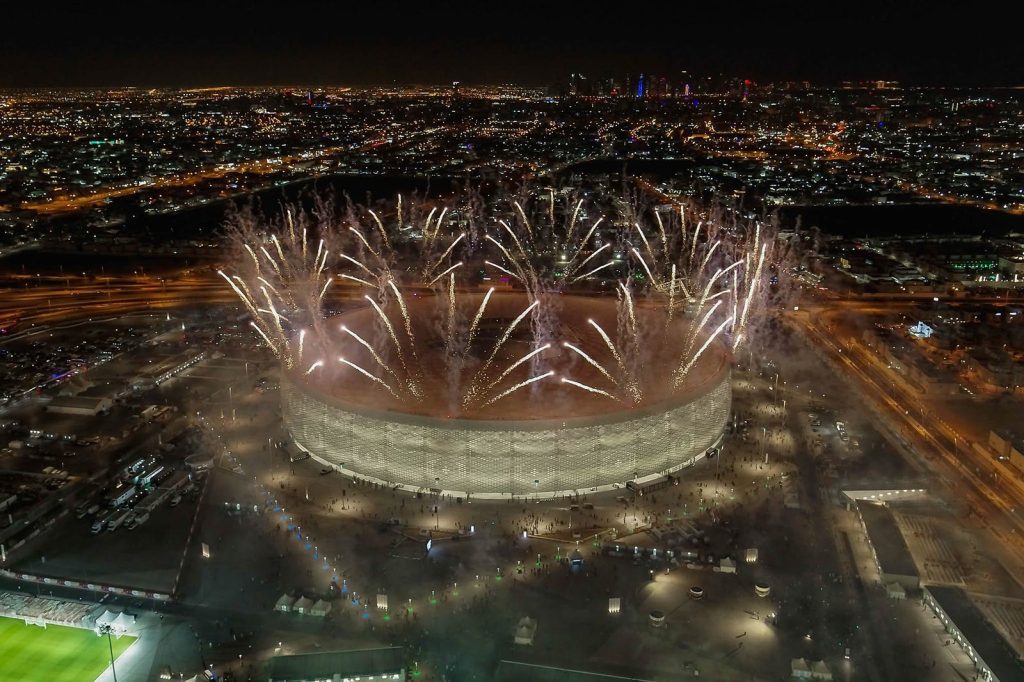
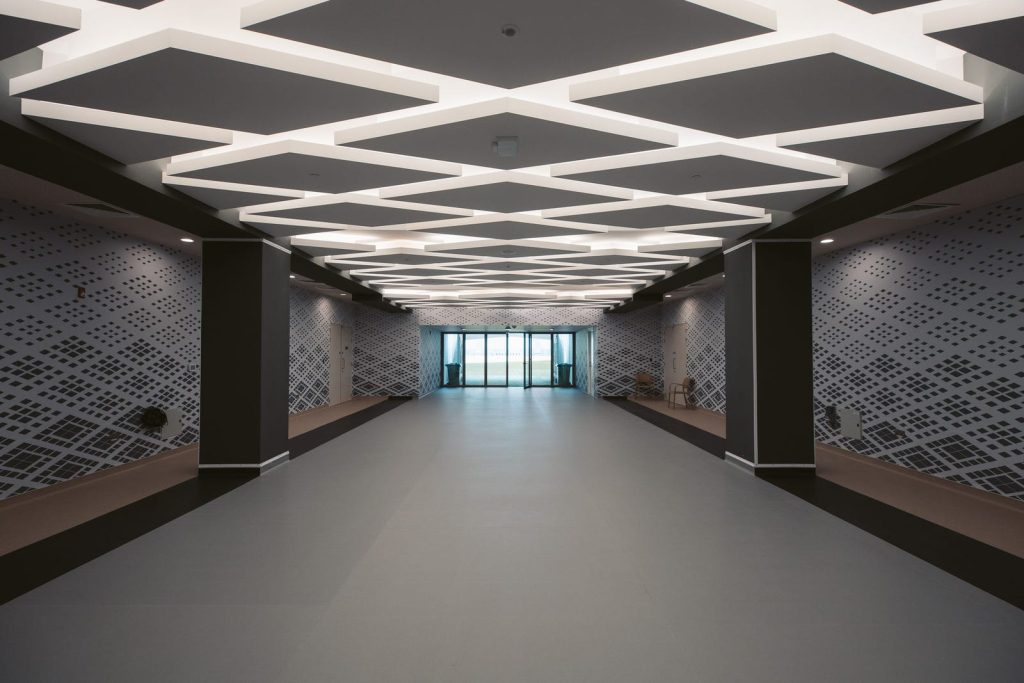
Designed by Qatari architect Ibrahim M. Jaidah, Al Thumama Stadium takes inspiration from the gahfiya, a type of woven cap traditionally worn by boys and men in several Arab countries. Al Thumama Stadium was named after a local tree.
Work on Al Thumama Stadium started in 2017 and it was officially opened on 22 October 2021 with the Amir Cup final. It hosted eight matches during the World Cup, the most high-profile of which was Morocco’s victory over Portugal in the quarter-finals.
Post World Cup, plans call for Al Thumama Stadium to become a leisure and sports complex with seating for around 20,000 people. Several papers discussing the engineering involved in constructing Al Thumama Stadium also mention a clinic and hotel set up in lieu of the stadium’s upper tier. Visit Qatar currently presents Al Thumama Stadium as a community sports and events hub with facilities for volleyball, handball, basketball and swimming, and tracks for running and cycling around the stadium. Al Thumama Stadium can be accessed by taxi or car.
Swipe for more photos
Al Janoub Stadium
Al Janoub Stadium, whose name means the stadium of the south, is a multi-purpose stadium in Al Wakrah and was used as a football stadium during the 2022 FIFA World Cup.
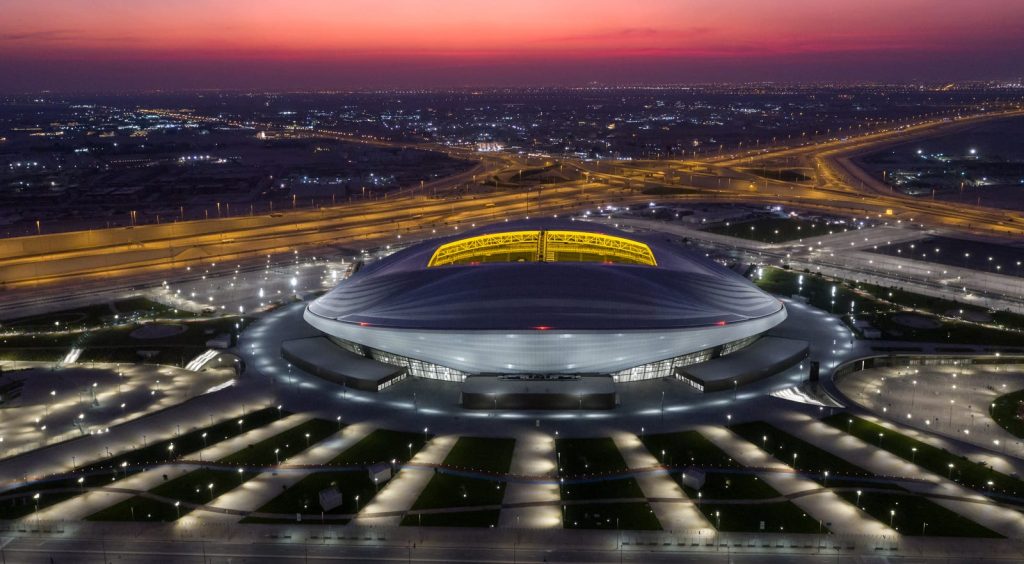
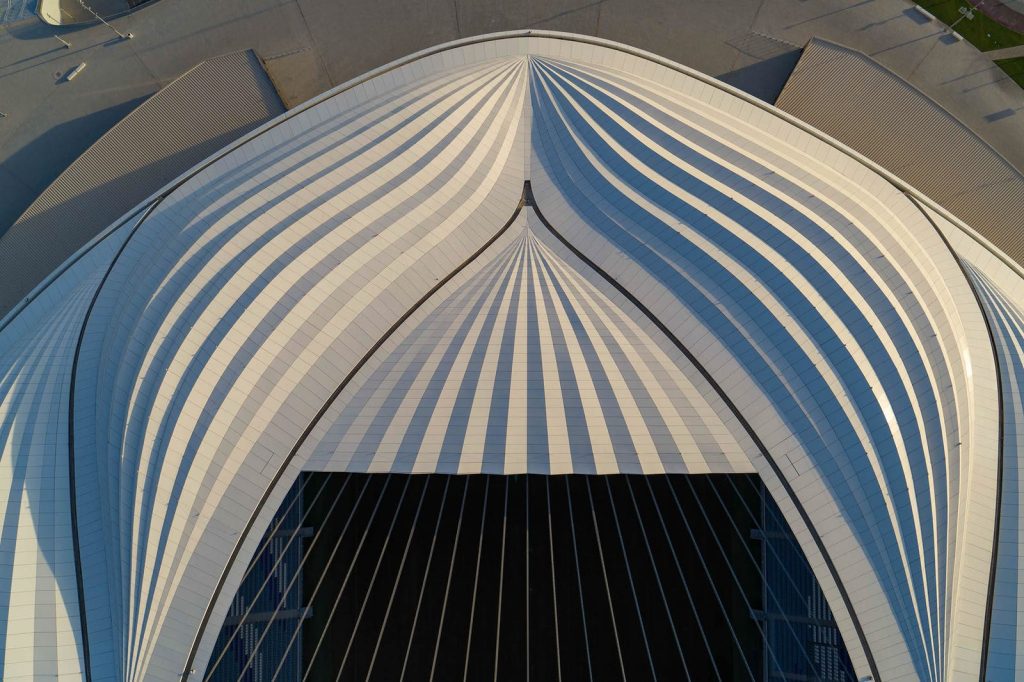
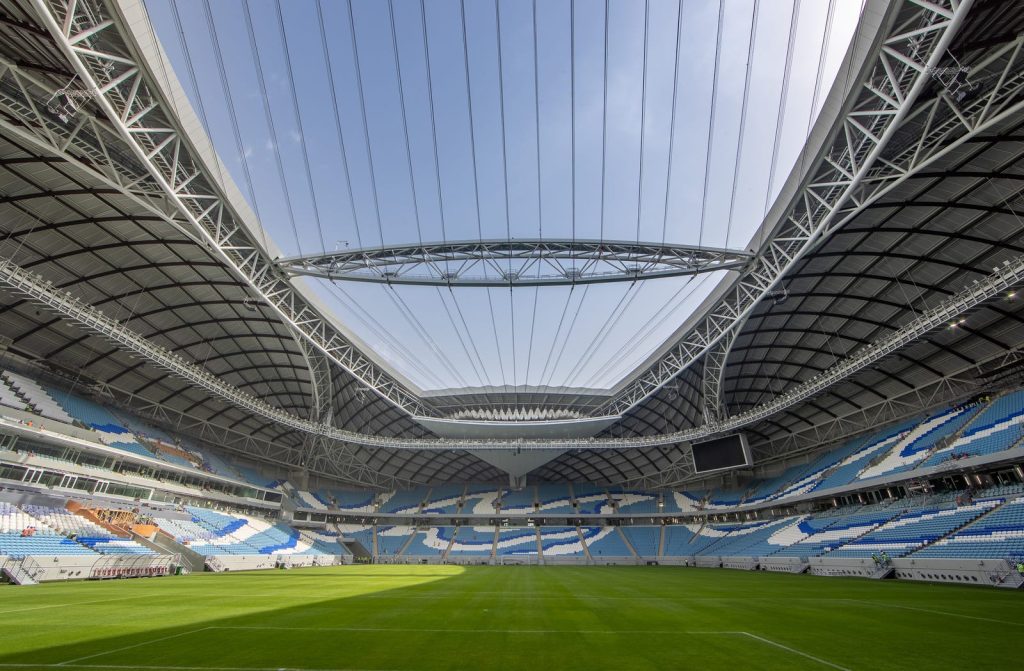
It was designed by the late Zaha Hadid’s studio and inspired by sails of dhows (boats which took pearl divers out to sea from the coast of Qatar) and waves. The seats are arranged in a similar wave-like fashion.
The stadium’s opening event was the Amir Cup final between Al Sadd and Al Duhail on 16 May 2019. It also hosted the 2020 AFC Champions League Final.
Al Janoub Stadium was the first new stadium built for the 2022 FIFA World Cup in Qatar. It hosted seven games during the tournament (up to and including the round of 16 stage). The retractable roof and cooling system of the stadium mean it can be used all year round.
Under the legacy plan, half of the 40,000 seats are to be removed and donated to other sporting projects abroad, leaving a stadium capacity of around 20,000. Al Janoub Stadium is the home stadium of Al Wakrah Sports Club.
It is accessible from Al Wakra metro station on the Red Line via the M132 Metrolink bus service.
Swipe for more photos
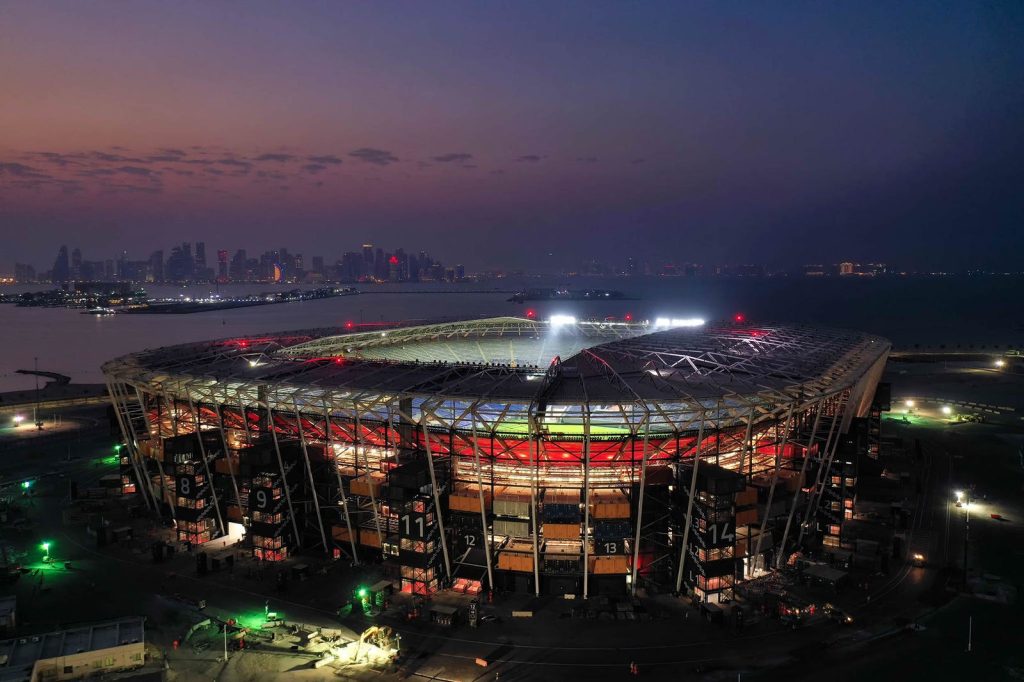
Stadium 974
Opened on 30 November 2021, Stadium 974 was used for seven games during the World Cup, the last of which was between Brazil and South Korea in the round of 16.
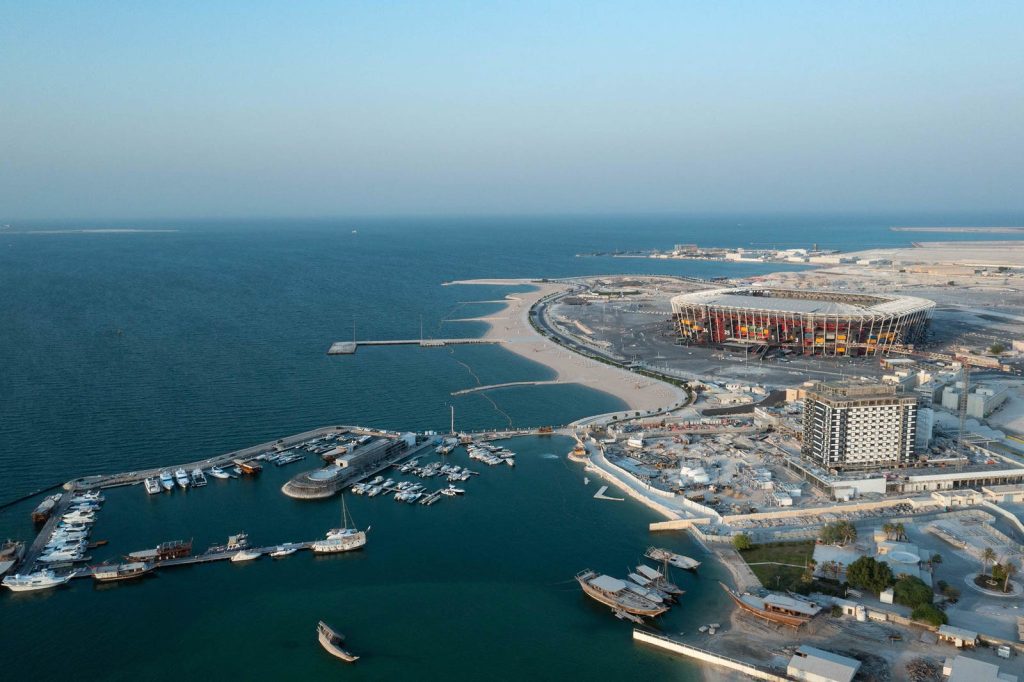
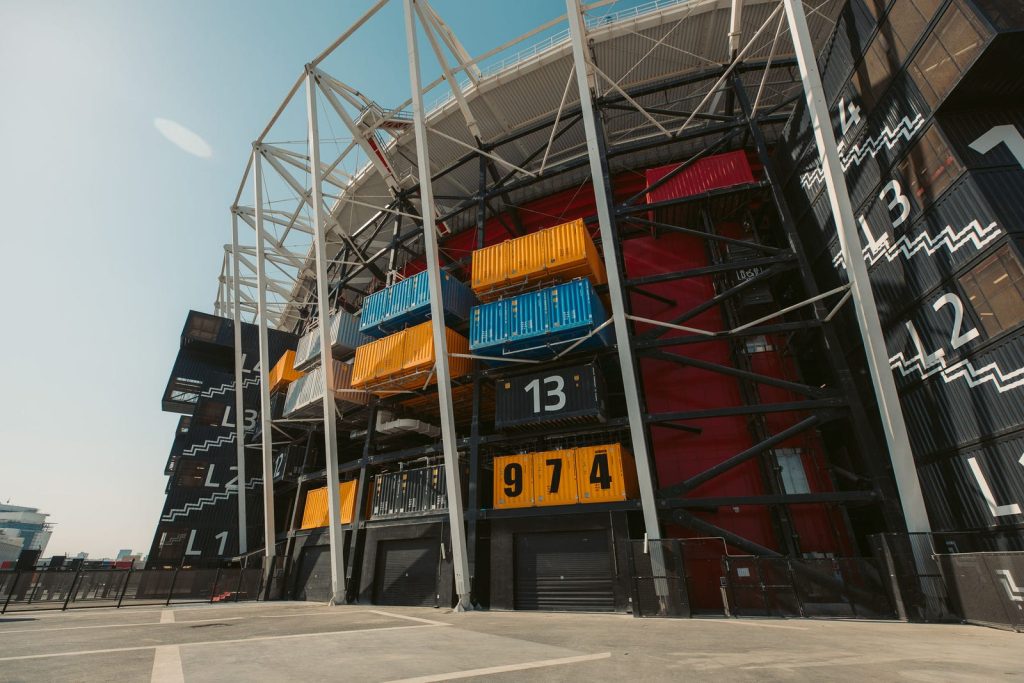
Constructed using 974 shipping containers and modular steel, a number that is also Qatar’s international dialing code, Stadium 974 was designed by Fenwick Iribarren Architects in collaboration with Schlaich Bergermann Partner and Hilson Moran. Located on the waterfront in Ras Abu Aboud, it was the first temporary stadium to host World Cup matches and was designed with full deconstruction and re-use in mind, something that has yet to occur.
Instead, Stadium 974 has gone on to host concerts and other events, was one of six stadiums used during the FIFA Arab Cup 2025 and, in February 2026, played host to National Sport Day activities for the first time. The venue’s November 2026 calendar listed concerts by Hans Zimmer and Shakira, and Guinness World Records has named the stadium the world’s largest temporary sports arena.
Ras Bu Abboud station on the Gold Line is about 800 meters away.
Swipe for more photos
Apartments for Sale in Lusail
Arady also has apartments for sale in Lusail, including apartments in Marina District, Fox Hills and on the waterfront. Lusail is a rapidly expanding city centered around Lusail Stadium. A selection of apartments for sale in Lusail are listed below.

What Comes Next for the Stadiums
The FIFA U-17 World Cup 2026 takes place from 19 November to 13 December and Qatar will continue to host the FIFA U-17 World Cup annually until 2029.
Aspire Zone, which is next to Khalifa International Stadium, hosts the majority of the 104 matches during the tournament.
Other events are also taking place in and around stadiums, including the Qatar International Food Festival 2027 which will be held in the Lusail Stadium precinct according to Visit Qatar.
Stadiums are no longer places visited only on match days, and they are becoming a bigger part of everyday life. More ideas for a visit to Qatar are in Arady’s guide to free things to do in Qatar.
Newsletter
Stay ahead of Qatar's property market
Sign up to receive the latest articles on property prices, land prices, buying guides, and real estate news in Qatar delivered right to your inbox.
No spam, ever. Unsubscribe anytime.
Related articles

Museums in Qatar and the Ideas Behind Their Architecture
Seven museums in Qatar are open today, and three carry the work of Pritzker Prize winners. Each design began with something that already existed, from a desert crystal and a Cairo fountain to a school, a fire station and a stadium.
Free Things to Do in Qatar This Winter With 29 Top Picks
29 free things to do in Qatar this winter, from eight seasonal events such as Skeek Al Doha, Torba Market and Darb Al Saai to 21 parks, souqs, beaches and heritage sites, with dates, opening hours, booking details and metro access.
Heritage Sites in Qatar (What Is Open and How to Visit)
Al Zubarah, the only World Heritage Site among the heritage sites in Qatar, is open with free tickets, while five other sites are temporarily closed. This guide covers every site by region, with hours, entry rules and day trips.
Newsletter
Stay ahead of Qatar's property market
Sign up to receive the latest articles on property prices, land prices, buying guides, and real estate news in Qatar delivered right to your inbox.
No spam, ever. Unsubscribe anytime.