
Qatar’s New Traffic Law (All Fines and Points Explained)
Seven points for a red light, and QAR 6,000 to settle it. Qatar’s new traffic law, Law No. 19 of 2026, sets 33 point offenses, five license withdrawal stages and up to 50% off for paying within 30 days. Every fine is listed here.
 Arady Desk25 min read
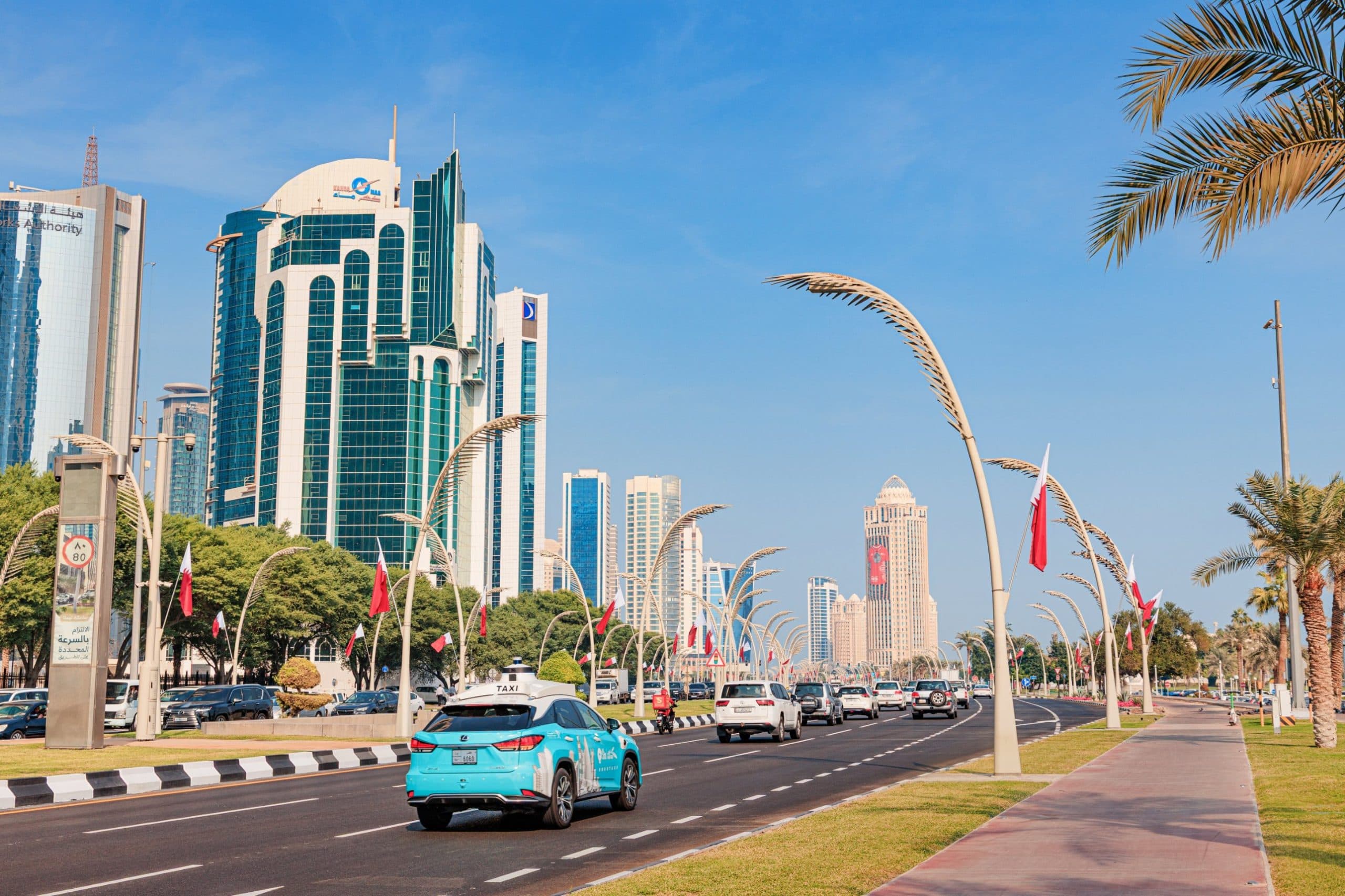
Issued on 4 November 2026 and published in the Official Gazette on 18 November 2026, Law No. 19 of 2026 sets out the new traffic regime in Qatar and repeals the previous traffic law dating back to 2007. The new law consists of 137 articles and regulates, among other things, how traffic violations are counted, how fines are settled, and when a driving license can be withdrawn or a vehicle seized. It comes into force on 19 December 2026.
Below is an overview of the main practical aspects of the new law, including the two schedules attached to it, one setting the points for each offense and one setting the conciliation amounts, with the fines for common traffic offenses and the rules for license holders and vehicle owners.
What the New Law Replaces
Driving licenses, vehicle operating licenses and permits issued under Decree-Law No. 19 of 2007 remain valid until the end of their validity period, and renewals are governed by the new law. Owners of registered vehicles have six months from the date the law comes into force to regularize their status. The Minister of Interior may extend this period once for a similar period.
The start date is 19 December 2026, which is 30 days after publication. Brigadier Ahmed Abdullah Al Harami, Director of the Legal Affairs Department at the Ministry of Interior, confirmed it at a press conference on 18 November, as reported by Gulf Times. The six months for vehicle owners are counted from that day. The ministry also announced an awareness campaign in several languages and said its official channels are the single reference for updates, according to Qatar News Agency.
The executive regulations and ministerial decisions in force remain valid to the extent that they are not contrary to the new law, until new regulations and decisions are issued. Therefore, certain traffic rules such as speed limits and the form and specifications of plates continue to be governed by the current executive regulations.
How the Points System Works
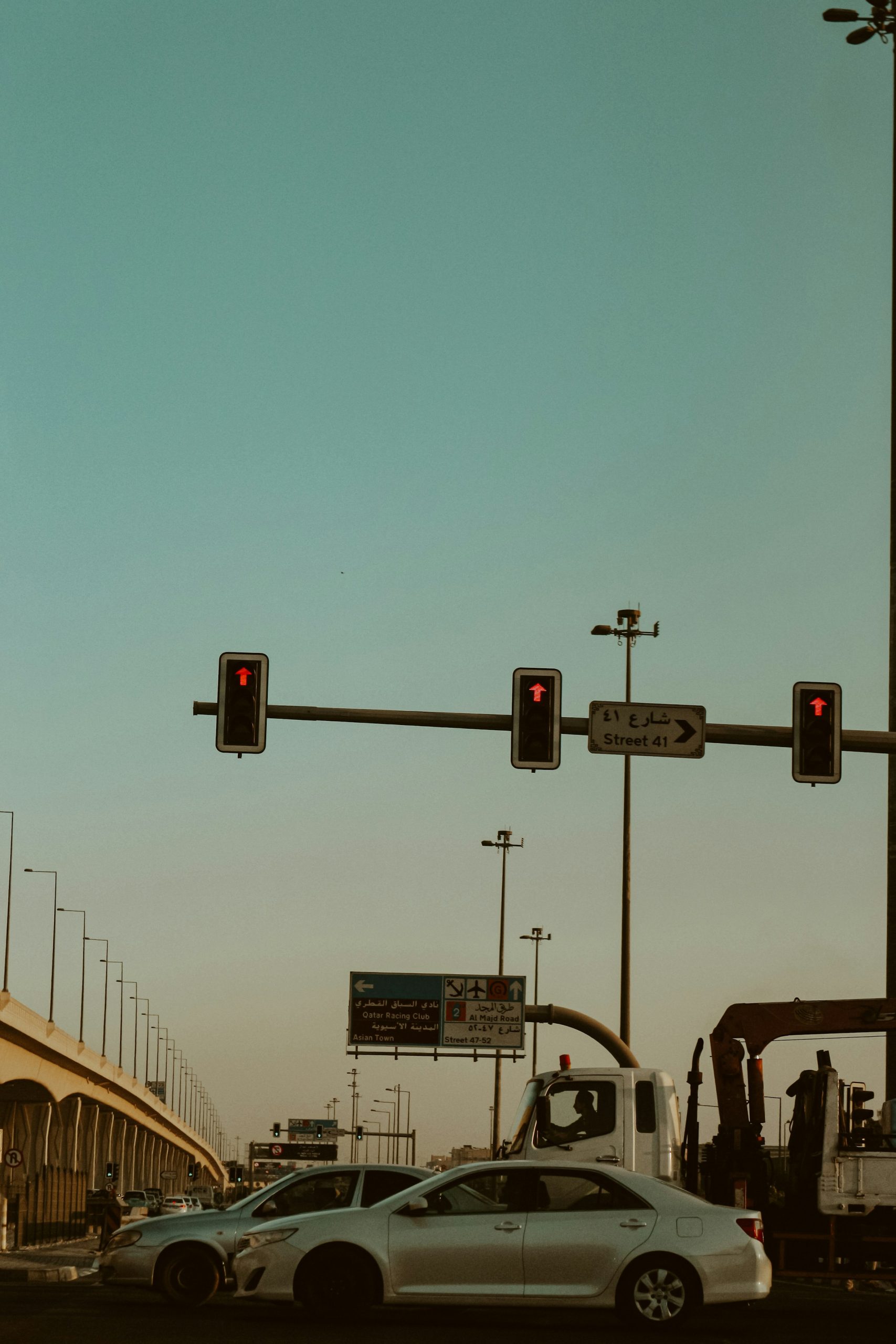
Red-light running tops the list with 7 points, followed by wrong-way driving on a highway and driving under the influence with 6 points each. Once conciliation is reached or a final conviction is issued, the licensing authority records the points in accordance with the schedule of points attached to the law.
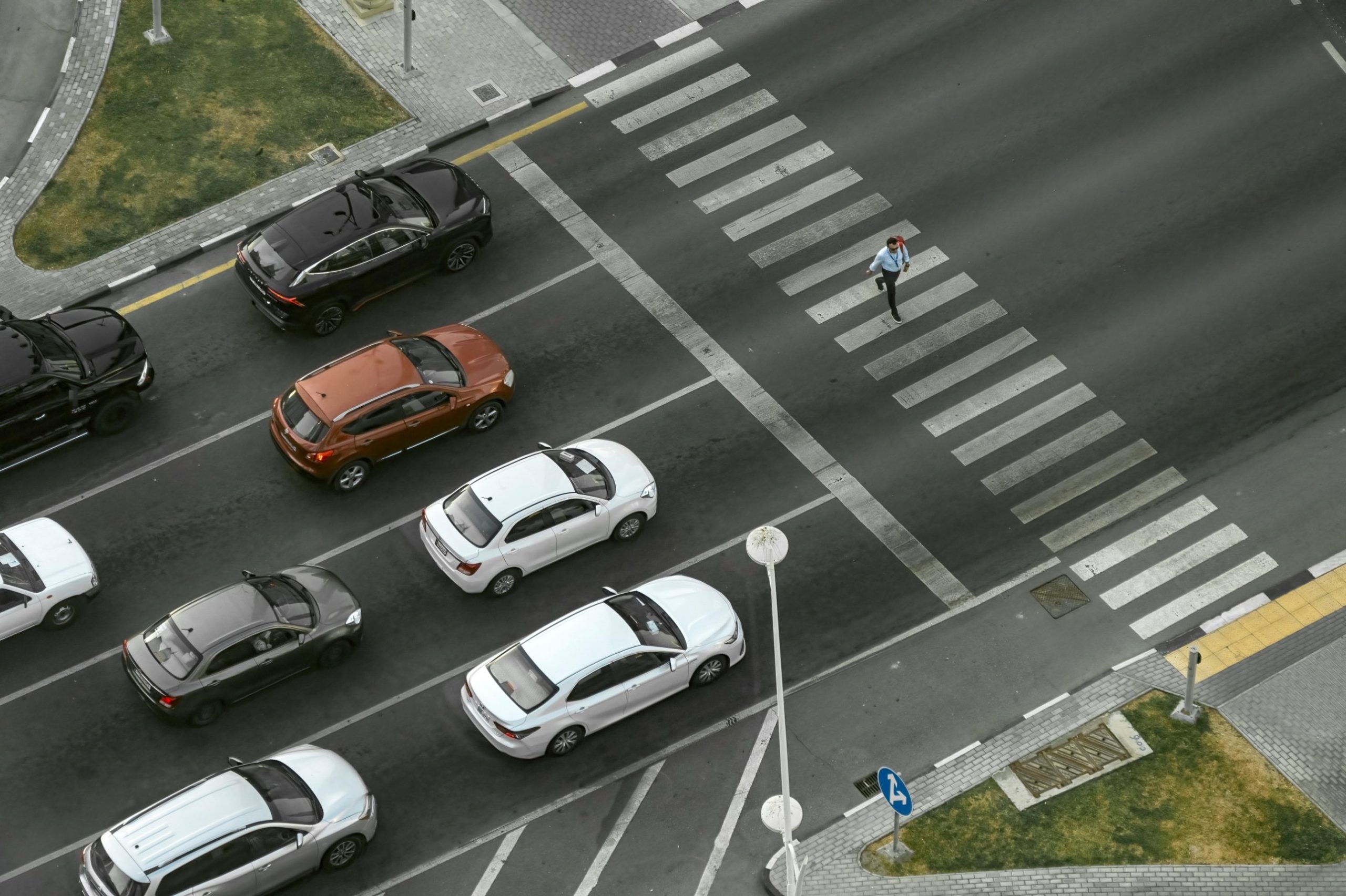
Once a driver accumulates a certain number of points, the driving license is withdrawn for a specified period. The first time, 14 points result in a withdrawal for three months. Should the driver offend again and accumulate 12 points, the license is withdrawn for six months. Offend again and accumulate 10 points and it is withdrawn for nine months. Offend again and accumulate eight points and it is withdrawn for one year. On the fifth time, six points mean permanent withdrawal, and the driver has to wait at least a year and sit the driving test again before becoming eligible for a new license.
Article 107 of the law stipulates the circumstances under which accumulated points are wiped clean.
Points shall be automatically erased in the following two cases: 1. If the driving license is withdrawn in accordance with the provisions of Article (106) of this Law / Act. 2. If the driver does not commit any other traffic offense within one year from the date of committing the last offense. In all cases, the instances of withdrawal shall remain recorded for reference when necessary.
In layman’s terms, if a driver does not commit another traffic offense for a year, the points tally is reset to zero. Likewise, a withdrawal resets the tally to zero, however the number of previous withdrawals stays on record, as this determines how long the license is withdrawn should the driver offend again.
Every Offense That Carries Points
There are thirty three offenses which attract points, and the table below lists every one of them. Driving on an expired license, for example, attracts three points. Other examples include refusing to show a driving license or vehicle operating license when required by the police (one point) and driving a vehicle with illegible plates (two points).
Not all common motoring offenses attract points. Using a hand-held mobile phone while driving and not wearing a seatbelt attract a fine, and in the case of mobile phone use the possible impounding of the vehicle, but no points.
| Offense | Points |
|---|---|
| Passing a red traffic light or a police hand signal | 7 |
| Driving against the direction of traffic on highways or ring roads | 6 |
| Driving under the influence of alcohol, narcotics or other psychotropic substances | 6 |
| Exceeding the speed limit by more than 60 km/h | 4 |
| Driving recklessly, carelessly or in a way that endangers lives and property | 4 |
| Driving a vehicle with no brakes or with faulty brakes | 4 |
| Exceeding the speed limit by more than 50 km/h | 3 |
| Driving with a license that does not cover that type of vehicle | 3 |
| Driving with a withdrawn or expired driving license | 3 |
| Committing an act against public morals or traditions in the vehicle, or allowing it | 3 |
| Driving a vehicle that has no operating license | 3 |
| Driving a vehicle without its plates | 3 |
| Driving with altered plate numbers or plates not issued by the licensing authority | 3 |
| Using the vehicle for a purpose other than its designated one | 3 |
| Deliberately blocking or obstructing traffic on public roads | 3 |
| Driving a vehicle that makes disturbing noise | 3 |
| Driving a vehicle that emits thick smoke or a foul smell beyond Qatari standards | 3 |
| Driving with a load that scatters or leaks flammable or harmful material | 3 |
| Driving with a load that falls and endangers road users | 3 |
| Driving on the road shoulder | 3 |
| Turning, U-turning or reversing against the direction of traffic | 3 |
| Replacing an essential part of the vehicle without a written permit | 3 |
| Parking in places designated for persons with disabilities | 3 |
| Starting off or swerving suddenly so the tires spin and make disturbing noise | 3 |
| A truck failing to stop at a weigh station | 3 |
| Exceeding the speed limit by more than 40 km/h | 2 |
| Handing the vehicle to a person without a valid driving license for it | 2 |
| Driving with plates that are unclear or cannot be read | 2 |
| Exceeding the speed limit by more than 30 km/h | 1 |
| Driving with one plate, or changing the place, color or shape of the plates | 1 |
| Refusing to present the driving license or vehicle operating license to the police | 1 |
| Transport vehicles breaching load conditions | 1 |
| Transport vehicles breaching width, height or weight limits | 1 |
| Driving a vehicle after an accident that affected its balance or tires | 1 |
| Using lights, loudspeakers, horns or other devices not permitted by law | 1 |
| Not following road markings or traffic signs | 1 |
Conciliation Amounts for Everyday Offenses
The law calls its fixed fines conciliation amounts, and in the attached schedule they run from QAR 300 to QAR 10,000. If a violation is conciliated, no court case is brought against the violator. However, if the prescribed amount is not paid, the case is referred to the Public Prosecution.
Four everyday offenses carry a conciliation amount of QAR 500, namely using a hand-held mobile phone while driving, not wearing a seatbelt, allowing a child less than ten years of age to travel in the front seat, and parking in a place reserved for persons with disabilities. Meanwhile, offenses carrying QAR 6,000 include driving against traffic, running a red light and making a U-turn on an expressway. Spitting or throwing rubbish out of a car carries a conciliation amount of QAR 2,000, against a fixed fine of QAR 10,000 if the case reaches court.
The law also prescribes a conciliation amount of QAR 10,000, the highest in the schedule, for whoever leaves a child less than 13 years of age, or a sick, old or incapacitated person who needs a companion, unattended in a car without an adult.
| Offense | Amount |
|---|---|
| Serious driving offenses | |
| Leaving a child under 13 alone in the vehicle | QAR 10,000 |
| Running a red light | QAR 6,000 |
| Driving against the direction of traffic | QAR 6,000 |
| Stopping, reversing or U-turning on an expressway | QAR 6,000 |
| Driving with a withdrawn driving license | QAR 3,000 |
| Everyday driving | |
| Littering or spitting from the vehicle | QAR 2,000 |
| Driving with an expired driving license | QAR 1,500 |
| Overtaking from the right or tailgating | QAR 1,000 |
| Driving on the road shoulder | QAR 1,000 |
| Not giving way to an official motorcade | QAR 1,000 |
| Speeding | QAR 500 – QAR 1,000 |
| No seatbelt, driver or front passenger | QAR 500 |
| Phone in hand, or watching a screen, while driving | QAR 500 |
| Child under 10 in the front seat | QAR 500 |
| Not carrying the driving license and vehicle operating license | QAR 500 |
| Using the horn with no imminent danger | QAR 500 |
| Parking | |
| Parking in a prohibited place, including disability spaces | QAR 500 |
| Leaving the vehicle with the key inside or the engine running | QAR 500 |
| Displaying a vehicle for sale in a square, on a sidewalk or on vacant land without a permit | QAR 1,000 |
| Vehicle and papers | |
| Taking a vehicle out of Qatar without a permit | QAR 4,000 |
| Louder exhaust or engine devices without a permit | QAR 3,000 |
| Writing, stickers or images on the vehicle body without a permit | QAR 3,000 |
| Altering or obscuring the plates | QAR 3,000 |
| Driving a vehicle with an expired operating license | QAR 2,000 |
| Obscuring the windows without a permit | QAR 2,000 |
| Not reporting a sale or purchase within 3 days | QAR 500 |
| Scooters, bicycles and pedestrians | |
| Riding an unregistered electric scooter | QAR 1,000 |
| Riding without both hands on the handlebar, or carrying a passenger on an unequipped bike | QAR 1,500 |
| No helmet on a motorcycle, bicycle or electric scooter | QAR 300 |
| Pedestrian walking in the roadway or crossing unsafely | QAR 500 |
Speeding Follows One Formula
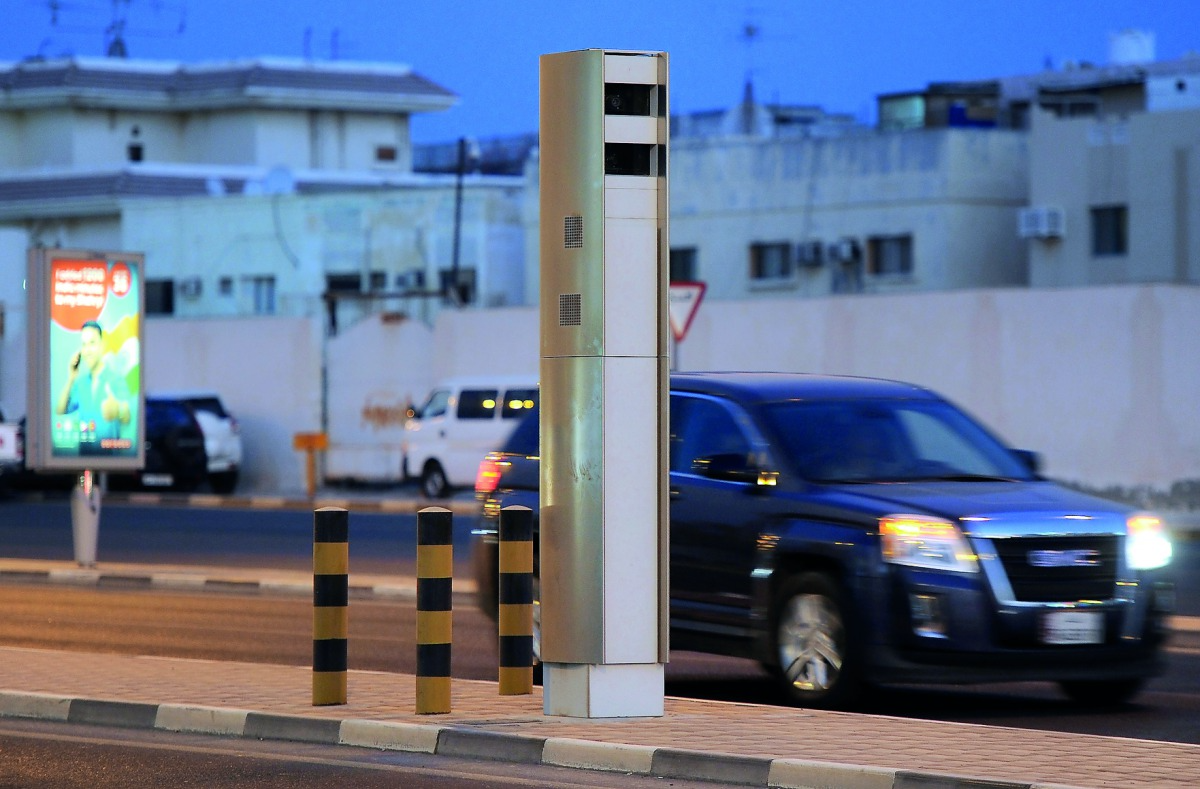
Speeding is fined according to a single formula. The amount is QAR 500, plus QAR 100 for every 10 km/h the driver exceeded the speed limit, up to a maximum of QAR 1,000. More points are assessed the faster the driver was going.
- Exceeding the speed limit by more than 30 km/h costs 1 point
- Exceeding the speed limit by more than 40 km/h costs 2 points
- Exceeding the speed limit by more than 50 km/h costs 3 points
- Exceeding the speed limit by more than 60 km/h costs 4 points
Slow driving is covered as well. Driving at an unusually slow speed that holds up other vehicles, with no reasonable cause, costs QAR 1,000. At the same press conference the Director General of Traffic, Brigadier Jabr Ali Al Kubaisi, announced the first phase of a project to set minimum and maximum speed limits on highways, Gulf Times reported.
Drivers who exceed the speed limit by more than 60 km/h also risk having their vehicle confiscated, at the court’s discretion. The calculator below shows how much any speeding offense costs.

What a Court Can Impose
Failure to reach conciliation leaves the violator before the court, which can impose far heavier punishments depending on the severity of the offense.
In the case of serious violations, including driving without a driving license, driving under the influence of alcohol or drugs, reckless driving, escaping from an accident scene or from a police order to stop, crossing at red signals, driving against the direction of traffic and allowing unlicensed drivers to drive one’s vehicle, the violator can be sentenced to a prison term not exceeding three years, a fine not exceeding QAR 50,000, or both.
In the case of other traffic violations, like exceeding the speed limit, using a hand-held phone while driving, not wearing seatbelts and illegal parking, the violator can be sentenced to a prison term not exceeding one year, a fine not exceeding QAR 10,000, or both.
In addition, the punishment is doubled when a similar violation is committed again within one year. It is worth mentioning that fines imposed by the court can’t be suspended, and reports issued by the police or by any traffic violation detection device are considered evidence unless proven otherwise.
| Offenses include | Maximum penalty |
|---|---|
| Driving without a license, driving under the influence, reckless driving, fleeing, red lights, driving against traffic, unauthorized racing, acts against public morals in a vehicle | 3 years and QAR 50,000 |
| Leaving a child under 13 or a dependent person alone in a vehicle | 3 years and QAR 20,000 |
| Not returning the plates after the permit to keep a vehicle abroad ends | 1 year and QAR 100,000 |
| Speeding, phone use, no seatbelt, illegal parking, unsafe overtaking, expired vehicle operating license, not carrying documents | 1 year and QAR 10,000 |
| Unregistered electric scooter, drifting, louder exhaust devices, unsafe pedestrian crossing | 3 months and QAR 6,000 |
| Littering or spitting from a vehicle | Fine of QAR 10,000 |
Impound, License Withdrawal and Confiscation
The Director General of the Traffic Department may order, by way of an administrative decision, the impoundment of a vehicle for a period not exceeding 90 days, notably in the following cases.
- Reckless driving
- Driving under the influence of alcohol or drugs
- Using a hand-held mobile phone while driving
- Disobeying traffic signals
- Driving against the direction of traffic flow
- Overtaking from the right-hand side
- Taking part in races on public roads without prior authorization
- Obscuring the vehicle windows without prior authorization
- Playing audio from inside the vehicle at a volume that disturbs the public
If the owner fails to retrieve the vehicle within three months from the expiry of the impoundment period, the vehicle may be sold at auction.
The Director General may also, by way of an administrative decision, withdraw a driving license, or a vehicle’s operating license together with its number plates, for a period not exceeding 90 days. Upon conviction, the court may order the same for a period not exceeding six months, notably in cases where a driving error resulted in the death or injury of another person. Any administrative withdrawal period already served is deducted from the period pronounced by the court.
In more serious cases, the court may order the confiscation of the vehicle on conviction for one of the following offenses.
- Driving under the influence of alcohol or drugs
- Reckless driving that puts people’s lives at risk
- Fleeing the scene of an accident or a police order to stop
- Driving through a red traffic light
- Exceeding the speed limit by more than 60 km/h
- Driving against the direction of traffic flow on highways or ring roads
- Taking part in races on public roads without prior authorization
- Using a hand-held mobile phone while driving, or drifting, for the second time
Pay in 30 Days and Save Up to Half
Violators can save money by paying early. When the conciliation amount is paid within 30 days of the date on which the traffic violation was registered, the licensing authority can waive up to half of the amount. The Minister of Interior may also reduce or cancel any conciliation amount for humanitarian reasons or in the public interest.
Waiting is expensive. The amount due must be paid within 60 days of receiving notification. After this time, the licensing authority may take any of the following steps.
- Withhold renewal of the driving license and the vehicle’s operating license
- Seize the vehicle
- Prohibit the violator from leaving Qatar
The violator may also be placed on a blacklist, meaning that some or all of that person’s requests under the law may not be considered.
Pay early, pay less. Pay within 30 days of the violation being registered and up to half the conciliation amount can be waived.
After 60 days without payment, renewals of the driving license and vehicle operating license can be refused, and the vehicle can be seized or a travel ban applied.
Road Rules That Catch Drivers Out
Overtaking must be done from the left only. Offenders who overtake from the right are fined QAR 1,000 and their vehicle may be impounded. It is also prohibited to overtake buses that have stopped in residential areas to drop or pick up students. Drivers are required to give way to emergency vehicles and keep a distance of no less than 50 meters behind them. Using the horn is only allowed in case of imminent danger. Drivers must also give way to official motorcades and must not follow or drive next to them.
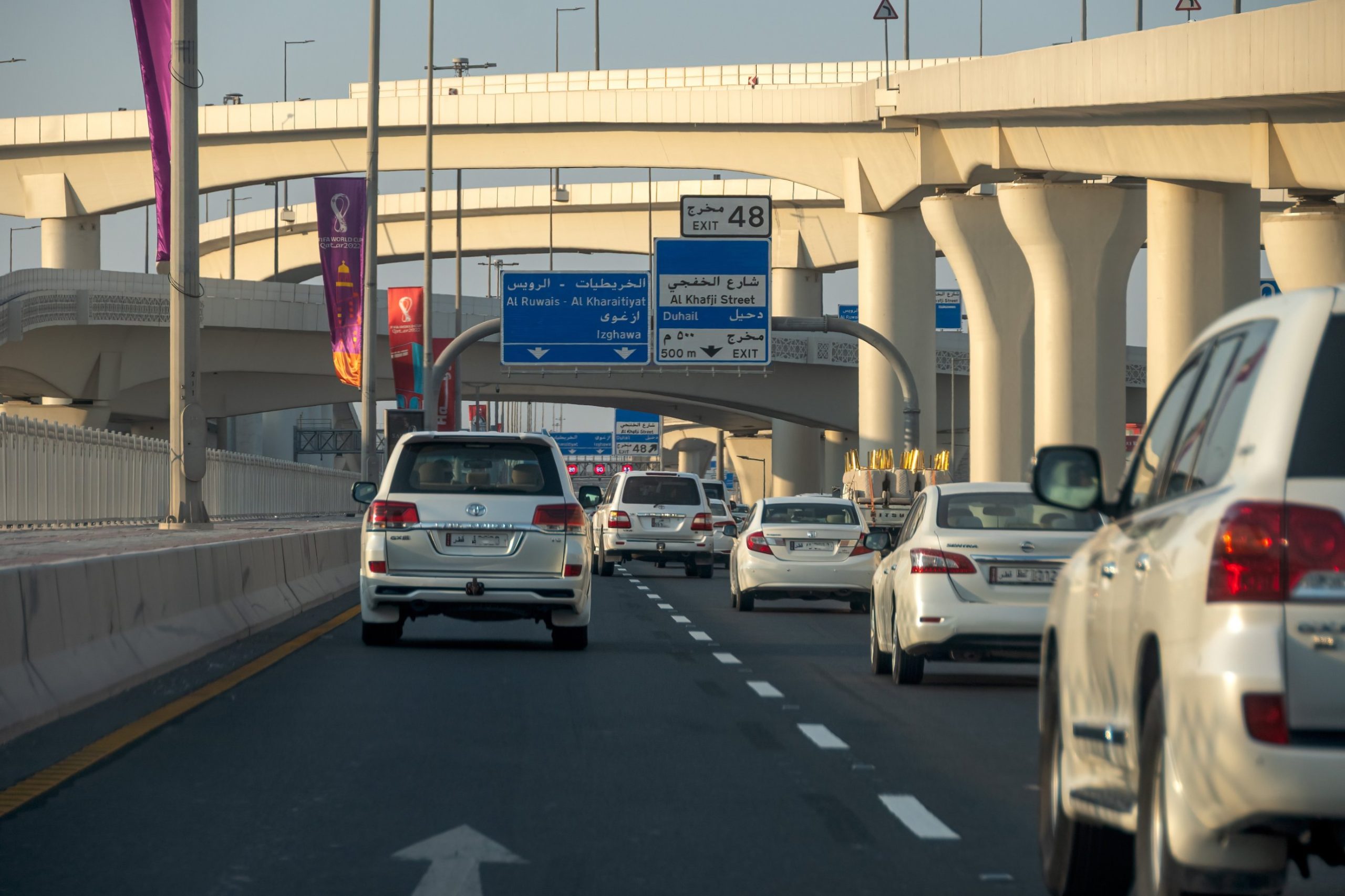
Using the road shoulder, except to stop in emergency situations, is fined QAR 1,000 and attracts 3 points. Playing audio at a volume that upsets public peace may result in the vehicle being impounded. Committing an act that goes against public morals or traditions while in a vehicle has no conciliation amount and is referred to court. Offenders can receive a sentence of up to three years in prison and 3 points, and their vehicle can be impounded.
Parking Rules and Wheel Clamps
The law names 17 places where stopping or parking is not allowed, such as on the sidewalk, on pedestrian crossings, on bridges and in tunnels, within 15 meters of junctions, entrances to roundabouts and bus stops, and in front of entrances to other people’s houses, garages, petrol stations and energy supply stations. The conciliation amount for these violations is QAR 500. Parking in spaces reserved for persons with disabilities attracts 3 points in addition to the fine.
Leaving a car with the ignition key inside or the engine on is prohibited, even if the key is outside the car.
Wheel clamps can be attached to vehicles parked in a wrong place. A notification is attached to the vehicle giving the owner 24 hours to contact the licensing authority, otherwise the vehicle is towed to the impound. In case the owner arrives before the wheel clamp is attached, the vehicle is neither clamped nor towed, and the owner pays the conciliation amount.
What to Do After an Accident
If an accident involves injuries, the driver should render assistance to the injured, call the police right away, and leave the vehicle where it is, unless authorized by the police or if moving it is necessary in order to help injured persons.
If no one has been injured and the vehicles are operable, drivers should move their vehicles out of traffic to the nearest service parking area and call the traffic police right away.
If requested by police, a driver involved in an accident must provide a name and address. Leaving the scene of an accident is punished severely and may even result in confiscation of the vehicle.
Modifications, Tint and Stickers
Most changes to a vehicle need written permission first.
- Any device used to raise the sound of the engine or exhaust, or the speed of the vehicle, must have written permission from the licensing authority.
- Any writing, picture, stickers or advertisement on the vehicle needs written permission from the licensing authority.
- The vehicle body, color, chassis and engine are considered essential parts, and any replacement needs written permission from the licensing authority.
- Each of the above violations costs QAR 3,000, and replacing an essential part also attracts 3 points.
- Air and musical horns are prohibited on the vehicle and are held by the licensing authority when found.
- Obscuring the windows without prior written permission costs QAR 2,000 and can lead to the vehicle being impounded.
- Driving a vehicle emitting disturbing noise or thick smoke contrary to the approved standards in the State of Qatar costs QAR 3,000 and 3 points.
Driving License Ages, Validity and Renewal
Driving licenses are issued for a period of 10 years for Qataris and 5 years for non-Qataris. The license should be renewed within 30 days from its expiry date. Driving with an expired license attracts a conciliation amount of QAR 1,500 and 3 points.
A light vehicle license may be obtained by a person who is 18 years and above, while the minimum age for motorcycle, heavy vehicle and public vehicle licenses is 21 years. For motorcycles this is a higher age than before. The Director General of Traffic, Brigadier Jabr Ali Al Kubaisi, said the new law raises the motorcycle license age to 21, as reported by Al-Raya newspaper. However, Qataris may obtain a temporary learner license for light vehicles from the age of 17, subject to the condition that the learner is accompanied by another person who has a valid driving license and is at least 18 years of age.
The driving license of a non-Qatari national is cancelled if the holder’s residence permit is cancelled.
It is compulsory to carry the driving license and vehicle operating license while driving and to produce them to police officers when asked. A conciliation amount of QAR 500 applies if one is not carrying both licenses while driving, and refusing to produce them attracts 1 point.
An owner should not allow a person who does not possess a valid driving license for the vehicle to drive it. This offense falls in the top court tier and attracts 2 points.
Foreign Licenses and Foreign-Registered Cars
A citizen of a GCC country with a valid driving license may drive in Qatar using it. When that license expires, it is replaced with a Qatari driving license.
An expatriate with a valid driving license other than a Qatari one must take it to the licensing authority for approval within 30 days of arrival in Qatar. An expatriate with a valid international driving license may also drive without a Qatari license.
A car registered outside Qatar may stay in the country for no more than 90 days without the licensing authority’s approval. The car must have a valid operating license from the country in which it is registered, as well as insurance that covers third-party risks in Qatar. Entry rules for visitors are covered in the Qatar visit visa guide.
Vehicle Registration and the 15-Year Rule
Vehicles may not be driven before being registered and issued an operating license. Operating licenses are issued for one year, although a three-year license may be issued for a new private car that was purchased from a licensed car dealer in Qatar or complies with the requirements for warranty and maintenance. Vehicle operating licenses must be renewed within 30 days of their expiration, otherwise driving the vehicle costs QAR 2,000 and the license and plates are withdrawn.
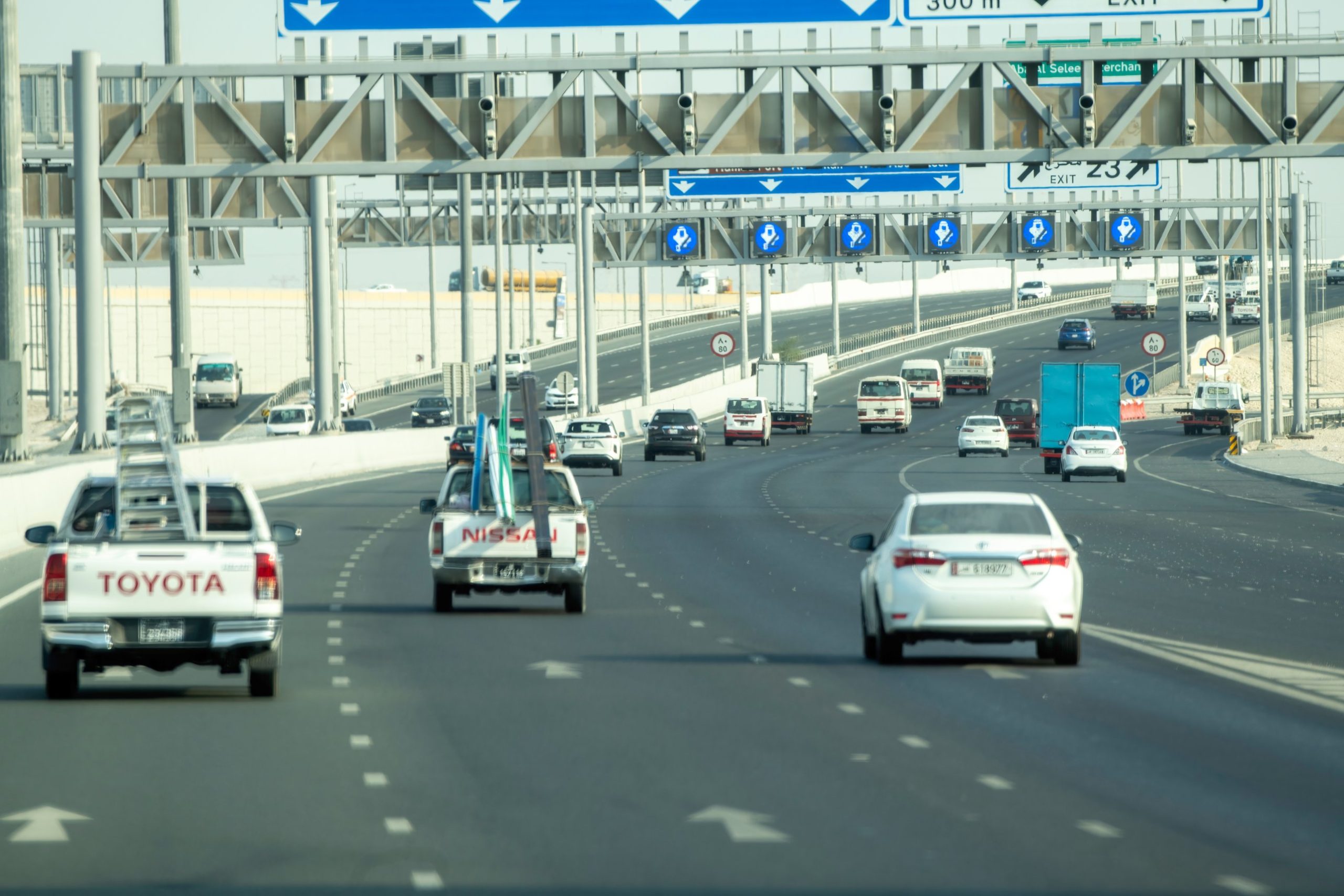
A car may only be issued an operating license if no more than 15 years have passed since its year of manufacture, subject to an exception for classic cars and any other exceptions set out in a decision of the Minister. Non-Qatari nationals may not register trucks, trailers, taxis, rental cars or buses unless permitted by the licensing authority.
Selling a Car, Leaving Qatar and Taking a Car Abroad
In case of a sale, the buyer and seller each have to notify the licensing authority within three days. The seller remains responsible for the vehicle as long as registration is not made in the buyer’s name. Within ten days of a change of name, address, nationality or ID number, vehicle owners must notify the licensing authority of the change.
If the residency of a non-Qatari vehicle owner comes to an end, the owner should transfer ownership of the vehicle within 90 days from the departure date. Failing that, the Director General may decide to sell the vehicle through public auction. Any amounts due on the vehicle are deducted from the sale price, and the remainder is kept for two years for the benefit of the owner.
It is prohibited to take a motor vehicle out of Qatar except with a permit issued by the licensing authority. This does not apply to goods transport vehicles or other vehicles designated by a decision of the Minister. Offenders pay a conciliation amount of QAR 4,000.
Within thirty days from the end of the period permitted for keeping the vehicle outside Qatar, unless the permit has been renewed, the plates must be returned to the licensing authority. Failure to comply is punished in court by a prison term of up to one year, a fine of up to QAR 100,000, or both.
Who Answers for a Violation
The vehicle owner, or the person possessing or managing it, is deemed responsible for any violation committed with the vehicle, unless that person presents acceptable evidence that someone else was driving and provides all the information required to identify the driver. A vehicle owner who does not give the name of the person driving at the time of the violation, or intentionally gives the name of someone other than the actual driver, is subject to the same penalty imposed on the driver.
The law provides a better solution by allowing the vehicle owner to apply to the licensing authority to register the name of a driver who has agreed to be responsible for the vehicle during a specific period of time. This is useful especially for families that employ drivers and companies that provide vehicles for their employees.
The law has two other noteworthy provisions. The first provides that insurance companies in Qatar cannot refuse to insure motor vehicles against third-party risks. The second provides that electronic documents and signatures have the same legal effect as paper ones.
Scooters, Bicycles and Pedestrians
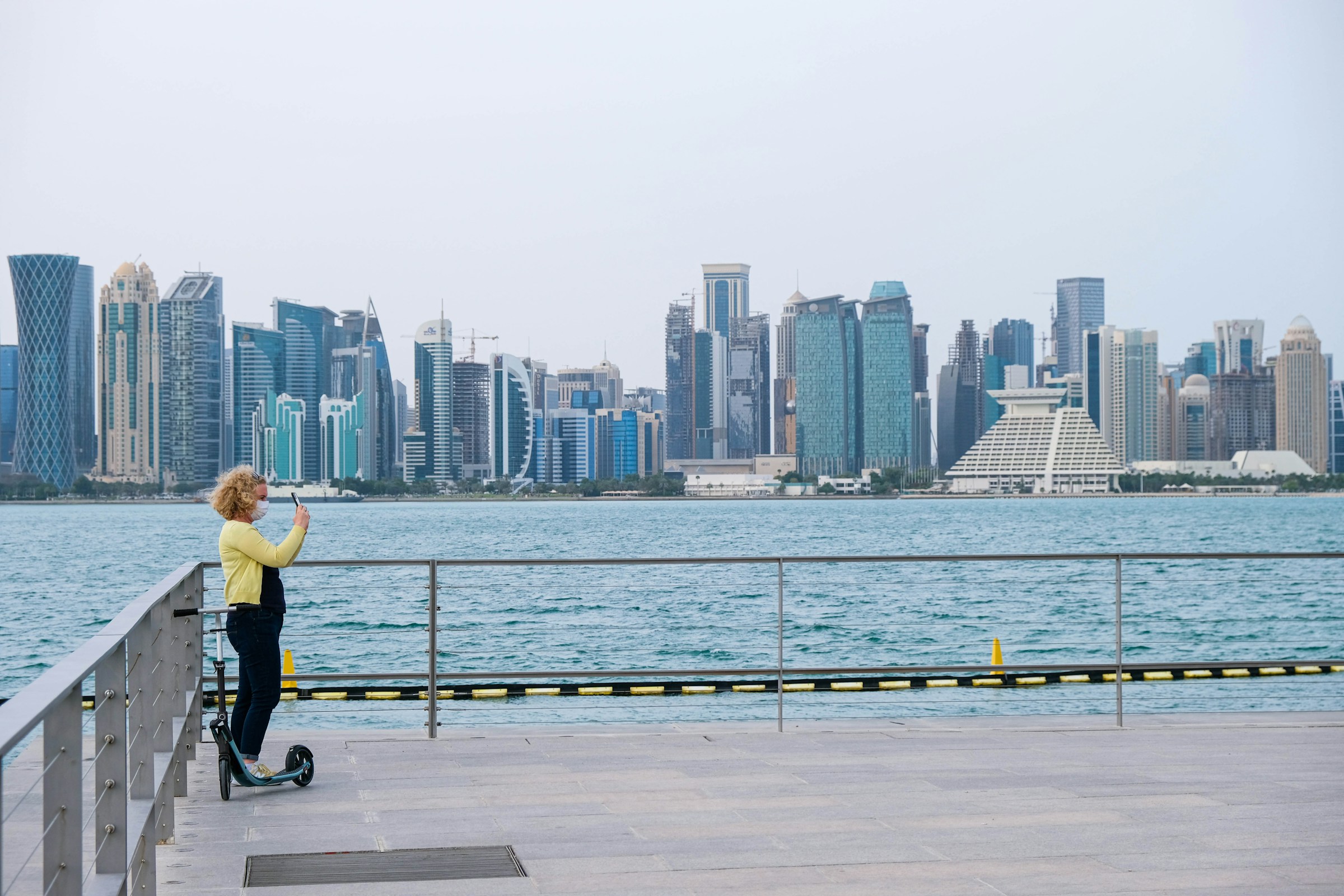
- If there are dedicated lanes, bicycles and electric scooters must use them.
- Riders and any passengers on electric scooters, bicycles and motorcycles must wear helmets, and scooter riders must wear a reflective vest when riding at night.
- Electric scooters and similar devices must be registered and display a plate before use, and riding an unregistered scooter costs QAR 1,000.
- Motorcycles of less than 50 cc are exempt from registration.
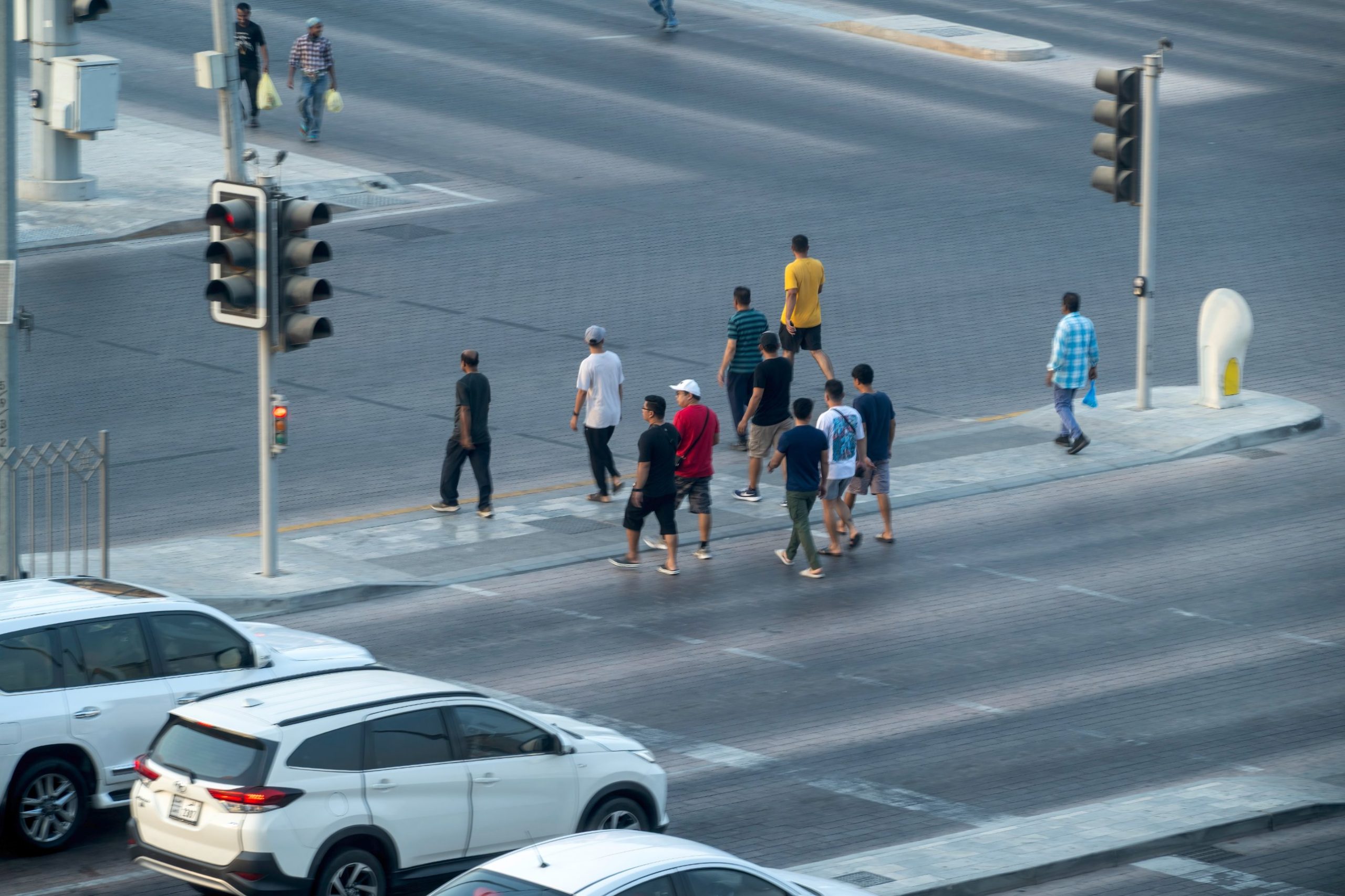
- Where there are sidewalks, pedestrians must use them, and they must cross at the nearest pedestrian crossing and abide by pedestrian signals. Walking in the roadway or crossing unsafely costs QAR 500.
The law, along with its two schedules, is available on the Qatar Official Gazette website.
Sources
- Law No. 19 of 2026 Promulgating the Traffic Law, Official Gazette Issue 22, 18 November 2026, officialgazette.gov.qa
- Conciliation schedule for Traffic Law crimes, attached to Law No. 19 of 2026
- Points calculation table for Traffic Offenses, attached to Law No. 19 of 2026
- Qatar News Agency, Interior Ministry statement on the new Traffic Law, 18 November 2026
- Gulf Times, New traffic law takes effect on December 19, 19 November 2026
Newsletter
Stay ahead of Qatar's property market
Sign up to receive the latest articles on property prices, land prices, buying guides, and real estate news in Qatar delivered right to your inbox.
No spam, ever. Unsubscribe anytime.
Related articles

Doha Zoo Reopening Set for 2027 After 15 Years Closed
Doha Zoo is set to reopen in the third quarter of 2027, the Ministry of Municipality announced on 23 November 2026. The zoo opened in 1984 and closed in August 2012. Here is the full timeline and what is still unknown.
How to Get a Sick Leave Certificate in Qatar Through e-Jaza
From 17 November 2026, every electronic sick leave certificate in Qatar is issued through e-Jaza, with a QR code or barcode and no stamp. The guide covers the two secure links, the employer copy and online verification.

Qatar Grand Prix 2026 Ticket Prices, Schedule and Transport
The Qatar Grand Prix 2026 runs on 27 – 29 November at Lusail International Circuit, with the race at 7:00 PM on Sunday. Tickets cost QAR 200 – QAR 2,000. This guide covers the schedule, discounts, transport and travel packages.
Newsletter
Stay ahead of Qatar's property market
Sign up to receive the latest articles on property prices, land prices, buying guides, and real estate news in Qatar delivered right to your inbox.
No spam, ever. Unsubscribe anytime.