
Qatar Owners Union Law 2026 Explained in Simple Terms
Law No. (11) of 2026 requires an Owners’ Union in any co-owned property with three or more owners. This guide explains registration, subscriptions, the three-month non-payment rule, the ban on selling a unit with arrears, and every owner’s duties in plain language.
 Arady Desk12 min read

Law No. (11) of 2026 on Owners’ Union explains how property owners form unions, manage shared spaces, cover expenses, and address unpaid fees. His Highness the Amir issued the law on 2 September 2026, and the Ministry of Justice published it in issue no. (17) of the Official Gazette dated 16 September 2026.
The following is a summary of the most important provisions of the law, written in plain language. Where we quote the law, we translate the Arabic text word for word, because the official Arabic version is the one that counts. The full text is available via Al Meezan, the legal portal of the Ministry of Justice.
What is an Owners’ Union
Article 1 of the law defines the union in a single sentence.
An union that brings together the owners of the real estate units within a co-owned property, for the purpose of managing it in accordance with the provisions of this Law and the Regulation.
In plain terms, it is the body formed by the owners of real estate units to manage the common areas of a co-owned property. If you own an apartment in a tower, or a villa in a compound with shared roads and gates, you and your neighbors belong to that one body.
The same article defines the other terms used in this guide.
- Real estate unit, such as an apartment, office, shop, floor, plot, partial plot or house located in a co-owned property.
- Co-owned property, meaning the building, its underlying land, and any connected parts.
- Common areas, meaning the shared parts of the property, as indicated in the approved site plan.
- The Authority, meaning the Real Estate Regulatory Authority, known as Aqarat. The Ministry is the Ministry of Municipality.
Which properties the law covers
Article 2 sets out who is subject to the law.
The provisions of this Law apply to all real estate development projects and co-owned properties, owned in shares determined according to the entitlements of the units, whether built, under construction or not built.
So towers, mixed-use buildings and gated compounds all fall under it, whether or not construction has been completed. The following are not subject to the law.
- Buildings used in their entirety for administrative purposes by government bodies.
- Hotel and tourism facilities regulated by the tourism law.
- Any other building or facility excluded by decision of the Council of Ministers.
When a union must be formed
Article 3 sets the trigger.
An Owners’ Union shall be established if the number of owners of the subdivided real estate units in a co-owned property reaches three owners or more, including the developer or the plot owner with respect to unsold units numbering not less than three units.
Where there are three or more owners of units in a building, it becomes mandatory to form an Owners’ Union. For the purpose of counting owners, a developer still holding three or more unsold units counts as one owner. The rule also applies to real estate complexes, whether residential or non-residential, and to owners who hold usufruct rights over units. One Owners’ Union may be formed for more than one property.
Quick check
Does the Owners’ Union law apply to your building?
Answer three questions based on Law No. (11) of 2026.
1. Is the building used entirely for administrative purposes by a government entity?
2. Is it a hotel or tourism facility licensed under the tourism law?
3. How many owners hold subdivided units in the property? Count the developer as one owner if it still holds at least three unsold units.
The law does not apply. Article 2 excludes buildings used entirely for administrative purposes by government entities.
The law does not apply. Article 2 excludes hotel and tourism facilities that fall under the tourism law.
No union is required yet. Article 3 sets the trigger at three owners or more. The obligation starts as soon as a third owner registers a unit.
An Owners’ Union is required. Key dates to keep in mind:
- 15 days for the competent department at the Authority to decide on the registration request. Silence counts as refusal.
- 30 days to appeal a refusal to the Minister, who then has 30 days to decide.
- 6 months from the date the law takes effect for existing properties to comply, extendable by the Minister.
- 2 years of subscriptions collected by the developer before handover of a new unit.
This tool summarizes the law for general guidance. The Executive Regulation will add the detailed procedures and fees.
How to register the union

Owners’ unions are registered by filling out an official form, in hard copy or electronically, accompanied by the documents specified in the Regulation, as Articles 4 to 7 explain.
- The competent department at the Authority approves or rejects the application within fifteen days of its receipt. Failure to notify the applicant within this deadline is deemed a refusal.
- The applicant can appeal to the Minister within thirty days from the refusal or deemed refusal. The Minister decides within thirty days, and failure to decide is again deemed a refusal. This decision is final.
- After the checks and the prescribed fee, the union is entered in the paper and electronic registers kept by the Authority.
From that point the union acquires legal personality and financial independence, with the right to conclude contracts and open a bank account in its own name. Membership starts at registration of the unit in the owner’s name and ends when it is sold.
Where the money comes from
Article 8 lists the resources of the union’s budget.
- The subscriptions decided by the general assembly for all owners.
- Returns on investing the union’s funds.
- Donations from members or third parties.
- Any other resources the general assembly approves from the use of the property.
All income and expenditure goes through a bank account in the name of the union, known as the operating account. The treasurer collects subscriptions, the board prepares the budget at the start of each financial year, which is 12 months, and payments go out by bank transfer or check signed by the chairman and the treasurer.
Article 14 adds a rule for new units. The developer or plot owner collects two years of subscriptions from the purchaser before handing over the unit, and transfers them to the operating account. Budget for this at handover.
What happens if an owner does not pay
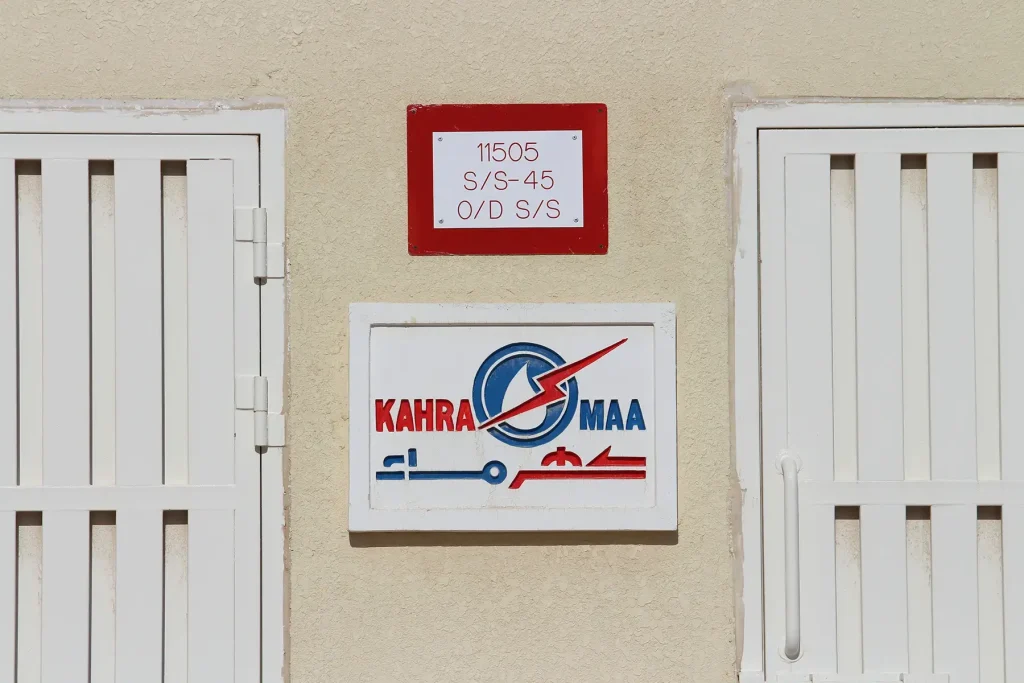
Article 12 sets the procedure in case of default, and its hardest step reads as follows.
If payment is not made for three consecutive months, the board of directors may request the competent department to take measures to cut the electricity and water supply to the unit.
Before it gets there, the board follows these steps.
- It sends the owner or occupant a notice asking them to pay within a period of not less than one week, then a second notice with the same period, with an interval of not less than fifteen days between the two.
- After the deadline passes, the late charges set out in the Regulation apply.
- The owner or occupant can appeal to the Authority’s competent department within fifteen days, and the department decides within fifteen days of receiving the appeal.
- Nobody may interrupt the supply until the appeal is decided or the deadline to submit it has lapsed.
The amount in default also becomes a lien on the defaulter’s unit, on their share of the common areas and the land. Upon a claim by the board chairman, the summary judge can issue an order to pay, guaranteed by the owner’s unit.
Selling a unit that still owes money
Article 35 closes the door on selling a unit with subscription debts.
No sale contract for these units, or any disposal thereof, may be notarized or registered, except upon presenting proof of payment of arrears together with the annual subscriptions.
The Ministry of Justice will not accept a unit transfer until all subscriptions are cleared. Before disposing of or selling a unit, Article 38 asks the owner to notify the board chairman in writing, and the union accepts the new owner as a member once all dues on the unit are cleared. Under Article 39, heirs and buyers take on the duties of the previous owner.
The board of directors
The general assembly elects the board, which consists of a chairman, a deputy, a treasurer and one or more members. If there are three owners at most, the deputy or the third member acts as treasurer.
- Companies and developers that hold several units are each represented by one person.
- Resolutions are adopted by majority. The chairman manages the union’s current affairs, calls the meetings, and represents the union in lawsuits and dealings with third parties.
- Fines of up to QAR 50,000 apply to a board member who votes on a matter related to their own interests or fails to disclose that interest.
- If owners fail to apply for a union, the Authority appoints a temporary board and all owners become members.
- If the number of owners drops below three, the union is dissolved.
The general assembly

All unit owners are members of the assembly, which meets at least once a year. It is summoned by the board, by a quarter of the membership, or by the competent department. Article 26 sets the attendance requirement.
A meeting of the general assembly shall be valid with the attendance of more than (50%) of the number of its members who have the right to attend the meeting
Failure to reach a quorum postpones the meeting to a second session held within 15 days, which is valid regardless of attendance. Resolutions pass by majority of those present. Voting rights follow the number of units each owner holds, capped at 50% of the total votes for any single owner.
The assembly elects and dismisses the board, approves the bylaws, appoints the auditor and approves the annual budget. Members are notified at least 15 days before the meeting. In each meeting a chair is elected who is not the board chairman, deputy or treasurer. Developers are not entitled to vote on contracts in which they have an interest.
Your duties as an owner
Article 34 sets four duties for every member.
- Pay the annual subscriptions and maintenance fees on time.
- Abide by the decisions of the board and the general assembly.
- Notify the union of any change in ownership.
- Do not damage the property or the common areas.
Owners must also provide the board with a valid address and keep it updated. If an owner neglects internal repairs in a way that harms other owners or the building, the competent department carries them out at the owner’s expense, plus 25% of the repair cost. Owners also compensate the union for any costs caused by their tenants.
Common areas and the bylaws
The forthcoming Regulation determines the method of calculating each owner’s share in the common areas. Article 41 then protects those areas. They cannot be divided, attached or auctioned off separately from the units. Consequently, a unit cannot be sold, rented or mortgaged separately from its share of the common areas.
Property bylaws are based on a model available on the Authority’s website. The developer or the union may add special provisions, as long as they are consistent with the law, and any later change is subject to the approval of the competent department.
Administrative officer, penalties and deadlines
Article 49 stipulates a deadline for complying with the provisions of the law.
Those addressed by the provisions of this Law must adjust their situations to comply with its provisions within six months from the date it comes into force, and the Minister may extend this period for another similar period or periods.
A few more enforcement rules apply alongside it.
- Where there is a breach of obligations, or where the public interest requires it, the competent department can appoint an administrative officer to run the union for a set period. All board seats then become vacant.
- Committing the same violation again within a year doubles the fine. Until a final judgment is issued, the Minister can settle a case for 50% of the maximum fine.
- The Council of Ministers will issue the Executive Regulation detailing fees, late-payment charges, share formulas and procedures. Where nothing is stipulated by this law, the Civil Code applies.
What this means for buyers and sellers
Before signing, buyers should check three things. Does the property have a registered union? What is the annual fee? Are there any arrears on the unit? For a new unit, expect to pay two years of subscriptions at handover.
Sellers should close their account with the union and settle any arrears before putting the unit on the market. If you are looking at apartments for sale in Qatar, ask about the union status early. Our guides on property registration fees in Qatar and where foreigners can buy property in Qatar cover the other costs, and the property prices map compares asking prices by zone.
Newsletter
Stay ahead of Qatar's property market
Sign up to receive the latest articles on property prices, land prices, buying guides, and real estate news in Qatar delivered right to your inbox.
No spam, ever. Unsubscribe anytime.
Related articles
Land Subdivision in Qatar: Who Approves It, What It Costs and How Long It Takes
The minimum plot size for residential plots after 9 September 2026, no-subdivision areas, required documents, applicable fees and the period for subdivision of residential plots, according to official Qatar government sources.

What Qatar’s Draft Real Estate Tokenization Law Says
Qatar’s cabinet has approved a proposed law that permits property to be issued and transferred as digital assets linked to the national real estate registry. The bill will undergo a 10-day public consultation process via the Sharek platform before being presented to parliament. A timeline for its implementation has yet to be established.

Property Fees in Qatar 2026: Registration, Transfer & Notary Costs
Currently, Qatar charges 0.25% of the property value for registering a sale, and under Law No. 8 of 2026, the cost to register a lease stands at QR 250 per unit. In this guide we have included information on all fees for registration, transfer, notary, and any exemptions.
Newsletter
Stay ahead of Qatar's property market
Sign up to receive the latest articles on property prices, land prices, buying guides, and real estate news in Qatar delivered right to your inbox.
No spam, ever. Unsubscribe anytime.